

Hosting a live concert stream isn’t just hitting "go live" on Instagram. If you’ve ever watched a favorite artist perform from your couch-whether it’s a solo singer with a guitar or a full band with pyrotechnics-you know the magic. But behind that seamless experience? A lot of moving parts, and yes, a real price tag.
Most people think it’s just a camera and a Wi-Fi connection. That’s true for a backyard stream. But if you’re running a professional online concert-with high-quality audio, multiple camera angles, real-time audience interaction, and ticket sales-you’re looking at a full production. Think of it like a TV broadcast, but without a studio. You need:
Skipping any of these? You’ll end up with pixelated video, echoey sound, or worse-your stream crashing halfway through the encore.
Let’s break it down. For a small to mid-sized act-think 5 musicians, 2 vocalists-you’ll need:
Most indie bands rent gear instead of buying. A full day of rental for a professional setup? Around $2,500-$4,000. That’s not including transport, setup, or crew.
You can’t just stream to YouTube and call it done. If you want ticketing, analytics, merch integration, or fan engagement tools, you need a dedicated platform. Here’s what’s popular in 2026:
| Platform | Setup Fee | Per-Event Fee | Ticketing Cut | Max Viewers | Special Features |
|---|---|---|---|---|---|
| StageIt A platform built for live music events, with integrated ticketing and fan clubs | $0 | $299 | 15% | 50,000 | Live chat, merch store, replay access |
| Veeps Used by major artists like Dave Matthews Band, offers high-fidelity audio streaming | $499 | $499 | 10% | 200,000 | Multi-camera switching, HD audio, VIP tiers |
| YouTube Live Free to use, but lacks monetization tools and fan engagement | $0 | $0 | 0% | Unlimited | No ticketing, no analytics, no merch |
| Eventbrite + StreamYard Budget option for smaller acts, simple setup | $0 | $199 | 5% + Eventbrite fee | 10,000 | Basic ticketing, one camera, chat moderation |
Platforms like Veeps and StageIt are designed for music. They handle everything from ticket sales to post-show replays. YouTube might be free, but you lose control. No way to charge fans, no way to track who watched, no way to sell merch during the show. If you’re serious about making money, you need a platform built for artists-not just viewers.
Here’s something no one talks about: your internet connection. Streaming a 1080p concert with 4 camera angles? You need upload speeds of at least 50 Mbps. For 4K? 100 Mbps minimum.
Most home internet plans max out at 30-50 Mbps upload. That’s not enough. You’ll need a business-grade line, often with fiber. In Wellington, a dedicated 100 Mbps upload line costs about $180/month. But for a one-time event? You rent it. A mobile bonded cellular unit (like a LiveU or TVU) can give you 200 Mbps over 4G/5G. Rental? $800-$1,200 for the day.
And don’t forget backup. Two internet sources? Three? You’re not paranoid-you’re professional.
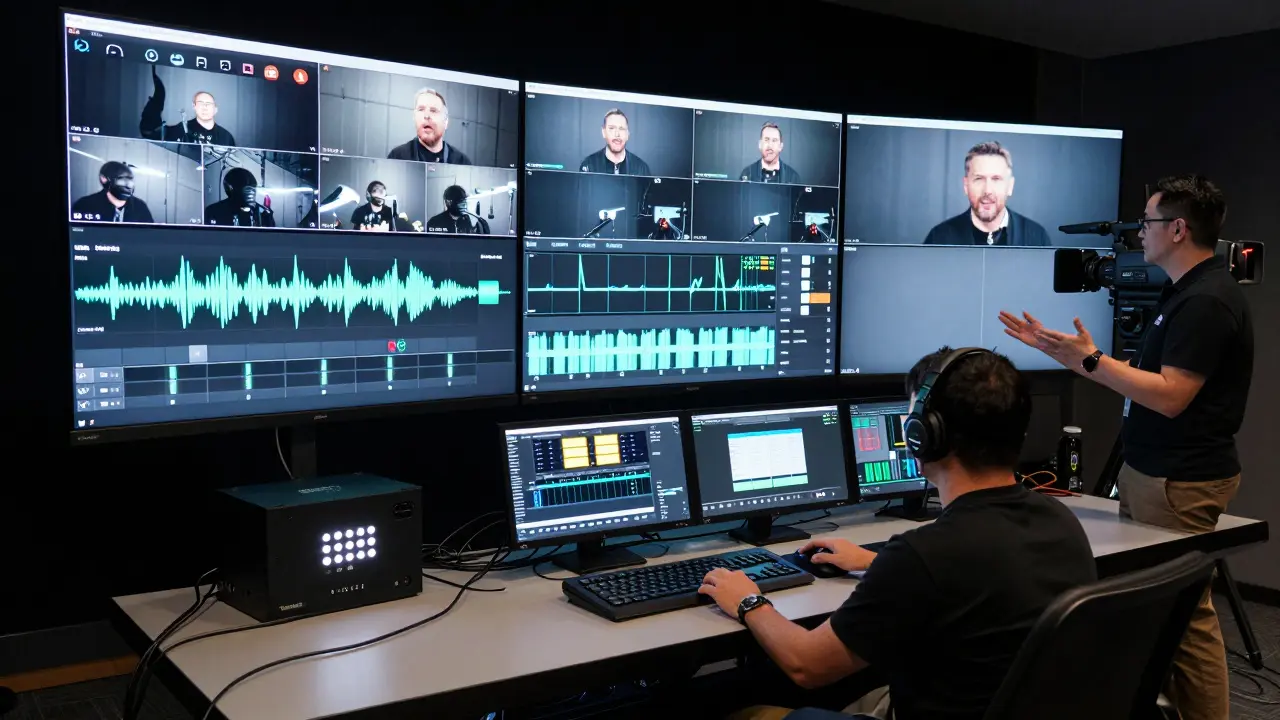
A live stream isn’t a solo act. You need:
Hourly rates vary. In New Zealand, skilled freelancers charge $50-$80/hour. A 2-hour concert? That’s $600-$960 just for labor. Add travel, meals, and overtime? Add another $300-$500.
You can have the best stream in the world-but if no one knows about it, you’re playing to an empty room. Budget at least 15-20% of your total cost for promotion.
Don’t skip this. One band in Auckland spent $1,200 on ads and sold 1,800 tickets. Another skipped it and got 200 viewers. The difference? $18,000 in revenue.
This is where many small acts get burned. Streaming a live performance isn’t the same as playing live in a venue. You need public performance licenses for every song you play-even covers.
In New Zealand, APRA AMCOS handles this. For a single concert stream, expect to pay $200-$600 depending on audience size and song list. If you’re playing original music? You still need to register the performance. Failure to do so? You risk legal action from publishers. It’s not a fine-it’s a lawsuit.
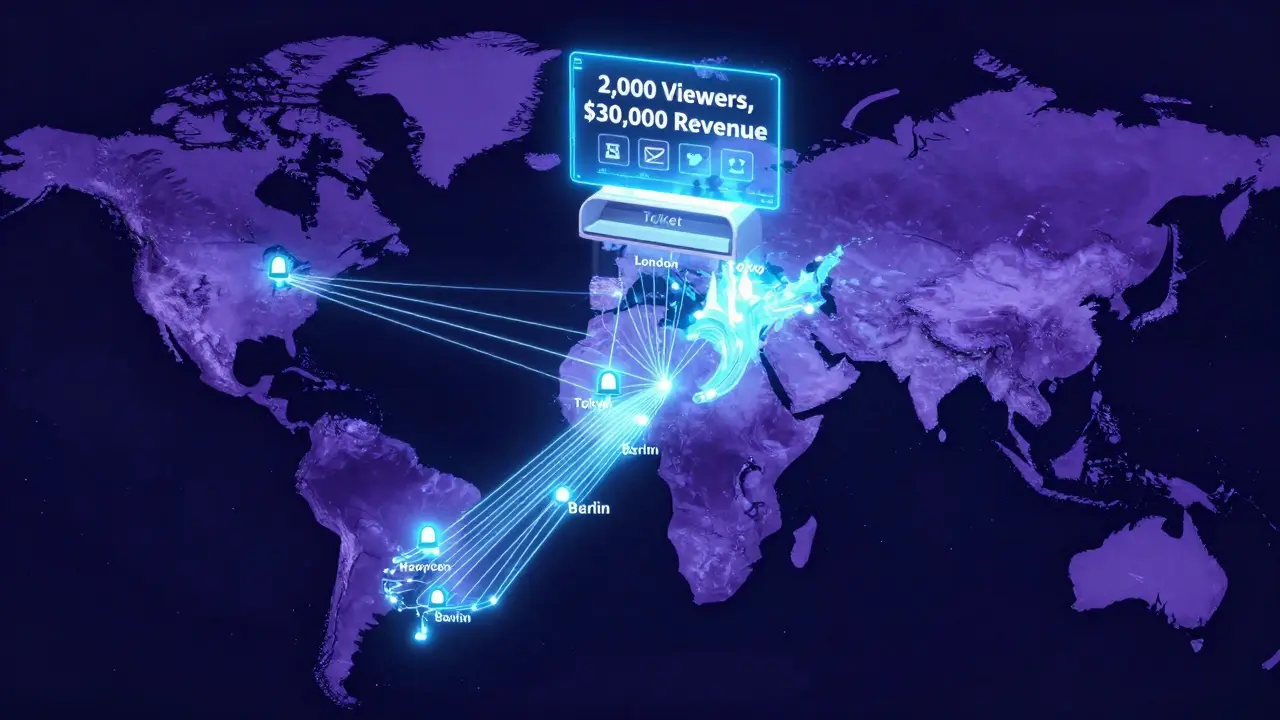
Let’s say you’re a mid-tier band with 10 songs, 6 members, and a 90-minute show. You’re targeting 2,000 viewers. Here’s what your budget might look like:
Now, if you sell tickets at $15 each? You need 550 sales just to break even. At 2,000 viewers? You make $30,000 in revenue. That’s a solid profit.
On the flip side, a solo artist doing a stripped-down acoustic set with a single camera and YouTube Live? Their total cost might be under $500. But they won’t have merch, analytics, or ticketing. It’s a trade-off.
You don’t need to spend $10,000 to stream a concert. Here’s how smart artists do it:
One Wellington artist saved $5,000 by filming in a friend’s warehouse, using student volunteers, and streaming only to YouTube. She still made $8,000 in donations and merch sales. It’s not glamorous-but it works.
Yes-if you treat it like a business. The average online concert in 2026 has a 3.5x return on investment. That means for every dollar spent, you make $3.50. Top performers hit 8x.
Why? Because streaming isn’t just about the show. It’s about:
One band from Dunedin streamed their album launch in 2025. They made $12,000 from the live show. Then they sold the replay for $10 each to 1,200 people. That’s another $12,000. And they got signed by a European label after a promoter saw the stream. That’s not luck. That’s strategy.
You don’t need a million-dollar budget to start streaming concerts. But you do need a plan. Figure out your goal: Are you trying to make money? Build a following? Test new songs? Each goal changes your cost structure.
Start with a 30-minute acoustic set. Use your phone, a mic, and YouTube. See how it feels. Then scale. The first time you hear your music echoing across 10 countries? That’s when you realize-this isn’t just a stream. It’s your stage.
Yes, but with major limits. You can use YouTube Live or Facebook Live for free, but you lose control. No ticketing, no merch, no analytics, no fan data. You’re giving away your audience to a platform that owns the data. If you’re just testing the waters, go free. If you want to make money or grow your brand, invest in a dedicated platform like StageIt or Veeps.
It depends on your total cost. For a typical mid-tier concert with $8,000 in expenses, you’d need to sell about 550 tickets at $15 each. If you’re doing a low-budget stream under $2,000, you only need 130 tickets at $15. Always calculate your break-even point before you promote.
Yes. In New Zealand, you need a public performance license from APRA AMCOS. This applies to any song you didn’t write-even if you’re playing it live. The cost is based on audience size and song list. For a small stream under 5,000 viewers, expect $200-$400. Don’t skip this-it’s not optional.
StageIt is the most popular for indie artists. It’s affordable ($299 per event), has built-in merch and ticketing, and supports up to 50,000 viewers. Veeps is better for bigger acts with higher production values. Avoid YouTube if you want to monetize directly. It’s free, but you’re giving up control.
You can, but your quality will suffer. One person can manage one camera, audio, and streaming-but only if everything is perfectly set up. For anything beyond a solo acoustic set, you need at least two people: one handling tech, one managing the artist. A good stream looks effortless because someone’s working hard behind the scenes.
Chris Atkins
Just did a solo stream last weekend with my phone and a lavalier mic. Made $1,200 in donations. No fancy gear, no crew, just me and my guitar. YouTube works fine if you’re real with your fans. They’ll pay if they feel connected.
Stop overthinking it.
Jen Becker
I hate how everyone acts like you NEED to spend thousands. My cousin streamed a 45-minute set from her apartment with one camera and OBS. Got 300 viewers. Made $900. She cried because people were crying in the chat. That’s the magic. Not the gear.
Ryan Toporowski
This is so dope 😍 I just started streaming my acoustic sets and I’m learning every week. The biggest win? Seeing someone from Germany type "I’ve been listening to your music all night" in chat. That’s worth more than any camera. Keep going!
Tamil selvan
I must respectfully observe that the economic model presented here is fundamentally sound, yet it overlooks the cultural imperative of accessibility. In many developing regions, including parts of India, the notion of renting equipment for a single event is economically untenable. The solution lies not in capital expenditure, but in communal resource pooling-local music collectives, university partnerships, and shared infrastructure. This is not merely cost-cutting; it is cultural sustainability.
chioma okwara
u mean APRA AMCOS? not APRO AMCOS? cmon people. and its not 1080p its 1080P. capital P. also why are you all talking about veeps like its the holy grail? its just another platform. i saw a guy stream on twitch with a webcam and a bluetooth mic and got 10k views. no one cares about your fancy cameras.
Nathan Pena
The entire premise is flawed. You’re treating this like a business when it’s an artistic expression. The moment you start calculating ROI, you’ve already lost the soul of the performance. Why are we quantifying emotion? Why are we reducing art to cost-per-viewer metrics? This isn’t a tech spec sheet-it’s a human experience. And now you’re trying to monetize the tears.
Mike Marciniak
You know who really profits from this? The platforms. StageIt, Veeps, YouTube-they all want you to think you need their $300 service. But here’s the truth: every time you pay for a streaming platform, you’re giving them your audience data. They sell it. They track you. They own your fanbase. You’re not streaming a concert-you’re signing a contract with Big Tech. Use OBS. Use free tools. Stay free.
VIRENDER KAUL
The notion that one can successfully stream a concert without professional crew is not merely optimistic-it is statistically indefensible. The technical requirements for synchronized multi-source audio-video capture, latency management, and real-time encoding demand specialized expertise. A single operator attempting to manage all functions is not a cost-saving measure; it is a recipe for catastrophic failure. Furthermore, the legal implications of unlicensed performance in jurisdictions beyond New Zealand are non-trivial. One must consider international copyright frameworks-DMCA, CCLI, and EU directives. This is not amateur hour.
Krzysztof Lasocki
LMAO at people spending $8k on cameras when a $200 iPhone 15 Pro and a $50 mic will do. The real magic isn’t in the gear-it’s in the energy. I’ve seen bands with zero budget blow away 10k viewers because they were just… real. You think fans care if the lighting is perfect? No. They care if you looked them in the eye and sang like your life depended on it. So go. Do it. Screw the checklist.
Henry Kelley
I just wanna say thank you for writing this. I’m a solo artist in rural Ohio with no money and no connections. This post made me feel like maybe I don’t need to wait for someone to ‘discover’ me. I can just… start. I’m streaming next Friday. No fancy stuff. Just me, my guitar, and a window. If you’re out there reading this-come say hi. I’ll be the one singing off-key but smiling like crazy.