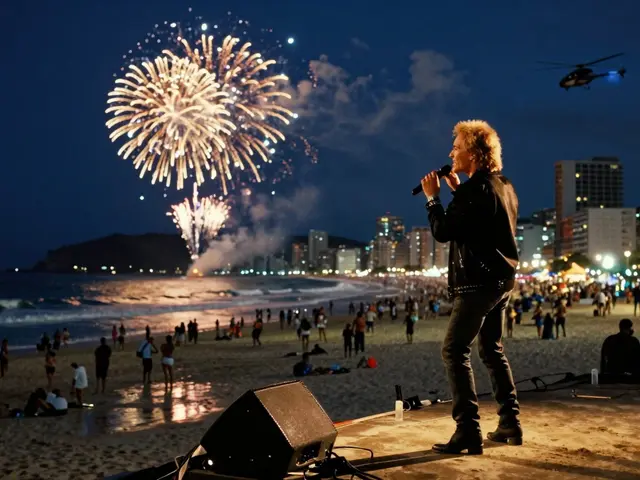

Writing a concert announcement isn’t just about listing the date, time, and venue. If you want people to show up, buy tickets, and tell their friends, you need to make them feel something before they even read the fine print. A great concert announcement doesn’t just inform - it invites. It turns a calendar entry into an experience people don’t want to miss.
People don’t go to concerts just to hear music. They go for the energy, the connection, the memory. Your announcement should hint at that.
Think of your announcement like a mini-movie trailer. You don’t start with credits - you start with the hook.
Bad example:
Concert at The Basement on April 12. Doors open at 7 PM. Tickets $25. Featuring The Midnight Echoes.
Good example:
The Midnight Echoes are back - and they’re bringing the whole Neon Ghosts album with them. It’s their first full-album performance in New Zealand, and it’s happening at The Basement on April 12. No opening act. No intermission. Just 45 minutes of synth-drenched nostalgia, strobe-lit chaos, and a crowd singing every word like it’s 2019 again. Doors open at 7 PM. Tickets at $25 - and they’re not going to last.
The second version doesn’t just tell you when and where - it makes you feel like you’re already there.
No matter how creative you get, people still need the basics. Put them where they’ll look first:
These details shouldn’t be buried. Use bold text or a simple bullet list. People skim. Make it easy for them to grab what they need in under five seconds.
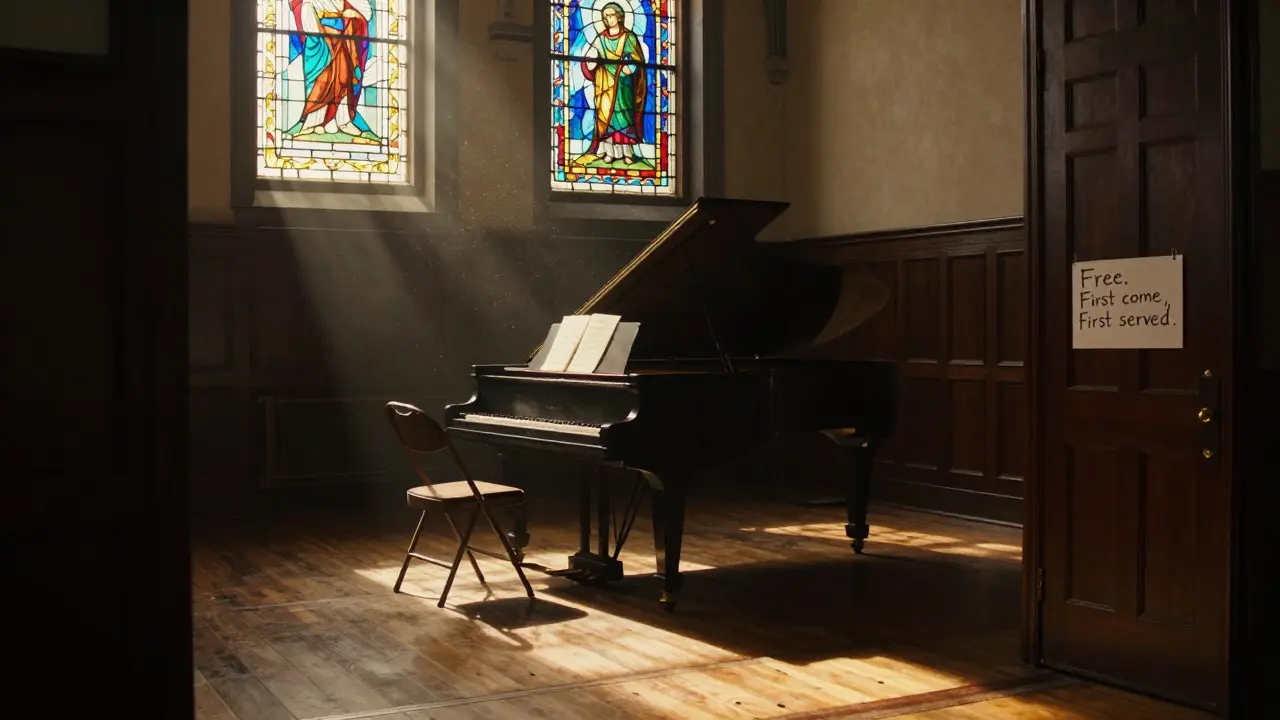
A concert announcement isn’t complete without an image. But not just any image.
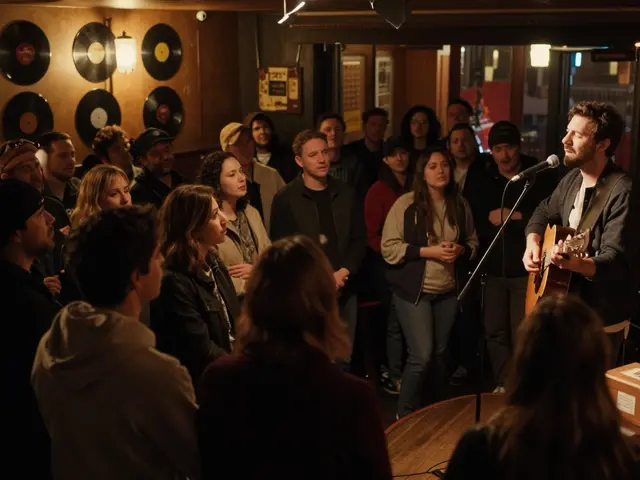
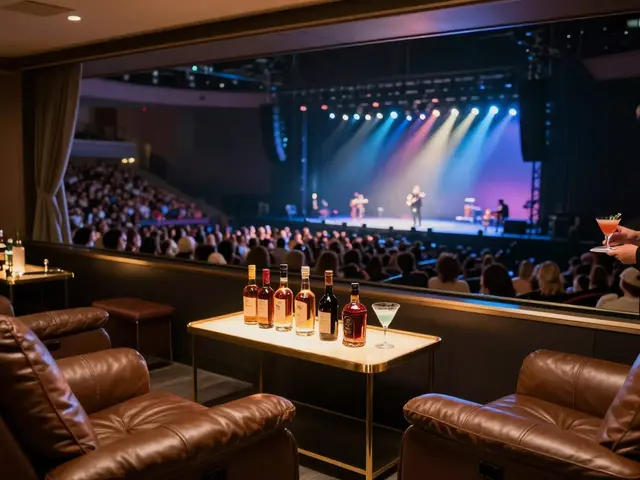
Don’t use a blurry headshot of the band. Don’t use stock photos of crowds clapping. Instead:
Visuals are often the first thing people see. Make sure they scream “this is worth your time.”
Your announcement will live in more than one place. Tailor it slightly for each:
Each version should feel like the same announcement - but optimized for how people consume it.
The announcement doesn’t end when you hit “publish.”
People forget. You have to remind them - gently, consistently, and with heart.
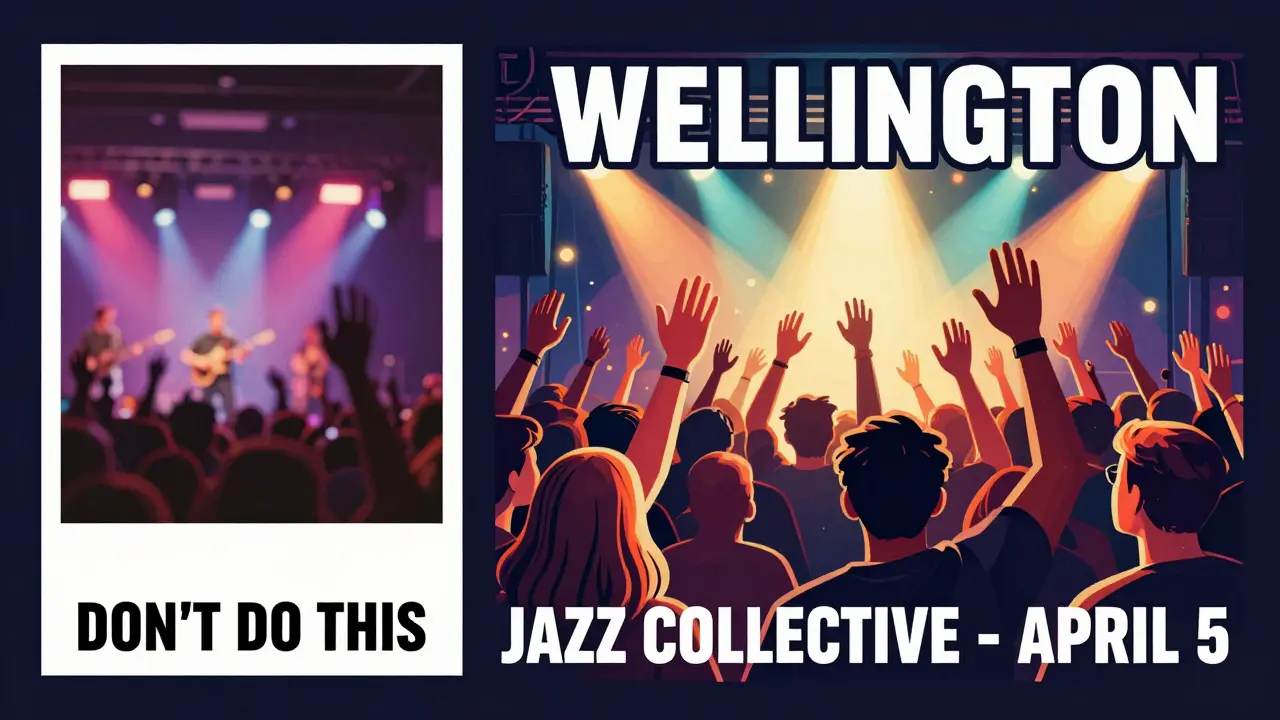
Last year, a local jazz trio announced their reunion show like this:
It’s been 11 years since the last time the Wellington Jazz Collective played together. The trio - now scattered across the country - reunited last month in a tiny studio in Miramar. They recorded one song. Just one. And it was magic. On April 5, they’re playing it live - at the old Masonic Hall, where they first played together in 2013. No setlist. No rehearsal. Just three old friends, one mic, and a piano that’s seen better days. Doors at 7. Free entry. First come, first served. Bring a chair if you want to sit. This isn’t a concert. It’s a homecoming.
They sold out. Not because they had a big social media following. But because the announcement made you feel like you were part of something rare.
People don’t follow bands because they’re perfect. They follow them because they feel real. Your announcement should too.
Use contractions. Use emotion. Use specific details. Say “we” instead of “the band.” Say “you” instead of “the audience.”
At the end of the day, a concert announcement isn’t a press release. It’s a handshake across the crowd. Make it warm. Make it real. And make sure they know - this isn’t just another show. It’s the one they’ll talk about for years.
The most important thing is the date, time, venue, and ticket link - but not just as facts. Present them clearly, and surround them with why this show matters. People need to know when and where, but they stay because they feel something.
Use them only if they fit the vibe. A punk show? A lightning bolt or a smashed guitar emoji works. A classical recital? Skip them. Emojis help when they’re natural - they shouldn’t feel like you’re trying too hard.
For local gigs, post at least 4-6 weeks out. For big-name acts or festivals, 8-10 weeks is better. Too early and people forget. Too late and they’ve already made plans. Aim for 5 weeks before - that’s the sweet spot for ticket sales and word-of-mouth buzz.
Yes - and not just any photo. Use one that shows energy, mood, or atmosphere. A blurry crowd shot won’t cut it. A tight shot of a musician mid-performance, or the venue’s unique lighting, will make people stop scrolling.
Say it clearly: “Free entry” or “No ticket needed.” Then explain why it’s special - “First time back in three years,” “Only 100 seats in the room,” “All proceeds to local youth music program.” Free doesn’t mean unimportant. Make people feel lucky to be there.
Kayla Ellsworth
Look, I read this whole thing and I'm still not convinced. People don't go to concerts because of "vibe" or "storytelling." They go because their friend said "you have to be there" or because the band's on TikTok. All this "paint the scene" nonsense is just marketing fluff for people who think emojis are a personality. I've been to 87 shows. Half the time the announcement didn't even have the correct time. We showed up anyway. Because we like the music. Not because you wrote it like a movie trailer.
Soham Dhruv
honestly this was super helpful i been trying to promo my buddy's open mic night and i was just throwing up a facebook event with "saturday 8pm the coffee shop" and no one came. now i get it. its not about the facts its about making people feel like they're missing out on something real. like that jazz trio example? that made me wanna cry. i'm gonna rewrite mine tonight. thanks for the vibe
Bob Buthune
I just want to say that the emotional weight of a live performance is not something that can be captured in bullet points or even the most poetic of prose. It's the collective breath held before the first chord. The way the air changes when the lights dim. The silent understanding between strangers who all know exactly what this night means. The Midnight Echoes example? That's not a concert announcement. That's a sacrament. And the jazz trio? That's not a reunion. That's a resurrection. You can't manufacture this. You can only witness it. And if you're lucky enough to be the one who gets to say "it's happening"... then you're not writing an announcement. You're holding space for something sacred. I'm not just impressed. I'm changed.
Jane San Miguel
The notion that "use contractions" and "say we instead of the band" constitutes "being human" is both laughably reductive and emblematic of the current crisis in cultural literacy. A concert announcement is not a diary entry. It is a public notice. The precision of the date, the unambiguous clarity of the venue, the directness of the ticket link-these are not "fluff." They are the scaffolding upon which any emotional resonance must be built. To suggest otherwise is to confuse sentimentality with substance. And please, for the love of all that is holy, do not overlay text on images. Typography matters.
Kasey Drymalla
this whole thing is a scam. you think people care about "vibe"? nah. they care about free merch. every single one of these "great" announcements? they all had a free shirt or poster. that's why they sold out. not because of some "homecoming" nonsense. the jazz trio? they probably gave out free beer. and the band? they're probably owned by the same company that runs the venue. you think this is art? it's a funnel. and you're the guy writing the funnel copy. wake up
Dave Sumner Smith
you know who wrote this? someone who's never actually booked a real show. you talk about "lighting design" and "emotional storytelling" like it's a TED talk. i've seen 3000 shows. 90% of the time the announcement was a scribbled napkin stuck to a bathroom stall. and the shows were still packed. why? because the music was fire. not because you used the word "sweaty" or "candlelit." stop overcomplicating. if the band is good, people will come. if they suck? no amount of "painting the scene" will save you. this is just influencer nonsense dressed up as wisdom.
Cait Sporleder
The structural elegance of this framework is, in fact, profoundly aligned with the principles of narrative psychology and affective communication theory. The transition from utilitarian information to experiential evocation mirrors the Aristotelian triad of ethos, pathos, and logos-but with contemporary digital constraints. The emphasis on platform-specific tailoring reflects the cognitive load theory of information processing in heterogeneous media environments. Furthermore, the insistence on visual fidelity as a non-negotiable component aligns with the dual-coding theory of memory retention. One must, however, question the omission of acoustic metadata-such as decibel levels or ambient reverberation-which may significantly influence audience anticipation. This is not merely a guide. It is a manifesto.
Paul Timms
Good advice. Clear. Practical. No fluff. The jazz trio example? Perfect. That’s what matters. Real moments > polished marketing. Just make sure the details are right. Date. Time. Place. Link. Everything else is bonus.
Jeroen Post
you missed the real truth. the whole thing is controlled. the venues, the ticketing platforms, the instagram algorithms-they all want you to believe that "vibe" and "story" are what sell. but it’s not. it’s the algorithm that pushes the post to 12 people who already follow 500 other bands. then they reshare it. then the bot networks amplify it. the "homecoming"? manufactured. the "free entry"? a trap to get your email. the "first time in five years"? they’ve played twice last year in secret. you think you’re getting something real? you’re just another data point in a system designed to make you feel special while they profit. the music doesn’t matter. the narrative does. and you’re writing it.
Nathaniel Petrovick
i love this. i’m a drummer in a band and i used to just post "we play thurs at the dive bar 9pm" and wonder why no one came. now i write it like i’m telling my best friend about the night. "you remember that one song we used to play on loop? we’re doing it live. no filter. just us and the broken amp." it’s wild how much more people respond. it’s not about being fancy. it’s about being real. thanks for saying it so well
Honey Jonson
this is so nice i cried a little. i just booked our first show and i was so stressed about getting it right. i used your jazz trio example as my template and changed the names. now it feels like a letter instead of an ad. people are already asking when the next one is. i didn’t think anyone would care. turns out they just needed to feel like they were part of something. thank you