
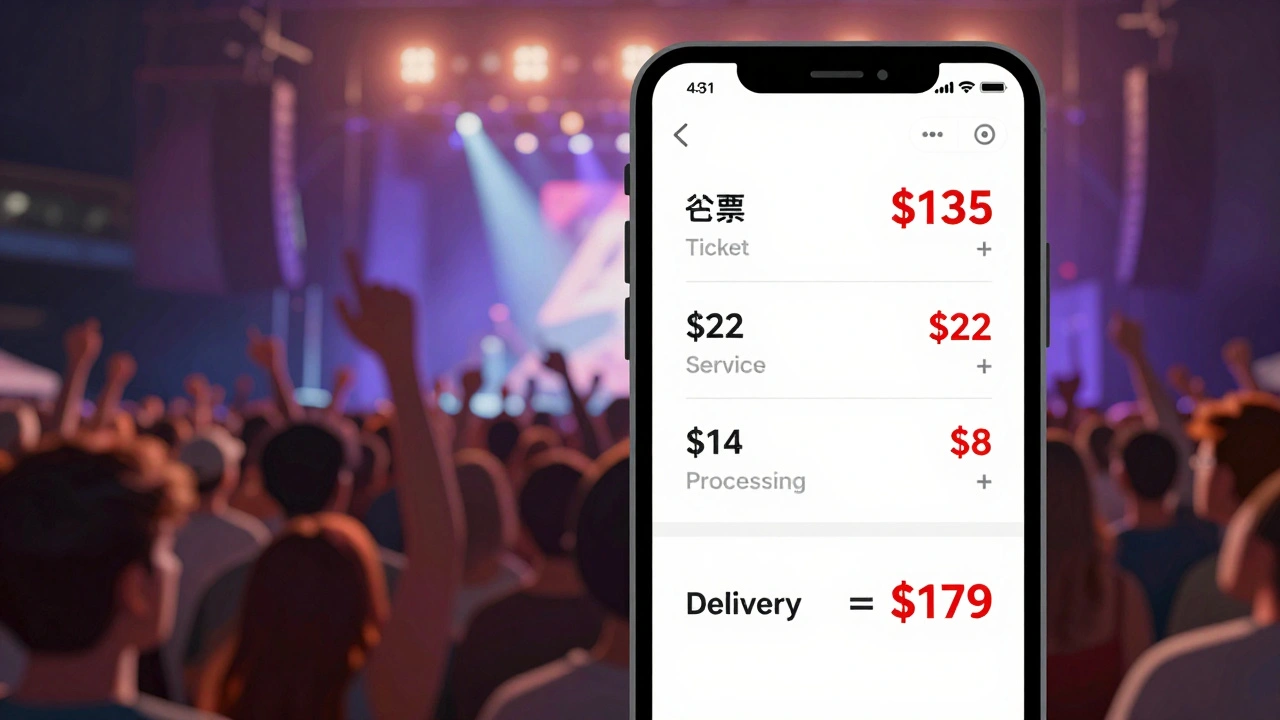
Buying concert tickets online feels easy-click, pay, get the email. But then you see the fees: service charges, processing fees, delivery fees. Suddenly, that $89 ticket costs $142. Meanwhile, your friend swears they got the same ticket at the box office for just $90. Who’s right? And more importantly-is it cheaper to buy concert tickets online or in person?
These fees cover things like payment processing, customer support, and platform maintenance. But here’s the catch: the artist and venue rarely see most of that money. A 2024 report from the New Zealand Music Commission found that in 80% of cases, ticketing platforms kept over 20% of the total revenue from ticket sales. That’s not just a cost to you-it’s money taken out of the artist’s pocket.
But here’s the trade-off: you have to be there. For popular shows, that means lining up hours-sometimes days-before tickets go on sale. In 2023, fans camped out overnight outside Spark Arena in Auckland for a Coldplay ticket release. The line started at 4 a.m. and had over 300 people by 7 a.m. That’s time you can’t get back. And if you’re working a 9-to-5, or have kids, or live outside the city, it’s not practical.
Some venues still offer a limited number of tickets for in-person sales only. These are often the best seats-the ones that don’t get snapped up by bots or resellers. But they’re rare. Most venues now sell almost everything online, even if they have a box office open.
Some resale sites claim they have “fair pricing” or “price caps,” but those are rarely enforced. A 2025 study by Consumer NZ found that 78% of resale tickets were priced above 150% of the original face value. And if you buy from a private seller on Facebook Marketplace? You risk scams, fake tickets, or being locked out at the door because the barcode doesn’t scan.
These deals don’t happen often, but they do happen. And if you’re flexible with dates or seating, you can save big.
These costs add up. If you’re buying a $100 ticket in person, but spending $50 on transport and time, you’re not saving much.
But here’s the problem: venues rarely hold back group blocks for in-person sales. Most group tickets are sold online through special group sales portals. If you want a table of 8 for a Metallica show, you’ll likely need to go online and register for a group booking. So even for groups, online is often the only practical option.
But the box office only opened 30 minutes before the online sale. By the time you got there, the best seats were gone. You got two $135 tickets in the upper tier-far from the stage. Online, you could’ve picked your exact seats, even if you paid $179. You got a better view. You didn’t wait in line. You didn’t miss work. And you got digital tickets you could forward to a friend.
In this case, the extra $44 was worth it for convenience and choice.
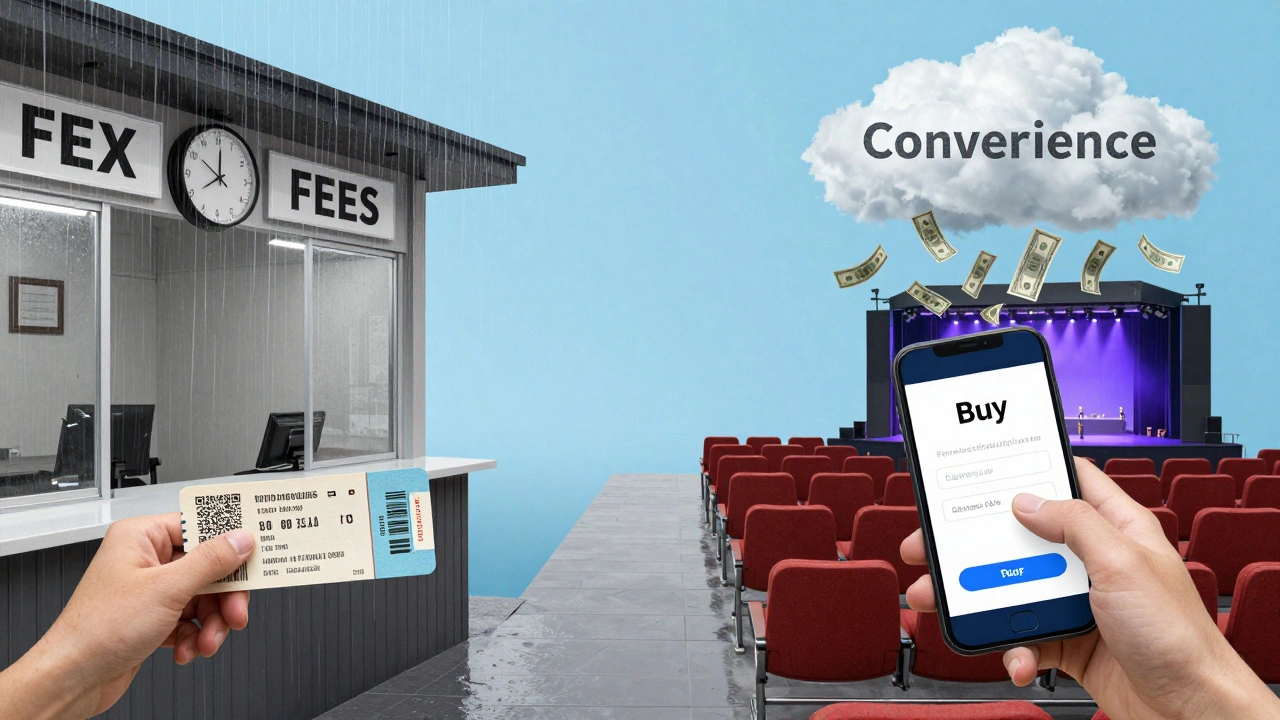
There’s no perfect system. But if you’re smart, you can avoid the worst fees and still get good seats.
If you want the lowest possible price and don’t mind waiting in line, risking weather, and losing time-go in person. You’ll pay face value and nothing more.
If you want choice, convenience, and the best seats-even if it costs a bit more-online is the way to go. The fees are high, but they’re predictable. And you’re not gambling on whether you’ll get good seats.
For most people, the extra $30-$50 in fees is worth avoiding the stress, the line, and the risk of getting stuck in the back row. But if you’re on a tight budget and have the time, the box office still offers the purest deal.
Bottom line: Don’t assume one method is always cheaper. Check both. Compare. And know what you’re paying for-because sometimes, you’re not just buying a ticket. You’re buying peace of mind.
Yes, box office tickets are cheaper because they don’t include service fees, processing charges, or delivery costs. You pay exactly the face value printed on the ticket. But you have to be there in person, often hours before the sale, and you might not get the best seats.
Platforms charge fees to cover payment processing, customer support, website maintenance, and anti-bot technology. But a large portion of those fees go to the ticketing company, not the artist or venue. In New Zealand, ticketing firms often take 15-25% of the total ticket price. That’s why you see $100 tickets turn into $140+ after fees.
Sometimes. Some artists sell tickets directly through their own site, especially for smaller shows or local gigs. These often have lower fees or none at all. But for big tours, they still use major platforms like Ticketmaster. Always check the official artist or venue website before buying from a third party.
It’s risky. Resale sites like StubHub or Facebook Marketplace allow sellers to mark up prices wildly, and fake tickets are common. Only buy from sites with buyer protection guarantees. In New Zealand, Consumer NZ recommends sticking to official resale partners like Ticketmaster’s resale section, which verifies tickets before sale.
The best time is during the initial on-sale, especially if you’re signed up for presales. The second-best time is 24-48 hours before the show, when unsold tickets are often discounted. Avoid buying in the final hours-prices spike as demand rises.
There’s no magic trick to avoiding all fees. But with a little planning, you can make smart choices that save you money-and stress.

Mike Zhong
Let’s be real-this whole debate is a capitalist scam designed to make you feel guilty for wanting convenience. You’re not buying a ticket, you’re buying the right to not stand in the rain while some corporation profits off your desperation. The box office isn’t cheaper-it’s just slower. And slower means more suffering. And suffering doesn’t equal virtue, it equals exploitation by the system.
Jamie Roman
I get why people love the box office-it feels pure, like you’re supporting the artist directly. But here’s the thing: if you’re willing to wait in line for six hours, you’re already paying in time, energy, and stress. And those costs don’t show up on a receipt. I bought a ticket online last year for $168. I didn’t miss work. I didn’t get soaked. I got front-row seats. That $40 extra? It bought me peace of mind and a memory I didn’t have to fight for.
Andrew Nashaat
Wait-you’re seriously comparing $142 to $90 and calling it a 'cost breakdown'? Where’s your math? $142 minus $90 is $52 in fees. That’s not 'convenience,' that’s gouging. And you say 'the artist doesn’t see most of it'? Then why are you defending the system? You’re not analyzing-you’re rationalizing corporate theft. Also, 'delivery fee'? You’re not getting a package, you’re getting a QR code. That’s not a cost-that’s a lie.
Gina Grub
The box office is a myth. You think you’re saving? You’re just trading money for trauma. I waited 14 hours for a Beyoncé ticket. Got a seat behind a pillar. Paid $0 in fees. Lost 3 days of productivity. My therapist still asks about it.
Nathan Jimerson
There’s no perfect way, but there is a smarter way. If you plan ahead, sign up for newsletters, and check official sites, you can avoid most fees without standing in line. It takes patience, not luck. And patience is a skill you can build.
Sandy Pan
It’s not about the money. It’s about the ritual. The box office is a temple. The line is a pilgrimage. The sweat, the cold, the shared silence with strangers who also love the same music-that’s the real ticket. The digital experience? It’s sterile. You’re not connecting with the art-you’re consuming a product. And that’s why it feels hollow, even when you ‘save.’
Eric Etienne
Why are we even having this conversation? Just buy the ticket. Stop overthinking. You’re not saving money-you’re wasting your life trying to save $50. Go to the show. Enjoy the music. Stop being a ticket accountant.
Dylan Rodriquez
Let’s reframe this: it’s not about whether online or box office is cheaper-it’s about what you value. If you value control, choice, and comfort, online wins. If you value authenticity, patience, and direct connection, box office wins. Neither is morally superior. The system is broken, but you can still make a choice that aligns with your values-not just your budget. And that’s okay.
Amanda Ablan
I used to think box office was the only ethical choice-until I tried it. I waited three hours in the rain, got a $120 ticket, and then realized I’d spent $70 on transit and missed my kid’s recital. Online isn’t perfect, but it lets you be present in your life. Sometimes, the best thing you can do for the artist is to show up-and that’s easier when you’re not exhausted.
Meredith Howard
The economic model of live event ticketing is fundamentally misaligned with consumer interests. Third-party intermediaries extract significant surplus value without commensurate service delivery. Structural reform is required to restore equitable access. The current paradigm incentivizes artificial scarcity and price discrimination. Consumers are being systematically disadvantaged.
Yashwanth Gouravajjula
In India, we queue for 2 days for movie tickets. No fees. Just patience. Same spirit. Just different country.
Kevin Hagerty
Wow you wrote a whole essay on how to pay more money. Congrats. You’re a financial genius. Next time just hand the artist your wallet and say 'here, take it all.' The box office exists for a reason. You’re not special for paying extra. You’re just lazy.