

When you hear "in concert," you might picture a music event. But in legal terms, it's a phrase with serious consequences. Understanding the in concert legal definition is crucial for anyone dealing with legal matters involving multiple parties. This isn't about entertainment-it's about collaboration that shapes legal outcomes in criminal, civil, and corporate cases.
Acting in concert is a legal phrase that describes when two or more people work together toward a shared objective, often in ways that have serious legal consequences. This term isn't about music-it's about collaboration in legal contexts, whether criminal or civil.
Unlike "concert" in music, "acting in concert" refers to coordinated actions between parties. It doesn't require a formal agreement. Courts look for evidence of mutual understanding or shared purpose, even if it's implied through behavior. For example, if two people silently nod before committing a crime, that's enough to establish they acted in concert.
Imagine two friends planning a robbery. One scouts the bank, another provides the getaway car, and a third drives. Even though they didn't all physically commit the theft, they're acting in concert. Courts treat them as equally responsible for the entire crime. In civil cases, acting in concert can lead to joint liability. For instance, if two companies collaborate to defraud customers-say, one handles marketing while the other processes payments-both can be sued together. A 2022 lawsuit against tech companies for wage suppression showed how coordinated efforts across multiple entities create shared legal responsibility.

In criminal law, acting in concert often relates to conspiracy charges. Under common law, conspiring with others to commit a crime means all participants face charges for the entire plan, even if they didn't personally carry out every step. For example, a 2019 fraud scheme involved multiple individuals: one created fake invoices, another processed payments, and a third laundered money. All were charged with conspiracy because they acted in concert.
However, the term also applies in civil cases. In tort law, if multiple parties collaborate to harm someone-like a group of landlords conspiring to raise rents illegally-they can all be held liable. Courts look at whether they shared a common purpose, regardless of whether the act was illegal. A 2021 case involving landlords in New York saw all defendants held jointly responsible for illegal rent hikes, even though only one signed the lease agreements.
Acting in concert is critical in corporate law. The Securities and Exchange Commission (SEC) uses this phrase to identify groups of investors who collectively acquire shares to gain control of a company. SEC Rule 13d-3 requires disclosure when investors acting in concert hold over 5% of a company's shares. Failure to disclose can lead to fines. In 2020, a hedge fund was penalized $500,000 for not reporting coordinated share purchases with another firm.
In antitrust cases, companies acting in concert to fix prices or divide markets face severe penalties. For example, if several airlines secretly agree to set ticket prices, they're acting in concert. This violates competition laws, even if no formal agreement exists-courts look at coordinated behavior. A 2023 European Commission case fined three airlines €1.2 billion for colluding on fuel surcharges through informal communication.
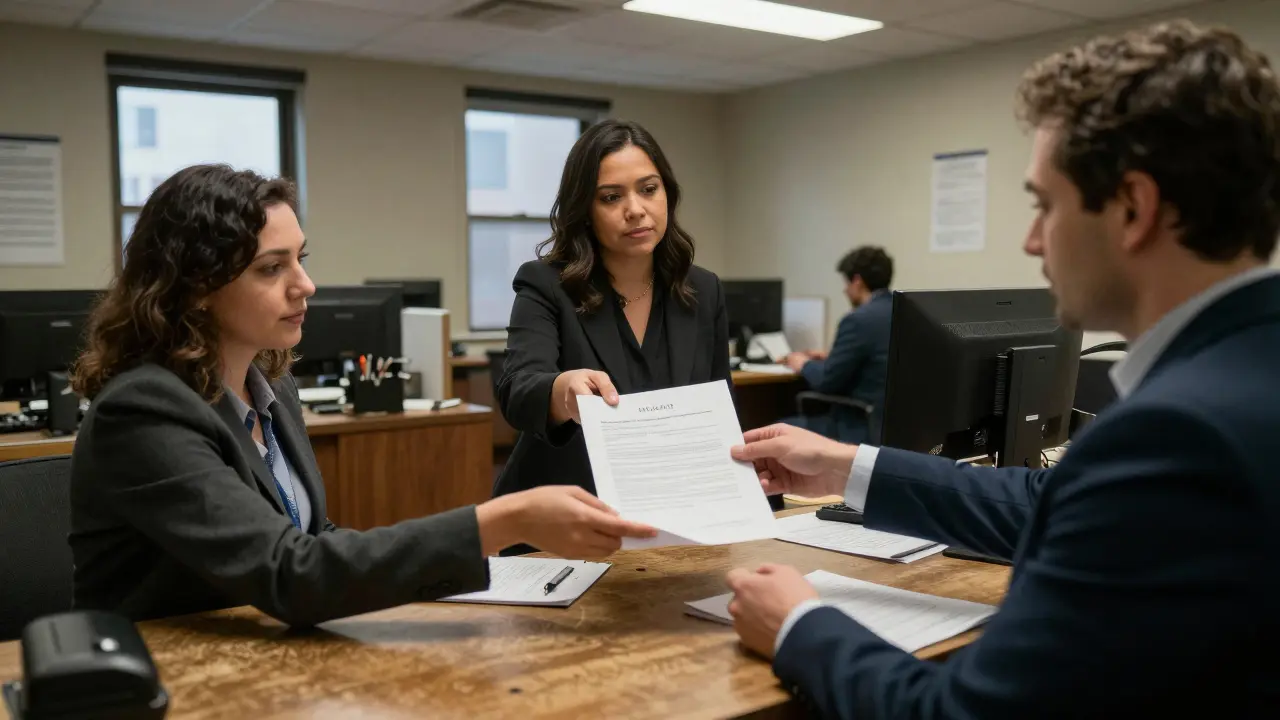
Many confuse 'acting in concert' with 'conspiracy,' but there's a key difference. Conspiracy requires an agreement to commit an illegal act, while 'acting in concert' is broader-it can apply to both legal and illegal joint actions. For instance, two businesses collaborating on a joint venture aren't conspiring; they're acting in concert lawfully.
Another myth is that acting in concert requires a written agreement. In reality, courts accept oral agreements, implied understandings, or even silent coordination. If two people silently nod to each other before committing a crime, that's enough to establish acting in concert. A 2021 U.S. Supreme Court ruling confirmed this, stating that "silent coordination" in a drug trafficking case was sufficient to prove joint action.
Conspiracy requires an agreement to commit an illegal act, while 'acting in concert' can apply to both legal and illegal joint actions. For example, two companies collaborating on a joint venture are acting in concert lawfully, but they aren't conspiring. Conspiracy is a specific criminal charge, whereas acting in concert is a broader concept used in various legal contexts.
No. Acting in concert requires awareness of the shared purpose. If you unknowingly participate in a group's actions-like a driver who doesn't know the passengers are planning a crime-you aren't acting in concert. Courts look for evidence of mutual understanding or coordination between parties.
In civil cases, acting in concert often leads to joint liability. This means all parties involved are responsible for the entire harm caused, not just their individual actions. For example, if multiple companies collaborate to defraud customers, each can be held liable for the full amount of damages, regardless of their specific role in the scheme.
No. While it's common in criminal cases, the phrase is also used in civil law, corporate law, and antitrust cases. For instance, in securities law, the SEC uses it to identify coordinated investor activity. In antitrust cases, companies acting in concert to fix prices face legal action under competition laws.
In 2021, several major tech firms were accused of acting in concert to suppress wages by agreeing not to poach each other's employees. Though they didn't have a formal agreement, their coordinated actions violated antitrust laws. This case shows how acting in concert in business can lead to serious legal consequences, even without written contracts.
No. Courts look for evidence of coordination, not a written document. This could include verbal agreements, shared emails, or even consistent behavior that implies mutual understanding. For example, if two people repeatedly coordinate their actions during a crime without speaking, that's enough for courts to认定 they acted in concert.
Courts examine evidence like communications between parties, timing of actions, and shared goals. For instance, in a fraud case, prosecutors might show that defendants exchanged messages coordinating their roles. In antitrust cases, regulators look at parallel pricing behavior or internal documents indicating collusion. The key is proving a common purpose and coordinated actions.
Under SEC Rule 13d-3, investors acting in concert must disclose their holdings if they collectively own more than 5% of a company's shares. This prevents hidden takeovers where multiple parties pool resources to gain control without transparency. Failure to disclose can result in fines or legal action, as seen in several high-profile SEC enforcement cases.



mani kandan
Legal 'in concert' isn't about music-it's coordinated actions between parties without needing formal agreements. Courts look for mutual understanding or shared purpose through behavior. For instance, in a 2022 wage suppression lawsuit, tech firms were held jointly liable despite no written contract. This concept spans criminal, civil, and corporate law. Understanding this nuance is vital for anyone dealing with multi-party legal scenarios.
Rahul Borole
Acting in concert denotes collaborative efforts leading to shared legal responsibility. In criminal cases, all participants face charges for the entire scheme regardless of individual roles. Civil tort cases similarly impose joint liability when parties collaborate to cause harm. The key factor is evidence of mutual understanding, not written documentation. This principle is critical for legal professionals navigating complex multi-party disputes.
Reshma Jose
This is spot on.
In the New York landlord case, even though only one signed the lease, all were liable for illegal rent hikes.
It shows how courts look at the bigger picture of coordinated actions.
No need for written proof-just evidence of shared intent.
Bhavishya Kumar
Many confuse acting in concert with conspiracy. Conspiracy requires an illegal agreement while acting in concert can be lawful. For example joint ventures between companies are acting in concert without criminal intent. Courts focus on coordinated behavior not written docs. The 2021 Supreme Court ruling confirmed silent coordination suffices.
Sheetal Srivastava
The jurisprudential construct of 'acting in concert' transcends mere syntactical semantics; it's a confluence of mens rea and actus reus coalescing in a synergistic legal framework. The absence of formal documentation is immaterial when proximate causality is established through circumstantial evidence. This principle is particularly relevant in antitrust cases where parallel market behaviors indicate collusion.
ujjwal fouzdar
Ah, the beautiful dance of law! When companies silently coordinate prices, it's not just a business move-it's a legal tightrope. One wrong step and you're facing billions in fines. The European Commission's €1.2 billion penalty against airlines for fuel surcharge collusion shows how subtle actions can have massive consequences. It's like chess-every move matters, even the silent ones. Courts don't need a smoking gun; patterns speak volumes.
rahul shrimali
Acting in concert needs no written agreement just shared purpose. Period.
Anand Pandit
Exactly! Whether it's a joint business venture or a criminal plot, the law looks at the collective action.
It's reassuring that courts focus on real behavior rather than paperwork.
This understanding helps everyone navigate legal complexities with confidence.