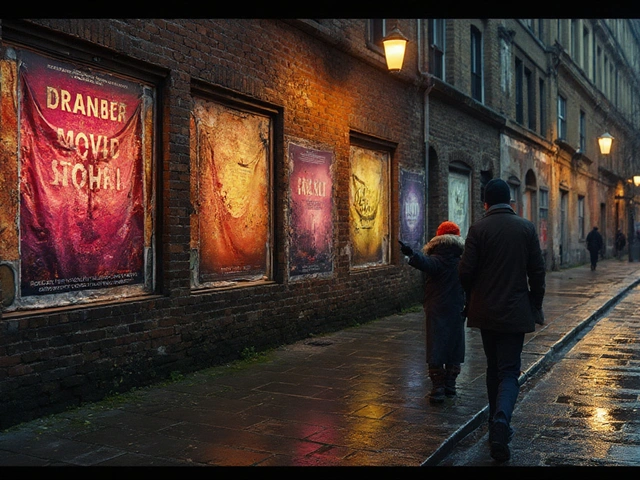

When someone says they went to a small concert, what do they really mean? It’s not just about the number of people in the room. A small concert isn’t defined by a strict headcount-it’s about the feeling, the space, and the connection between artist and audience. You could have 200 people in a basement bar or 800 in a converted church, and both could feel just as intimate. So what actually makes a concert "small"?
Most people assume a small concert means under 500 attendees. That’s a common rule of thumb, but it’s not universal. In New Zealand, a venue like Wellington’s Theugly is a 300-capacity live music venue in the heart of Te Aro that regularly hosts emerging artists. A show there feels small because you can see the artist’s facial expressions, hear every guitar string vibrate, and maybe even exchange a smile after the set. Meanwhile, a 600-seat theater in Portland or a 700-capacity club in Austin might also be called small because the acoustics, lighting, and layout keep things personal.
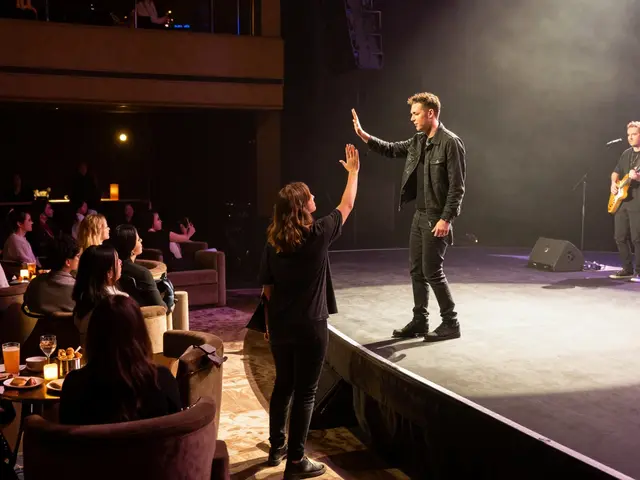
The real marker? Proximity. If you’re within arm’s reach of the stage, or if the artist pauses between songs to talk to someone in the front row, you’re at a small concert. It doesn’t matter if the venue legally holds 1,000 people-if the promoter only sells 400 tickets and keeps the lights low, it feels small.
Big concerts-think stadiums or arenas-are designed for spectacle. Pyrotechnics, giant screens, backing dancers, and complex lighting rigs dominate. The music becomes part of a larger show. Small concerts are the opposite. They’re stripped back. Often, it’s just the artist, an amp, and a mic. No opening act. No merch table three blocks away. Just music, close up.
At a small concert, you might hear a song the artist hasn’t recorded yet. You might catch them tuning their guitar mid-set and laughing about it. You might be the one who gets asked to hold a pick they dropped. These moments don’t happen at a 20,000-seat venue. They happen because the space is human-scaled.
There’s no official definition, but industry insiders generally agree on these ranges:
For context, The Crocodile in Seattle holds 650 people. It’s legendary for launching artists like Nirvana and Pearl Jam. But because of its layout-low ceilings, no balconies, tight seating-it still feels small. Same goes for The Great American Music Hall in San Francisco, which holds 1,200 but rarely books acts that fill it completely.
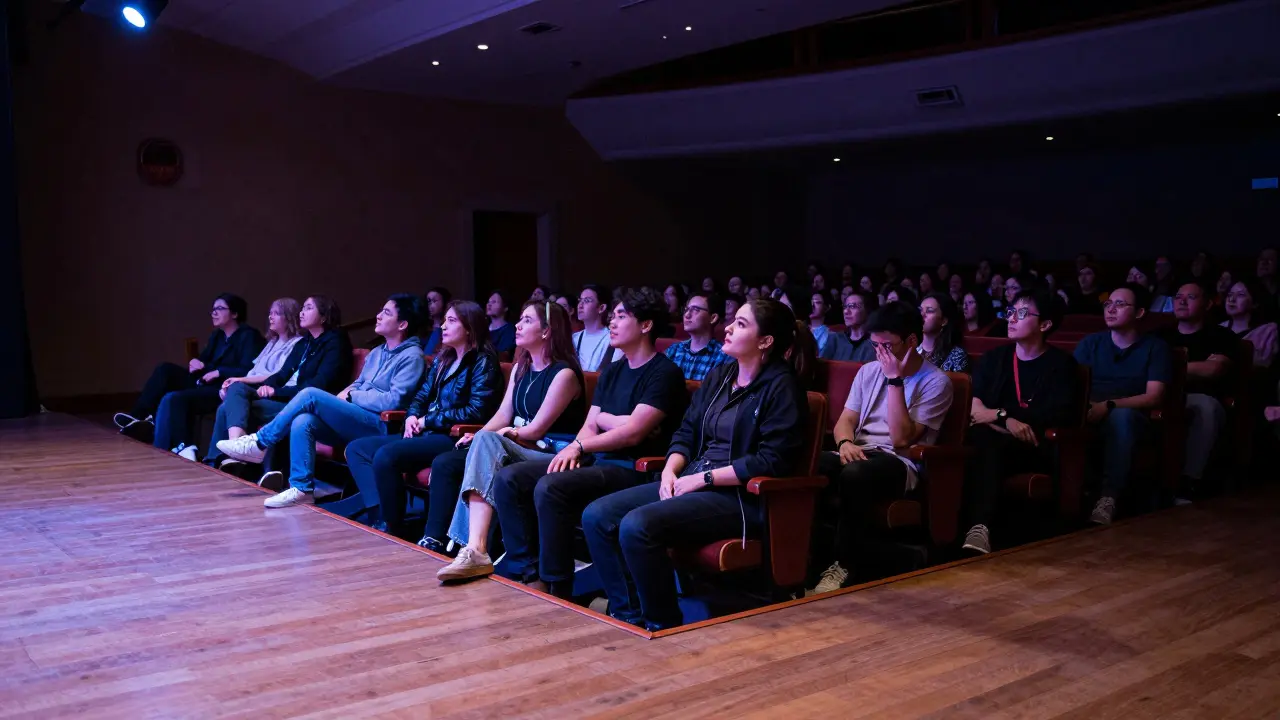
They’re where careers are built. Most artists who make it big start in rooms that hold fewer than 300 people. Taylor Swift played her first real concert in a Nashville bar with 40 people. Billie Eilish’s early shows were in small clubs in LA, sometimes with just 50 fans. These aren’t exceptions-they’re the norm.
Small concerts also give artists room to experiment. No pressure to perform hits. No corporate sponsors watching every move. You might hear a cover you’ve never heard before. Or a song that got scrapped for the album. You’re not just listening-you’re part of the process.
For fans, it’s about connection. You don’t just hear the music. You feel it. The bass vibrates through the floorboards. The singer’s voice cracks just a little on the high note-and you know it’s real. There’s no filter. No autotune hiding behind a wall of speakers.
Don’t expect VIP packages, luxury lounges, or a merch line that takes 45 minutes. You won’t see drone footage of the crowd. There’s no branded soda cup. No hologram. No live-streamed performance with 50,000 viewers watching from home.
What you will find? A single stage, maybe one lighting rig, a sound engineer who knows the artist’s setlist by heart, and a crowd that’s there because they love the music-not because it’s trending.
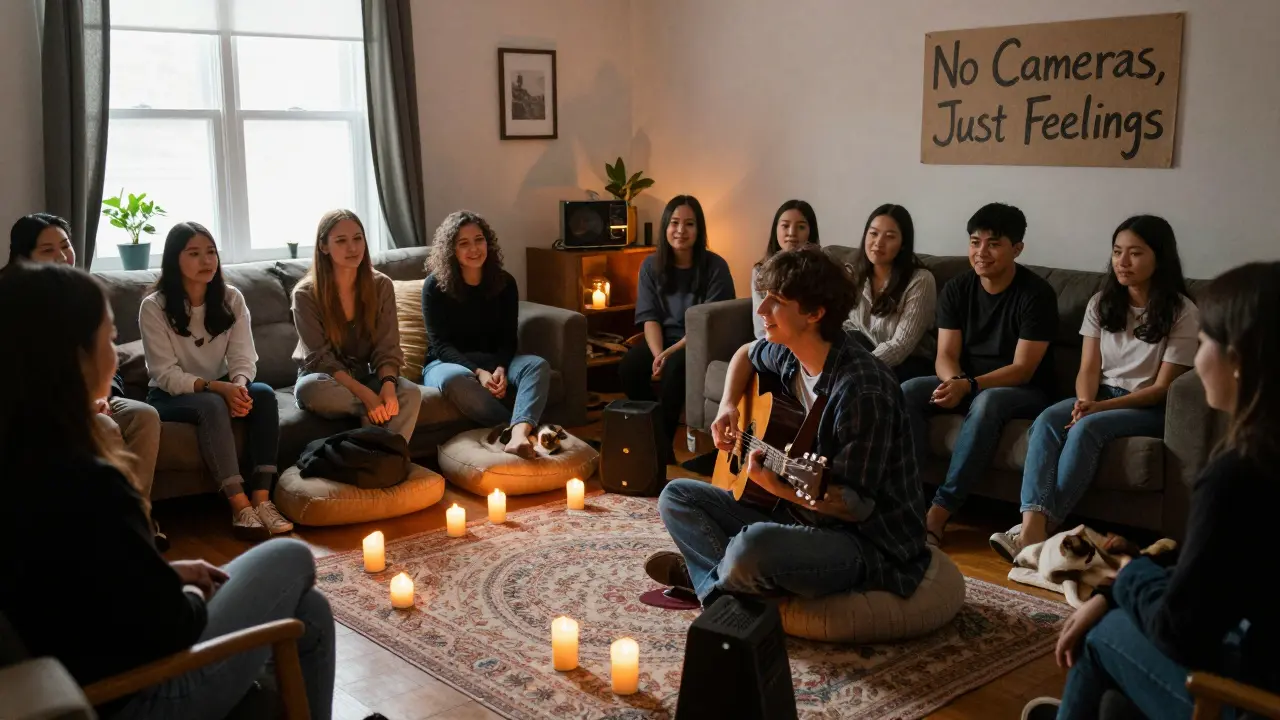
Start with local music blogs, independent record stores, and community calendars. In Wellington, places like The Tuning Fork and The San Francisco Hotel host weekly shows by local acts. In the US, Local 12 in Cincinnati and The Middle East in Boston are known for booking emerging artists.
Follow artists on Bandcamp or Instagram. Many will post "coming to a small space near you" announcements. Join Facebook groups for local music scenes. Sign up for newsletters from venues you like. Small concerts don’t advertise on billboards-they spread by word of mouth.
Big tours get the headlines. But the real magic? It’s happening in rooms that hold less than 500 people. That’s where new sounds are born. Where fans become loyal. Where artists learn what their music really means.
If you’ve ever felt moved by a live performance-not because it was loud or flashy, but because it felt honest-you’ve been to a small concert. And chances are, you’ll remember it longer than any stadium show you’ve ever seen.
Not always. A 300-person venue can host a small concert or a large one, depending on who’s playing. If it’s a local band with a loyal fanbase, yes-it’s small. But if a major indie act with a national following plays there and sells out, it might feel more like a mid-sized show. The key is context: the artist’s size, the crowd’s energy, and how personal the experience feels.
Absolutely. Some of the most memorable small concerts happen in libraries, art galleries, rooftops, or even private homes. These spaces often have no formal sound system, which means the performance is quieter and more acoustic. That intimacy is part of the appeal. Artists like Sufjan Stevens and Bon Iver have played house shows that later became cult favorites.
Generally, yes. Tickets for small concerts usually range from $10 to $30, compared to $50-$200 for larger venues. Some shows are even pay-what-you-can. The lower cost isn’t just about size-it’s about the artist’s goals. At this level, many performers prioritize building a fanbase over profit. You’re paying for access, not production.
It’s not always about ticket sales. Many artists earn more from merch, digital tips, or fan subscriptions during small shows. A $20 T-shirt sold to 100 people brings in $2,000-more than the $15 ticket price from the same crowd. Some also use these shows to promote upcoming albums or Patreon pages. It’s a direct line between artist and listener, which makes monetization more personal and sustainable.
Control. Creative freedom. Authentic connection. Big venues come with corporate demands: set times, lighting cues, product placements. Small venues let artists play longer, change the setlist, tell stories, or even invite fans on stage. For many, it’s the only way to stay true to their music. Some artists, like Phoebe Bridgers, return to small venues even after going mainstream because that’s where the real music happens.

Abert Canada
I saw a band play in a laundromat in Ottawa last year. 30 people, two amps, and a guy with a kazoo. No stage. Just a washing machine as a drum riser. It was the most real thing I've ever experienced. No lights, no merch, just sweat and feedback. I still think about it.
Xavier Lévesque
Funny how people think 'small' means 'cheap.' I paid $40 for a show in a bookstore in Montreal. Got a hand-written setlist, a beer, and the singer told me why he wrote the song about his dog. Worth every penny. Big venues? I pay that just to hear a song I already know.
Thabo mangena
In Cape Town, we host concerts beneath the trees in Green Point Park. No electricity, no PA system. Just acoustic guitars and voices carried by the wind. People bring blankets. Children sleep on laps. The music becomes part of the night. This is not entertainment. This is communion.
Karl Fisher
I saw Phoebe Bridgers at The Echo in LA. 400 people. No barricades. She looked right at me when she sang 'Kyoto.' I cried. Then she said, 'This one's for the weirdos.' I think I'm one. Anyway, if you haven't been to a real small show, you haven't heard music. You've heard sound.
mark nine
The magic is in the mistakes. A mic feedback, a wrong chord, a singer laughing because they forgot the lyrics. Big shows edit that out. Small shows let it live. That's why you remember them. Not because it was perfect. Because it was human.
Tony Smith
It is a matter of profound irony that individuals who have never attended a gathering of fewer than five hundred persons presume to define the parameters of intimacy. The notion that authenticity is contingent upon capacity is not only statistically unsound, it is philosophically bankrupt.
Rakesh Kumar
I went to a concert in a temple in Delhi. 80 people. No amplifiers. Just tabla, sitar, and a guy singing in Hindi. People were crying. Not because it was loud. Because it was quiet. And true. I still have the ticket. It's just a scrap of paper. But I keep it like a prayer.
Bill Castanier
Small concerts are where music lives. Not in stadiums. Not in algorithms. In rooms with creaky floors and one working light. That's where artists earn their soul.
Ronnie Kaye
You know what's wild? The same guy who posted this? He played a set at The Crocodile last year. I was there. He didn't even mention it. Just played, smiled, said thanks, and left. That's the whole point. No fanfare. Just the music. And the people who showed up because they wanted to be there.