
Music festivals aren’t just about the bands - they’re about the whole experience. But if you’ve ever stared at a ticket page and wondered, how much do music festivals usually cost?, you’re not alone. The price tag can feel like a punch to the gut, especially when you add in travel, food, and camping gear. Let’s cut through the noise and break down what you’re actually paying for - and how to avoid getting burned.
The biggest split in festival pricing comes down to how long you plan to stay. A one-day ticket to a mid-sized festival like Shaky Knees or Bonnaroo’s smaller offshoots usually runs between $120 and $180. That’s the entry fee only - no parking, no merch, no food. For a full weekend pass? You’re looking at $300 to $550. That’s not a typo. Headliners like Kendrick Lamar, Taylor Swift, or Coldplay can push those prices even higher.
Why the jump? Organizers bundle in camping, multiple stages, and exclusive after-hours sets. A weekend pass often includes access to 30+ acts over three days. If you’re seeing 15 bands total, that’s less than $20 per show. But if you’re only going for one day and the lineup’s weak? You’re paying premium for a single headliner.
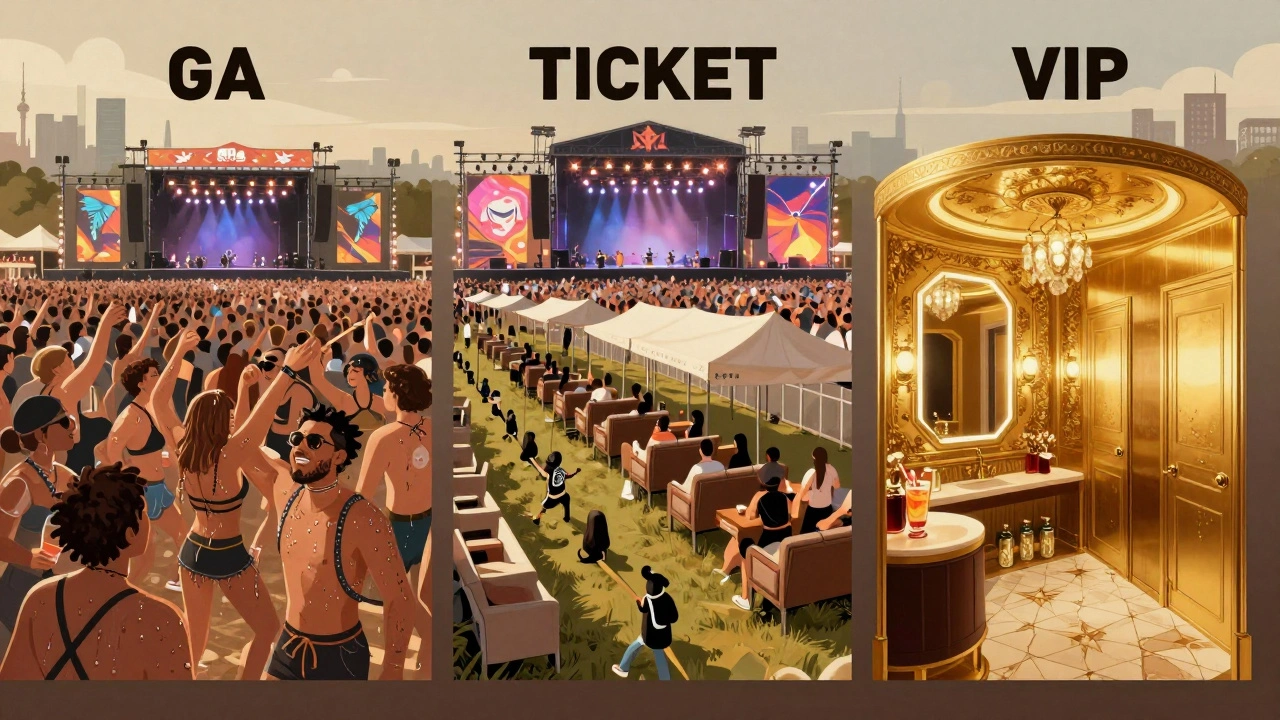
Not all tickets are created equal. Most festivals now offer at least three tiers:
Here’s the truth: unless you’re a diehard fan of a specific artist playing on the last day, VIP often doesn’t justify the cost. You’ll still miss half the acts because you’re stuck in the lounge. GA with smart planning gets you just as much music - and saves you hundreds.
That $350 ticket? It’s just the beginning. Festival budgets explode fast once you add the extras.
That $350 ticket? Add $300-$600 in extras, and you’re at $650-$950. That’s more than a monthly rent payment for some people. Know your limits before you click "Buy."
Festival costs aren’t random. They follow geography, scale, and demand.
Big U.S. festivals like Coachella, Bonnaroo, and Lollapalooza charge top dollar because they’re iconic. Coachella’s 2025 GA tickets started at $549. That’s more than most European festivals charge for the whole weekend.
In Europe, festivals like Glastonbury (UK) or Tomorrowland (Belgium) often run $250-$400 for a weekend pass - but add flights and hotels, and you’re back to $1,000+. In Latin America, festivals like Lollapalooza Chile or Rock in Rio Brazil offer better value: $150-$250 for GA, with food and transport way cheaper.
Even in New Zealand, where I live, festivals like Rhythm & Vines or Homegrown charge $180-$280 for a three-day pass. That’s one of the most affordable major festivals in the world. Why? Lower production costs, smaller crowds, and government support for local arts.
You don’t need to be rich to enjoy a festival. Here’s how real people cut costs and still have a blast:
One friend of mine went to a major U.S. festival last year. She bought her ticket during early bird, packed her own meals, slept in a borrowed tent, and took a bus from the next town. Total cost: $285. She saw 18 bands. She didn’t buy a single shirt. She still talks about it as the best weekend of her year.

At the end of the day, a festival ticket isn’t just for music. It’s for community. For dancing in the rain with strangers who become friends. For hearing a song live that changed your life. For sleeping under the stars after a full day of music.
Yes, prices are high. But they’re not arbitrary. Organizers pay for stages, sound systems, security, sanitation, and artist fees. A single headliner can cost $1 million+ to book. That’s not something you see on the ticket - but it’s why festivals exist.
So ask yourself: Is this festival worth the cost? Not because it’s trendy. But because it’s the one you’ve been waiting for. The one with the band you’ve loved since high school. The one where you’ll meet someone who feels the same way you do about music.
If the answer’s yes - then it’s worth it. Even if it takes saving up for months. Even if you skip coffee for two weeks. Because some experiences don’t come with a price tag. They come with a memory.
Yes, on average, ticket prices rose 8-12% in 2025 compared to 2024. Inflation, higher artist fees, and increased security costs are the main drivers. Major U.S. festivals like Coachella and Lollapalooza saw the biggest jumps - some GA tickets increased by over $50. But smaller regional festivals kept prices steady or even lowered them to stay competitive.
Most festivals have strict no-refund policies, especially for early bird or discounted tickets. Some offer ticket transfer options - you can sell or give your ticket to someone else. A few, like Bonnaroo, have insurance add-ons at checkout that cover cancellations due to illness or emergencies. Always check the fine print before buying.
Generally, no. VIP packages are designed for people who’ve been to festivals before and know exactly what they want. First-timers are better off sticking with General Admission. You’ll see the same music, meet the same people, and learn the ropes without spending $800. Save the VIP upgrade for your third or fourth festival - when you know which acts you can’t miss.
Yes, many do - especially the big ones. Ticketmaster, Eventbrite, and festival sites like Pitchfork Festival and Austin City Limits let you pay in installments. You usually pay 25-50% upfront, then monthly until the event. No interest, but you must pay in full by a set date. Miss a payment? Your ticket gets canceled. Always read the terms.
The cheapest way? Go local. Look for free community festivals, small-town events, or university-sponsored shows. In New Zealand, places like Wellington’s Winter Music Festival or Auckland’s Harbour Jazz Festival are free to attend. Bring your own food, ride a bike, and skip the merch. You can have a full day of great music for under $20 - if you’re smart about it.
Music festivals cost money. But they also give back. Memories. Connections. Songs you’ll hum for years. The guy next to you who told you about a band you never knew existed. The sunrise set you danced to with no shoes on.
Don’t compare your festival budget to someone else’s. Compare it to what you’d spend on a weekend getaway, a new phone, or a fancy dinner. If this festival means something to you - then it’s not a cost. It’s an investment in joy.


James Winter
U.S. festivals are ripped off. Canada gets way better deals. Why are we paying Australian prices for nothing?
Marissa Martin
People act like spending $900 on a festival is normal. Meanwhile, my cousin’s kid can’t afford insulin. This isn’t ‘investment in joy’-it’s capitalism eating your soul. And don’t even get me started on VIP lounges where people sip champagne while others sweat in the mud. Disgusting.
Aimee Quenneville
so like… i went to a fest last year and my friend brought a whole cooler of homemade lemonade?? and we just… sat in the grass?? and listened?? and it was the best?? like… who even needs merch??
Cynthia Lamont
Let me just say this: if you think bringing your own snacks is ‘saving money,’ you’re delusional. You’re still paying $300 for a ticket that funds corporate greed. And don’t even get me started on the fact that most festivals don’t even have enough porta-potties-let alone clean ones. This isn’t ‘community,’ it’s a glorified sweatbox with a stage. And you call that an ‘investment’? Please. You’re just another sucker who thinks a band’s logo on a shirt makes you cool.
Kirk Doherty
My buddy drove 12 hours for a three-day fest. Slept in his car. Ate peanut butter sandwiches. Saw five bands he loved. Spent $180 total. Best weekend ever.
Dmitriy Fedoseff
Music festivals are one of the last spaces where strangers become family. You don’t need VIP access to feel that. You just need to show up. The cost isn’t in the ticket-it’s in the time you spend away from screens, away from noise, away from everything that tells you you’re not enough. That’s the real price. And it’s priceless.
Meghan O'Connor
Typical. Someone writes a 2000-word essay about ‘investment in joy’ while ignoring that 78% of festival workers make minimum wage and sleep in vans. Also, ‘free community festivals’? In what universe? The only free ones are in backyards with three guys with guitars. And don’t even get me started on the grammar in this post-‘you’re looking at $50-$100 per day just to eat’? No comma after ‘day’? Amateur.
Morgan ODonnell
I read this whole thing and just felt… calm. Like, yeah, it’s expensive. But if it’s the one festival that makes you feel alive? Do it. Just don’t let anyone make you feel bad for choosing a different way. We all find our music in different places.