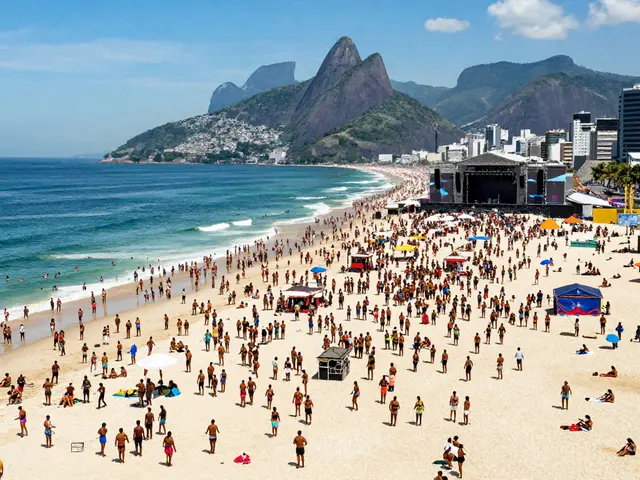

Ever walked out of a concert and heard someone say, "That was insane," but then pause like they’re searching for the right word to describe what happens next? You’re not alone. Everyone feels it - that strange, electric quiet right after the last note fades. But what’s it actually called? There’s no official sign, no dictionary entry, and no stage crew yelling, "Time for the post-concert phase!" Still, fans and insiders have a few terms that stick.
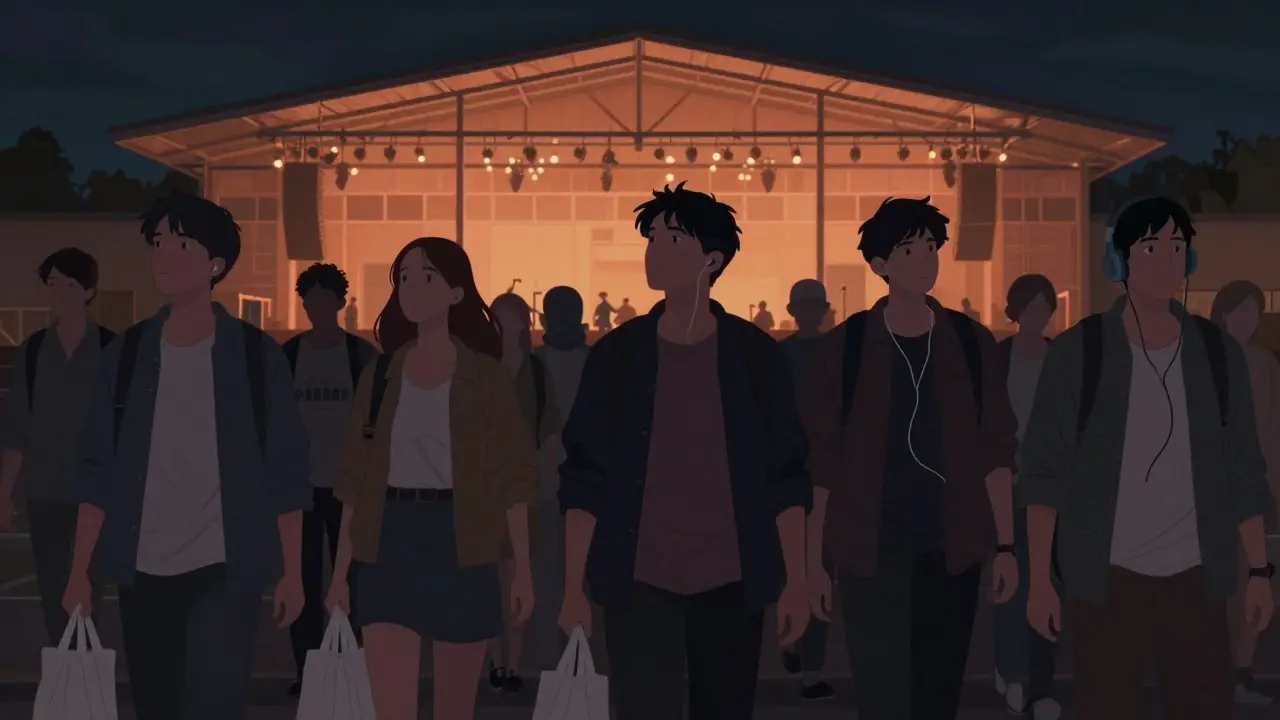
The most accurate term you’ll hear among regular concertgoers and industry folks is "post-concert experience." It’s not fancy, but it’s real. It covers everything from the slow shuffle out of the venue to the group texts that explode five minutes after you’re outside. This isn’t just about leaving - it’s about the emotional and physical transition from high-energy crowd to quiet reality.
Think about it: you’ve been screaming for two hours. Your voice is gone. Your ears are ringing. Your feet ache. You’re still buzzing, but now you’re standing in a line for the subway, or waiting for a ride-share that’s 17 minutes late. That moment - the quiet crash after the storm - is the post-concert experience. It’s not just a time of day. It’s a state of mind.
Unlike "encore," which has a clear definition (an extra performance after the main set), there’s no single word for what happens after. Why? Because it’s messy. It’s not one thing. It’s a chain of small moments:
There’s no single ritual, no universal tradition. So no single word caught on. But that doesn’t mean it’s not real.
Ask ten people what they call the time after a concert, and you’ll get ten answers:
None of these are official. But "comedown" and "post-concert experience" are the ones that stick because they capture the feeling.
There’s actual science behind why the post-concert feeling is so strong. When you’re in a crowd singing along to your favorite song, your brain releases dopamine, oxytocin, and endorphins. It’s like a natural high. Studies from the University of Oxford in 2019 showed that group singing during concerts increases pain tolerance and social bonding - more than just listening alone.
But when the lights come up? That chemistry drops fast. Your heart rate slows. Your adrenaline crashes. Your body says, "Okay, we’re not in survival mode anymore." That’s why you feel drained. You’re not just tired from standing. You’re tired from emotional overload.
That’s why the post-concert experience isn’t just about leaving a venue. It’s about your brain adjusting to normal life again.
Every fan has their own post-concert ritual. Some:
There’s no right way. But the pattern is clear: people don’t want the experience to end. They’re clinging to it.
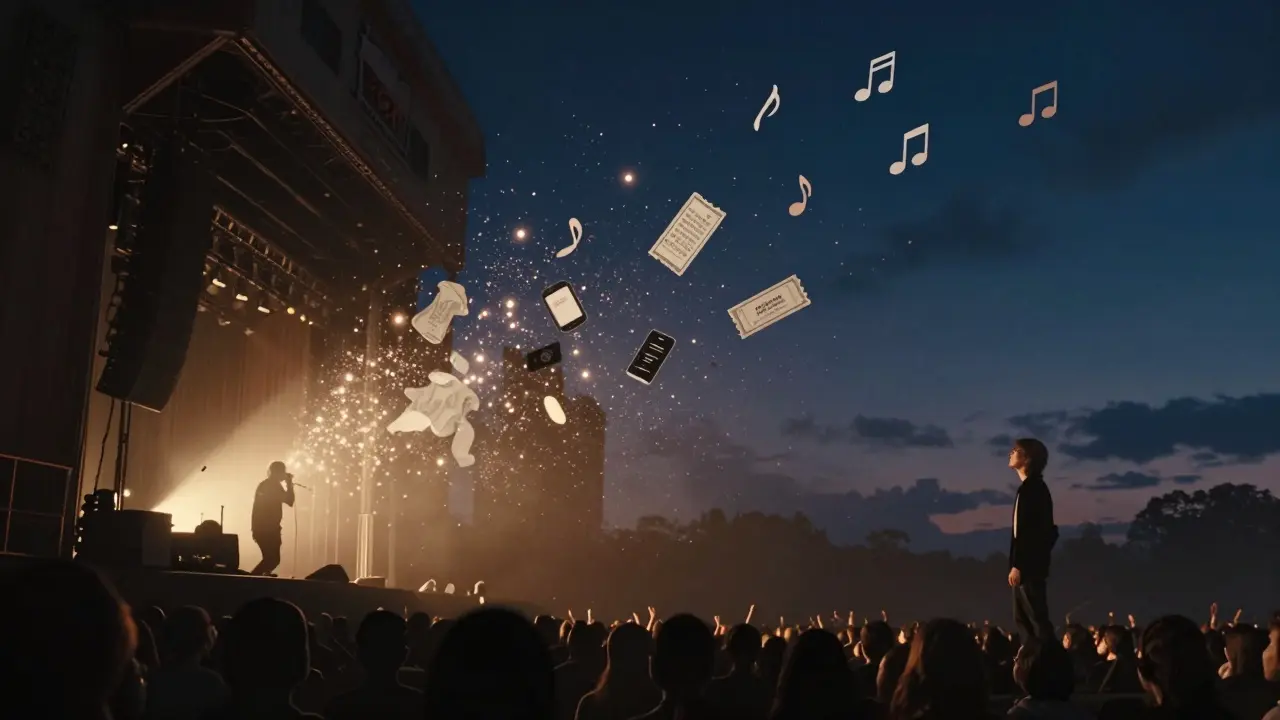
Smart artists and venues don’t just turn off the lights and call it a night. They design the post-concert experience on purpose:
They know: the concert doesn’t end when the last note plays. It ends when you finally close your eyes on the ride home.
There’s no one word. But if you had to pick the most accurate term, it’s "post-concert experience." It’s broad enough to cover the chaos, the quiet, the texts, the tears, the merch, the walk to the car. It’s not a moment. It’s a process.
And if you’re feeling that strange, heavy calm after the lights come up? You’re not weird. You’re not alone. You’re just in the middle of it.
Next time someone asks, "What’s it called after a concert?" - you can say: "It’s called the post-concert experience. And it’s the most important part."


Jen Becker
i just sat in my car for 20 minutes after the show crying. not because i was sad. because i didn’t want to go home.
Ryan Toporowski
this is so true 😭 i always buy merch even if i’m broke. it’s like holding onto the magic. 🎸✨
Samuel Bennett
post-concert experience? that’s not a term. it’s a corporate buzzword. real fans say "comedown." period. no hyphens. no capitalization. stop sanitizing culture.
Rob D
you think that’s deep? in russia, we call it "poslekoncertnyi kray" - the after-show wasteland. you don’t just leave a concert. you crawl out of a psychic vortex. americans need a word for everything. we just feel it.
Franklin Hooper
the term is "afterglow." everything else is noise. and you’re overcomplicating a simple emotional residue. no need for paragraphs. just silence. and the echo.
Jess Ciro
they’re all lying. the real term is "the government shutdown." they don’t want you to know concerts are a psyop. dopamine is weaponized. the walkout? it’s brainwashing. they want you addicted to the high so you keep buying tickets.
saravana kumar
this article is overly verbose. in india, we do not have such terms. we just say "after concert." why invent complexity? music is emotion. not a marketing report.
Tamil selvan
Thank you for this thoughtful, deeply researched piece. It is truly remarkable how the human psyche responds to collective auditory stimulation. The physiological and psychological aftermath is not merely anecdotal - it is empirically verifiable. I am moved.
Mark Brantner
omg yes i just drove around for 45 mins listening to the setlist on repeat and my phone died. i was like "this is my life now". also i cried in the parking lot. again. this is my 3rd time this month. help.
Kate Tran
i left my coat at the venue. didn’t even notice till i got home. went back at 2am. security guy just nodded. "yeah. we see you every time."
Anuj Kumar
this whole thing is fake. no one cares. you just want attention. go outside. touch grass.
Christina Morgan
i’ve started making post-concert playlists for every show. not the songs they played. the songs i felt in my chest after. it’s my way of holding the moment. sometimes i cry listening to them. i don’t care.
Kathy Yip
i think the real term is "the quiet after the storm". not because it’s poetic. because it’s true. you’re not tired from standing. you’re tired from being alive too hard for too long.
Rocky Wyatt
you all are so dramatic. it’s just a concert. you don’t need a term. you need therapy.