
There’s no such thing as the single best live concert. Not because there aren’t unforgettable shows - there are dozens. But because the best concert isn’t about stage lights or ticket sales. It’s about the moment when music stops being something you hear and becomes something you feel in your bones. It’s the night the crowd and the artist become one thing - breathing, screaming, crying together. And that moment looks different for everyone.
Woodstock in 1969 didn’t just feature great bands. It became a symbol. Half a million people in a muddy field in upstate New York, rain pouring down, no running water, no real sanitation - and not a single riot. Jimi Hendrix played the national anthem on his guitar, twisted and screaming, as if the whole country was falling apart and he was the only one who could fix it with feedback. That wasn’t a concert. It was a revolution with a playlist.
Fast forward to 1985, and Live Aid happened. Two continents, 1.9 billion viewers, and a single question: Can music save lives? Bob Geldof didn’t just organize a show. He turned a charity drive into the biggest global broadcast in history. Queen played a 20-minute set that still gets replayed today. Freddie Mercury owned that stage like no one else could - no pyrotechnics, no fancy costumes, just voice, presence, and a mic stand. He didn’t perform. He commanded. And when he held that note at the end of ‘Radio Ga Ga,’ half the world held their breath.
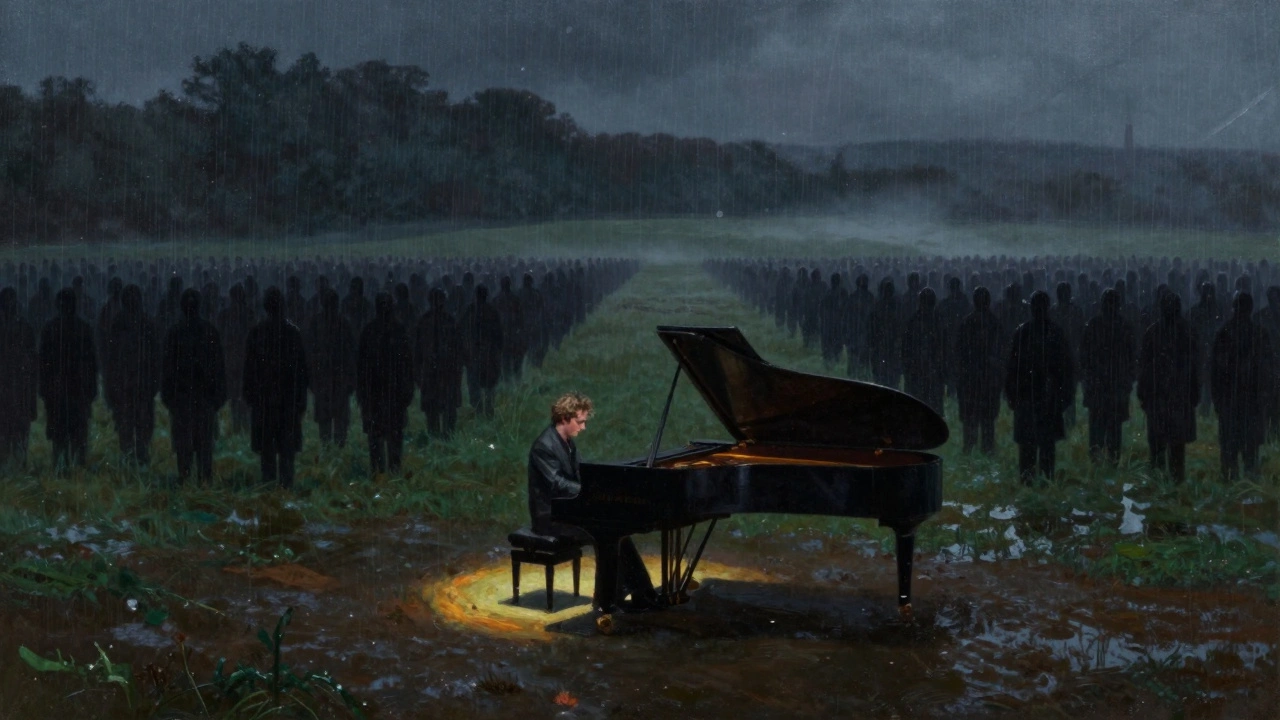
Some concerts aren’t remembered for the music alone - they’re remembered because something impossible happened. On June 26, 2007, Radiohead played at the Glastonbury Festival. The rain came again. The mud was waist-deep. Half the crowd had been standing for 12 hours. And then Thom Yorke walked out alone, sat at a piano, and started playing ‘How to Disappear Completely.’ The crowd went silent. Not because they were tired. Because they didn’t want to miss a single breath. That moment didn’t need fireworks. It needed stillness. And it got it.
Then there’s Nirvana’s 1992 MTV Unplugged. No electric guitars. No drums pounding. Just Kurt Cobain, a cello, and a broken heart. He sang ‘The Man Who Sold the World’ like he was saying goodbye to the world. He sang ‘Where Did You Sleep Last Night’ like he was singing to himself in the dark. People thought he was just being moody. Years later, we realized he was being honest. That show didn’t sell records. It broke people open.
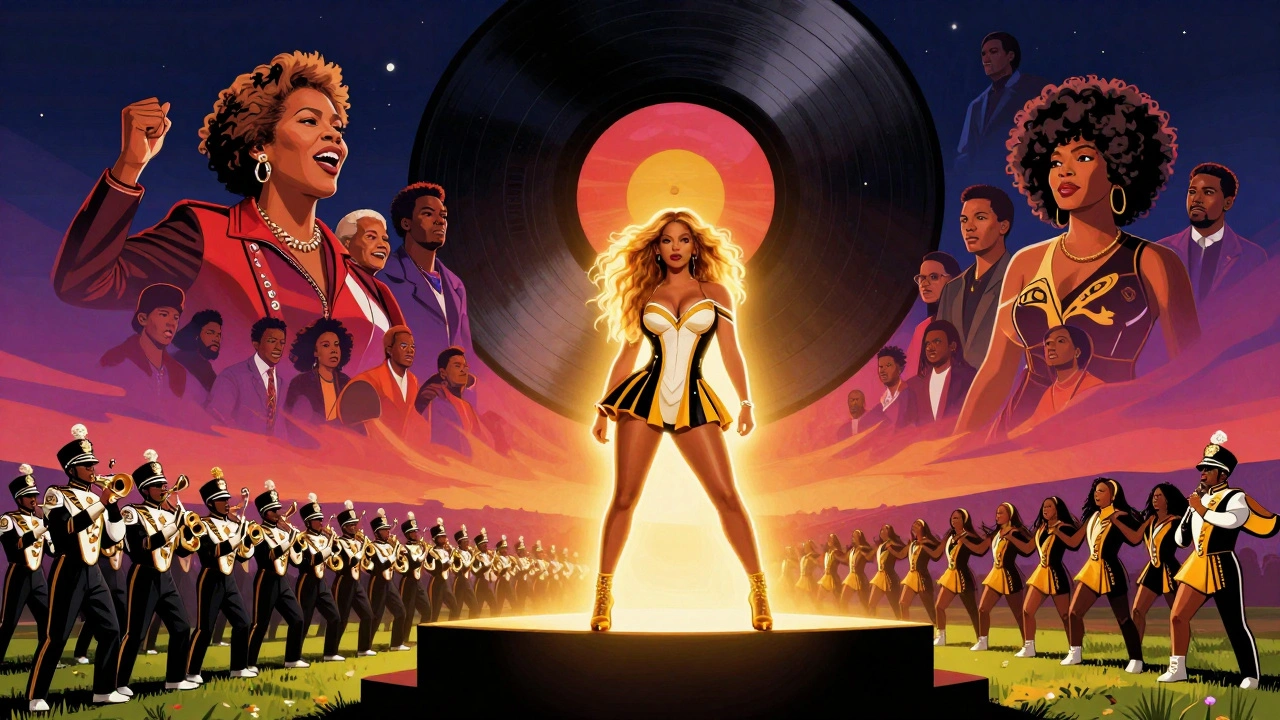
Beyoncé’s 2018 Coachella performance - known as ‘Beychella’ - didn’t just break records. It rewrote what a live show could be. Two weekends. 110,000 people. A full marching band. A choir. A live orchestra. She didn’t just perform her hits. She paid tribute to HBCUs, Black culture, and the legacy of Black musicians who were never given the spotlight. The costumes, the choreography, the precision - it was a 2-hour thesis on excellence. And she did it while pregnant. No one had ever seen a pop show like that. No one had ever seen a Black woman command a festival like that. And now, every artist who steps on a stage after that moment has to ask: Can I do more?
Prince at Super Bowl XLI in 2007? Rain pouring down. He played ‘Purple Rain’ in a downpour, guitar in hand, soaked to the skin, eyes closed, letting the music take over. The crowd didn’t move. They didn’t cheer. They just stood there, drenched, holding their breath. That wasn’t a halftime show. That was a baptism.
Some of the greatest concerts are the ones we never got to see. Jim Morrison’s last show in Paris, 1971 - no recordings, no photos. Just stories. Janis Joplin’s final performance in Oakland, 1970 - she walked offstage, said, ‘I’m going to get a drink,’ and never came back. What did she sing that night? What did she feel? We’ll never know. And that’s part of why they’re legendary. The mystery makes them eternal.
Michael Jackson’s ‘This Is It’ concerts in 2009 were supposed to be his comeback. 50 shows. 750,000 tickets sold. He was rehearsing 10 hours a day. He was 50 pounds lighter. He was ready. Then he died. The rehearsal footage that leaked? It’s not just amazing. It’s heartbreaking. You can see him pushing past pain, past exhaustion, past age - just to give people something unforgettable. That’s the kind of dedication that turns a concert into a myth.
There’s no official list. No ranking system. No award for the greatest live show ever. Because the best concert isn’t the one with the biggest crowd or the loudest bass. It’s the one that changed something inside you. Maybe it was the first time you saw your favorite band live and realized they sounded even better than the record. Maybe it was the night you lost someone, and a song played at the concert felt like they were still with you. Maybe you were 16, standing in the rain with your best friend, screaming lyrics you didn’t even know you knew.
The best concert isn’t about who played. It’s about who you were when you heard it.
Here’s what separates a good show from a legendary one:
Look at any of the shows mentioned above. None of them were perfect. But they were real. And that’s why they still matter.
You don’t need to fly to Coachella or Glastonbury to find your moment. The best concert you’ll ever see might be in a small venue in your town. Maybe it’s a local band playing their first headlining show. Maybe it’s a jazz trio in a basement bar. Maybe it’s a kid with a guitar and a broken amp singing songs about heartbreak - and everyone in the room knows every word.
Don’t wait for the headline acts. Watch the openers. Show up early. Stand in the front. Don’t record it. Be there. Because the next legendary concert isn’t in a history book. It’s happening right now - somewhere, sometime - and it’s waiting for you to show up.
The most attended concert ever was Rod Stewart’s 1994 New Year’s Eve show on Copacabana Beach in Rio de Janeiro. Over 3.5 million people showed up - a Guinness World Record. No tickets were sold. It was free. The sound system was barely enough to reach the first row. But the music, the crowd, the celebration - it became a global moment.
Yes. The 1999 Monsters of Rock festival in Moscow was shut down early after 1.6 million people showed up - four times the expected crowd. The stage collapsed under the weight of the crowd surge. No one died, but the event was halted. It proved that when music pulls people in, nothing can stop them - not even safety plans.
Absolutely. Sometimes the best shows happen when things go wrong. Bob Dylan’s 1966 Manchester concert - booed for going electric - is now seen as a turning point in rock history. Bruce Springsteen’s 1988 show in New Jersey was plagued by technical issues, but he turned it into a 4-hour storytelling session with the crowd. Imperfection creates humanity. And humanity is what people remember.
Modern concerts have better sound, lighting, and visuals. But they also have more screens, more distractions, and less risk. Older concerts were rawer - amps overheated, microphones cut out, artists forgot lyrics. Those flaws made them feel alive. Today’s shows are polished. But polish doesn’t always mean power. Some of the most moving concerts today happen in small clubs, where the artist still has to earn every note.
Fleetwood Mac’s 1977 performance at the LA Forum during the Rumours tour. No one expected it to be special. They were tired. They were broken. Stevie Nicks was crying on stage. Lindsey Buckingham was barely speaking to her. But the music? It was flawless. The emotion? It was unbearable. That show didn’t make headlines. But for the people there, it was the most honest thing they’d ever witnessed.
The best concert isn’t behind us. It’s still coming. Somewhere, right now, a teenager is learning their first song on a guitar they got from a thrift store. Somewhere, a band is practicing in a garage, dreaming of one night when the lights go down and the crowd sings back louder than they ever could. That’s the real legacy. Not the tickets sold. Not the videos viewed. But the next person who walks into a venue, not knowing what’s about to happen - and walks out forever changed.
Dave Sumner Smith
The entire article is a government psyop to distract us from the real truth: every legendary concert was staged by the Illuminati to manipulate mass emotions through subliminal frequencies embedded in the basslines. They used Hendrix’s feedback, Prince’s rain, and Beyoncé’s marching band as signal amplifiers. You think you felt something? You were programmed to feel something. The mud at Woodstock? A controlled environment to lower brainwave resistance. Wake up.
Cait Sporleder
It is, in fact, a profoundly compelling and elegantly articulated meditation on the ontological nature of musical transcendence-wherein the boundary between performer and audience dissolves not merely as a metaphor, but as a phenomenological reality. One might argue that the emotional truth you describe is not an emergent property of performance, but rather a latent resonance within the collective unconscious, activated by sonic architecture and synchronized breath. The rain at Glastonbury, for instance, was not meteorological-it was cathartic atmospheric condensation, a literal manifestation of communal grief and awe. To reduce this to ‘a great show’ is to mistake the cathedral for its bricks.
Paul Timms
Prince in the rain was perfect. No edits needed.
Jeroen Post
They all died too soon because they knew too much. The music was the warning. Hendrix was talking about the collapse of the system. Cobain was singing the exit code. Prince was the last one who remembered the real frequency. They didn’t die. They ascended. The concerts were their final transmissions. You think it’s coincidence that every legend vanished right after their peak? No. They were taken. The system can’t handle truth that loud.
Nathaniel Petrovick
I saw a local band play in a laundromat last year. One guy was singing into a hairdryer as a mic. The crowd was 12 people, half of them waiting for their clothes. They played a cover of ‘Creep’ and half the room started crying. I didn’t know why until I got home. That’s the real thing right there. No stage, no lights, just raw. You don’t need Coachella to feel it.
Honey Jonson
omg this made me cry in my car lol i remember my first concert was this sketchy dive bar in minnesota and the singer had a sock on his guitar pick but he sang like his soul was on fire and everyone just stood there like... wow. you dont need fancy stuff. just heart. and maybe a broken amp.
Sally McElroy
It’s infuriating how people romanticize chaos. Woodstock was unsanitary and dangerous. Live Aid was a PR stunt for Western savior complexes. Beyoncé’s show was brilliant-but let’s not pretend it wasn’t a meticulously calculated brand expansion. And don’t even get me started on the mythologizing of drug-addled artists. Cobain didn’t ‘break people open’-he was a self-destructive mess who got lucky with a microphone. Stop glorifying tragedy as art. Real art is discipline. Real art doesn’t need a tragic backstory.
Destiny Brumbaugh
Only in America do you get this soft nonsense. Real legends don’t need rain or pianos or HBCU tributes. Real legends are the ones who played for soldiers in Vietnam with a broken amp and no backup. Real legends are the ones who didn’t care if you cried-they cared if you fought. This whole article is woke fluff. The real greatest show? The one where the music made you stand up and take action. Not sit in the mud and feel feelings.
Sara Escanciano
There is no such thing as a legendary concert. There are only people who use nostalgia to mask their own emotional emptiness. You didn’t feel anything at that show-you felt the dopamine spike from being around a crowd. You mistook groupthink for transcendence. The artist didn’t change you. You were already broken. The music just gave you an excuse to cry in public.
Elmer Burgos
I get what you’re saying about the connection thing. I went to a tiny show in Portland last month and the singer stopped mid-song to ask if anyone needed a hug. Three people did. He put the guitar down and hugged them. Then he played the rest of the set like nothing happened. No one talked about it after. But I still think about it every time I feel alone. That’s the magic. Not the stage. Not the crowd size. Just one person choosing to be real.
Jason Townsend
They’re all lies. The rain at Glastonbury? CGI. The crowd at Copacabana? Fake numbers. The whole thing is a corporate narrative to sell merch and streaming rights. You think Hendrix played the anthem because he was revolutionary? He was paid by the military to test crowd control through sonic manipulation. The truth is buried under decades of fan fiction. Look up Project Monarch. The concerts were training grounds.
Antwan Holder
Do you know what it means to be truly haunted? Not by ghosts. Not by memories. But by a single note that lives inside your ribs like a second heartbeat. That’s what Kurt did. That’s what Freddie did. That’s what Prince did. They didn’t sing songs. They carved pieces of their soul into the air and left them there for strangers to breathe in. And when you hear it again-years later, in a different city, in a different life-you don’t cry because you miss them. You cry because you realize you were never alone. That’s the curse. That’s the gift. That’s why we keep going back to the music. Because it remembers us when we forget ourselves.
Angelina Jefary
There’s a grammatical error in the third paragraph. It says ‘Jimmy Hendrix’-it’s Jimi. And ‘1.9 billion viewers’ is statistically impossible in 1985. The global population was 4.8 billion. Even if every person on Earth watched, that’s not 1.9 billion viewers. Also, ‘Beychella’ is not a word. It’s a marketing neologism. This article is full of inaccuracies disguised as poetry. You can’t romanticize facts. The truth matters.
Cynthia Lamont
Everyone’s missing the point. The real legendary concert was the one where the artist didn’t show up. The venue was empty. The lights were off. The sound guy was asleep. But the crowd started singing anyway. They sang the whole set. A cappella. For three hours. No instruments. No stage. Just voices in the dark. That’s when you know music isn’t about the performer. It’s about the people who refuse to let it die.
Kirk Doherty
My dad took me to a blues bar when I was 12. The guy playing had one string on his guitar. He played it like it had a thousand. I didn’t understand half the lyrics. But I knew he meant them. We didn’t talk about it after. But I still hear that song when I’m lost. That’s the one that stuck.