

When someone asks for a synonym for concert, they’re usually trying to describe a live music event without repeating the same word. But not all alternatives are created equal. The right word depends on the setting, the music style, the size of the crowd, and even the vibe you’re going for.
The most straightforward replacement for concert is live show. It’s casual, widely understood, and used by fans and venues alike. You’ll see it on ticket sites, social media posts, and posters. A band playing at a small bar? That’s a live show. A stadium headliner? Still a live show.
Performance is broader but still accurate. It works whether it’s a rock band, a jazz quartet, or a classical pianist. It’s the go-to word when you want to focus on the act itself, not the crowd or venue. A musician might say, “I have three performances this week,” meaning they’re playing in different places - each one could be called a concert, but “performance” covers them all.
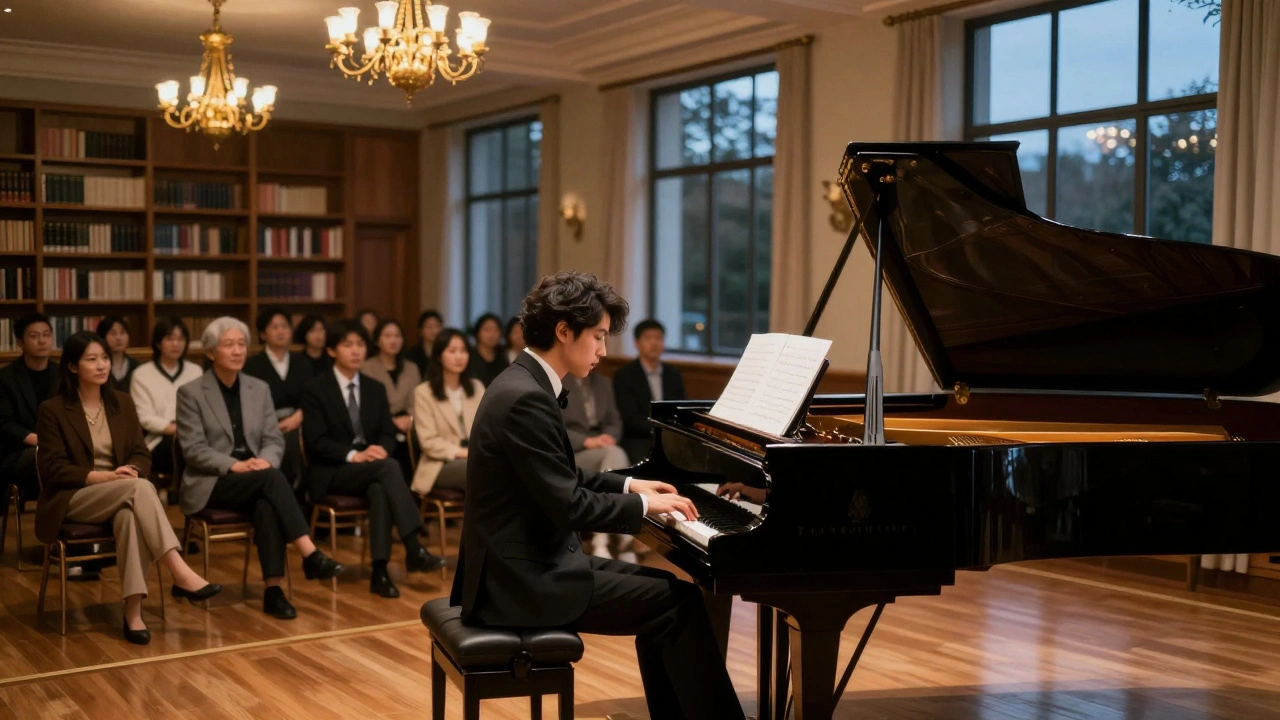
Recital is specific. You don’t call a Metallica show a recital. But if a classical pianist plays Chopin in a small hall, or a violin student performs for their teacher and parents, that’s a recital. It’s often associated with formal training, soloists, and acoustic settings. Think of it as the quiet cousin of the concert.
Event is the most general. It’s safe, but vague. “There’s a music event downtown tonight” could mean anything from a street fair with a DJ to a symphony orchestra. It’s useful when you don’t know the details - or when you’re writing a calendar listing and need a catch-all term.
Here’s how to pick the right one:
For example:
You might hear words like gig, show, or outing thrown around. These aren’t formal synonyms, but they’re part of everyday language.
Gig is slang, mostly used by musicians and industry folks. “We’ve got a gig at the Blue Note Friday.” It’s informal, energetic, and often implies a smaller, less polished setting. It’s not wrong - it’s just casual.
Show alone is often used interchangeably with live show. “We’re going to the Foo Fighters show.” It’s common, but it can also mean a TV program or theater act. Context matters.
Outing is rarely used for music. You might say, “It was a nice evening outing,” if you’re referring to the whole experience - dinner, walking to the venue, the music, drinks afterward. But you wouldn’t say, “Let’s go to an outing.” That doesn’t work.
Choosing the right word isn’t just about sounding smart. It’s about setting the right expectation.
If you’re writing a ticket description, calling a classical piano night a “concert” is fine. But if you call it a “rock concert,” people will show up expecting loud amps and mosh pits. That’s a mismatch.
Same goes for reviews, social media, or event listings. A jazz trio playing in a library doesn’t need to be marketed as a “concert.” “Evening Jazz Performance” sounds more accurate - and more appealing to the right crowd.
Even in casual conversation, precision helps. If you tell a friend, “I went to a recital,” they’ll picture a quiet room, a soloist, and polite applause. If you say, “I went to a concert,” they’ll imagine lights, crowds, and a setlist with 15 songs. That’s the difference.
Some terms vary by region. In the UK, “gig” is far more common than in the US. In classical circles, “recital” is standard everywhere. In Australia, “live music” is often used as a catch-all phrase - “There’s live music every Friday at the pub.”
But globally, concert and performance are understood in almost every language. That’s why they’re the safest choices for international audiences.
There’s no perfect one-word substitute for concert. That’s because concerts aren’t just about music - they’re about atmosphere, scale, and shared experience. A concert can be intimate or massive, planned or spontaneous, ticketed or free. No single word captures all that.
That’s why we have options. Use the word that matches the mood, the music, and the moment.
No. A recital is typically a solo or small-group performance, often classical or educational, with a formal tone. A concert is broader - it can include bands, large ensembles, and popular music, and usually has a more energetic, crowd-focused atmosphere.
Yes, especially in casual use. “I saw the Rolling Stones last night - what a show!” sounds natural. But avoid it in formal writing, since “show” can also mean a TV program or theater production.
A gig is slang for a paid musical performance, often short-term or in smaller venues. A concert is a more formal term that can refer to any size of live music event. All gigs are concerts, but not all concerts are called gigs - especially big arena tours.
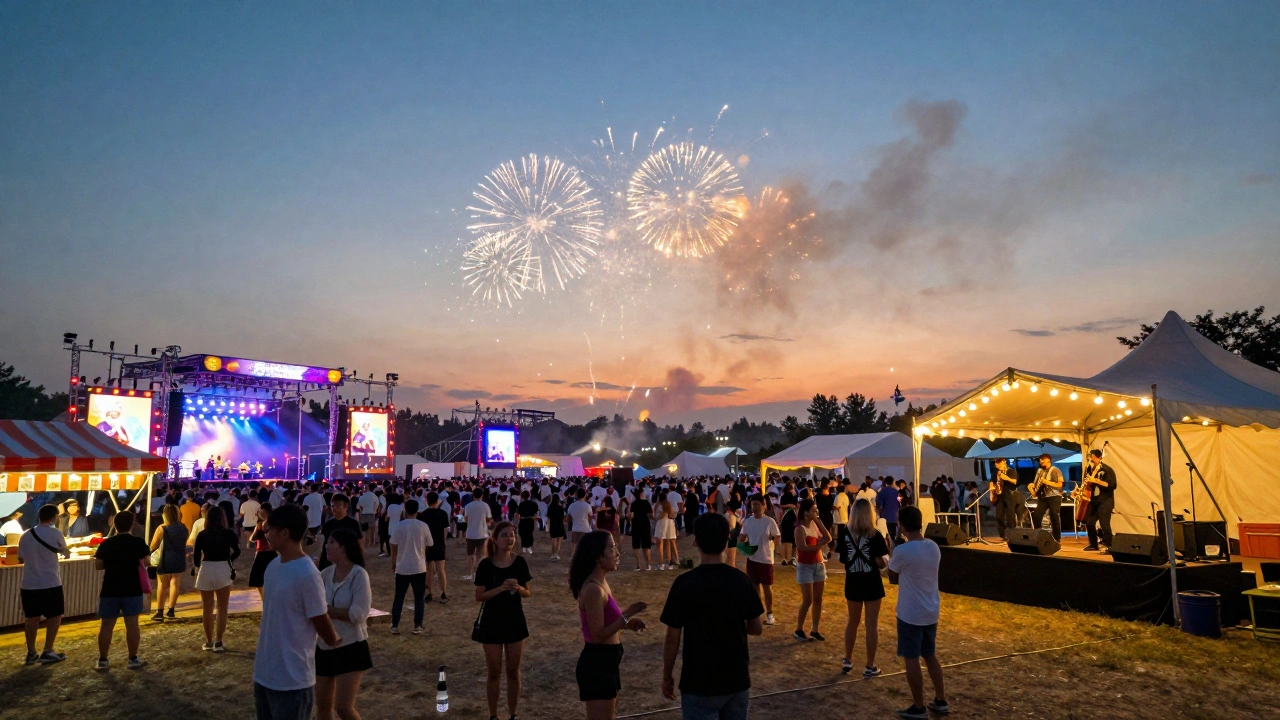
A festival is a collection of multiple concerts or performances over one or more days. It’s not a single concert - it’s a series of them, often with different artists, stages, and ticketing. So you’d say, “I went to a music festival,” not “I went to a concert.”
It’s often about size and setting. A solo artist playing in a 200-seat theater feels more personal than the same artist in a 20,000-seat stadium. Even the same band can feel different depending on the venue - a basement bar gig versus a radio station live session. The intimacy comes from proximity, not the name you give it.

mani kandan
The way you broke down 'concert' versus 'performance' versus 'recital' is actually beautiful. I never realized how much nuance lives in these words until now. In India, we often say 'live show' for everything from qawwali to metal, but this makes me want to be more precise. It’s like choosing between 'dinner' and 'feast' - the word sets the table before you even sit down.
Also, 'gig' feels so alive in Mumbai’s indie scene - it’s not just slang, it’s culture. A band playing a rooftop with no PA system? That’s a gig. A symphony at the National Centre? That’s a concert. The energy changes with the word.
Thanks for this. I’m going to start using 'recital' again for my cousin’s piano nights. She’ll appreciate the respect.
Sheetal Srivastava
How utterly pedestrian. You treat 'concert' as if it’s a dictionary entry and not a sacred vessel of sonic transcendence. 'Live show'? Please. That’s what your cousin’s karaoke night at the mall is called. A true performance is a ritual - the silence before the first note, the way the air thickens, the collective breath held in a 300-seat hall as a pianist lingers on a suspended chord. You reduce art to marketing copy.
And 'gig'? That’s a dirty word for those who can’t distinguish between art and commerce. If you’re not using 'recital' for any solo classical act, you’re not just wrong - you’re spiritually tone-deaf. This entire piece reads like a corporate content farm wrote it after a 10-minute Google search.
Bhavishya Kumar
While your intent is commendable, several grammatical inconsistencies undermine the authority of your argument. For instance, the phrase 'you’ll see it on ticket sites, social media posts, and posters' lacks parallel structure - 'ticket sites' is plural, 'social media posts' is plural, but 'posters' is not preceded by a determiner consistently. Also, 'It’s the go-to word' is colloquial to the point of being unprofessional in formal discourse.
Furthermore, the use of 'music event' as a catch-all is problematic. 'Event' is a semantic vacuum. It implies nothing about artistic merit, audience intent, or cultural context. A concert is not an 'event' - it is an artistic occurrence. Please revise for lexical precision.
ujjwal fouzdar
What if the word 'concert' is just a cage? We name things to control them. We say 'recital' to make classical music feel safe. We say 'gig' to make rock feel rebellious. But the truth? It’s all just humans screaming into the void together - whether it’s a violinist in a library or a metalhead headbanging in a parking lot.
Language is a mirror. We don’t choose the word - the word chooses us, based on how much we’re willing to feel. That’s why 'concert' feels empty sometimes - because we’ve drained it of its soul by overusing it.
Maybe we don’t need synonyms. Maybe we need silence before the first note. Maybe that’s the real word we’ve forgotten.
Anand Pandit
This is such a helpful breakdown! I’ve been trying to explain the difference between a recital and a concert to my friends for years and never had the right words. Now I can just send them this. Also, the point about 'show' being ambiguous is spot-on - I once told someone I went to a 'show' and they asked if I meant the new Netflix series. Oops.
And yes, 'gig' is absolutely the heartbeat of our local music scene. My buddy’s band plays gigs every Thursday at the café downtown - no tickets, just donations and chai. It’s not a concert, it’s a community. Thanks for capturing that.
Reshma Jose
OMG yes I’ve been saying 'live show' for everything and I didn’t even realize it was actually correct. My sister’s jazz band plays these tiny venues and I always called it a concert but now I get it - it’s a show. And 'recital' for piano? Yes. My niece’s recital last week was so quiet you could hear a pin drop. No one clapped too loud. It was sacred.
Also 'gig' is 100% the word for underground stuff. I’m telling my friends now. Thanks for this - I feel smarter already.
rahul shrimali
Concert show gig recital all the same really just music happening
People overthink words too much
Just go listen
Eka Prabha
Of course you’re telling people to use 'performance' instead of 'concert' - because who benefits from that? The corporate venues, the ticketing platforms, the cultural gatekeepers who want to sanitize live music into digestible, branded experiences.
Did you know 'recital' was once used only for state-sponsored classical events in colonial India? And now you’re normalizing it as if it’s neutral? This isn’t about language - it’s about erasing the subversive energy of the concert. The crowd, the chaos, the unscripted scream - that’s where the truth lives.
They want you to say 'event'. They want you to say 'show'. They don’t want you to say 'concert' - because then you might remember what it really means: resistance.
Bharat Patel
There’s something deeply human about how we name experiences. A concert isn’t just music - it’s the shared breath before the first chord, the way strangers become a single body when the bass hits. We need words to hold that feeling, but maybe we’re clinging to them too tightly.
What if 'concert' is just one shadow of the same light? 'Gig' is the shadow of rebellion. 'Recital' is the shadow of discipline. 'Performance' is the shadow of artistry. And 'event'? That’s the shadow of forgetting.
Maybe the real synonym isn’t a word - it’s the silence between the notes.
Bhagyashri Zokarkar
okay so i was at this thing last week and i swear i thought it was a concert but my friend said it was a recital and i was like wait what but then i realized ohhhhh the piano lady was just playing alone and everyone was like super quiet and i felt so dumb for not knowing the difference before
also why do people even care so much about words like this like its not like the music changes right like if you like the song you like the song
but also i guess if you say concert and its actually a recital then people might bring beer and that would be weird so yeah maybe its important
ps i think i spelled recital wrong
Rakesh Dorwal
Why are we letting Western terms dictate how we describe Indian music? We have our own words - 'sangeet samārōh', 'kala kshetra', 'nādānubhav' - but we bow to 'concert' and 'gig' like they’re superior. This isn’t about language - it’s about cultural surrender.
Recital? That’s a British term for colonial-era piano lessons. Gig? That’s colonial slang from the 1920s. Even 'performance' is a translation of 'pradarshana' - but we don’t use our own words.
Let’s reclaim our vocabulary. A sitar recital isn’t a 'recital'. It’s a 'raga sādhana'. A bhangra party isn’t a 'concert'. It’s a 'lās'. Stop importing labels. Start speaking truth.
Vishal Gaur
Man this whole thing is kinda long but i think i got it? So concert is big crowd and loud and show is like same thing but shorter word and gig is like when bands play in bars and recital is like when people play piano alone and its quiet? yeah i think thats right
also i think the festival thing is important cause i went to one last year and it was like 8 bands over 2 days and i kept saying i went to a concert and everyone was like no its a festival
and the part about the library jazz thing? that was good. i never thought about how the venue changes the word
also i think you missed 'jam session' but that's probably too niche
anyway thanks for writing this i learned something even though i skimmed half of it
Nikhil Gavhane
I’ve been playing bass in small venues for over a decade and I never thought about how the word I use changes how people show up. Calling it a 'gig' invites friends who want to hang out. Calling it a 'concert' invites people who want to witness something. Calling it a 'performance' invites those who want to understand.
This post made me realize I’ve been unconsciously choosing the word based on who I want in the room. That’s powerful.
Thank you for giving language to something I’ve felt but never named.
mani kandan
Actually, I think you nailed it with 'performance' being the most flexible - but I’d add that in India, we often say 'musical evening' for classical or fusion events. It’s not in your list, but it’s widely used. And it carries warmth. 'Evening' implies time, space, ritual - not just sound.
Also, I just realized - we don’t say 'concert' for temple kirtans or qawwali at dargahs. Those are 'satsang' or 'mehfil'. The word carries the soul of the space. Maybe that’s the real lesson: the word isn’t just a label. It’s a doorway.
Sheetal Srivastava
How predictable. You want to 'reclaim' language with 'musical evening'? That’s just another sanitized, middle-class euphemism. You’re not honoring tradition - you’re diluting it. The word 'satsang' belongs to devotion, not cultural tourism. Don’t romanticize the sacred to make it palatable for your Instagram captions.
Real music doesn’t need your polite euphemisms. It needs the rawness of 'concert'. The chaos. The noise. The truth. Not your 'evening'.