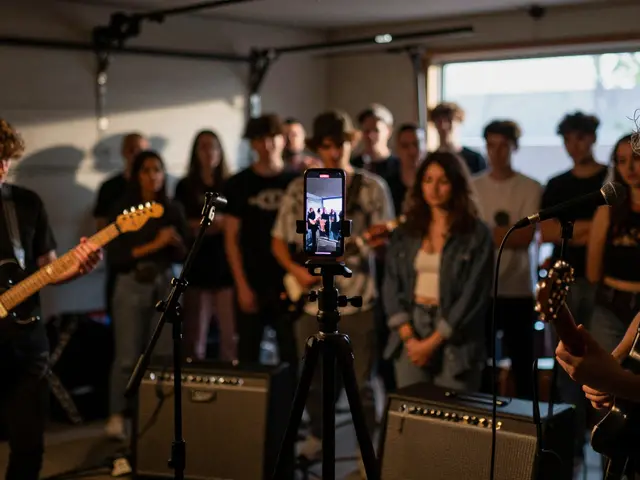

The landscape of live streaming platform options has shifted dramatically since the pandemic forced venues online. By March 2026, choosing the right home for your concert broadcast isn't just about picking a logo; it’s about balancing latency, monetization control, and audience reach. You need a service that treats music seriously, not just another vertical video feed. If you are an artist, venue manager, or label exec, the stakes are high. A dropped frame during the climax of a ballad kills momentum. A payment gateway failure before the drop-off means lost revenue. We are past the "try anything" phase. Now we need precision.
Let’s cut through the noise. There is no single “best” tool for every scenario. A grassroots DJ set has different needs than a sold-out arena tour. The decision hinges on three pillars: how you handle the money, how fast the signal gets to the viewer, and where the audience actually hangs out. Understanding these variables prevents wasted budget on enterprise tools you don’t need or consumer apps that crash under load.
Before signing a contract or uploading a first test stream, you need to understand the technical floor beneath the interface. Most modern services rely on the RTMP Protocol (Real-Time Messaging Protocol), which sends video from your camera to a server. This remains the industry standard even in 2026. However, the bottleneck is rarely your upload speed anymore; it is often the Content Delivery Network (CDN) chosen by the platform. A poor CDN results in buffering, and buffering equals churning viewers.
For professional concerts, latency is the silent killer. If your stream lags behind a fan watching a TV rebroadcast, they might tune out. Standard adaptive bitrate streaming takes seconds to minutes to adjust quality. For live performances, sub-five-second latency is the sweet spot. Some platforms offer WebRTC technology, which pushes data faster but costs more in bandwidth fees. You need to ask providers explicitly if their "low latency" mode is standard or an upsell feature.
YouTube Live is a free video hosting platform known for its massive global audience. It offers the broadest reach because the search engine dominance drives traffic automatically. Also known as YouTube Broadcast, it supports 4K resolution and has integrated merchandise shelves. The framework’s algorithm favors retention, so high-quality audio tracks significantly boost recommendation chances. Companies and independent artists alike use YouTube for archival value. Once the show ends, the VOD (Video On Demand) becomes a permanent asset that generates passive revenue for years. However, monetization through tickets is tricky unless you partner with specific ticketing integrators.You have likely heard that organic reach on social media has plummeted. That trend holds true in early 2026. While platforms like Instagram Live allow you to broadcast instantly to followers, the limitations are severe. Video quality caps lower than 1080p, and once the session ends, the memory disappears unless you save it manually to Reels. This ephemeral nature works for short Q&A sessions or behind-the-scenes content, but not for a full album release performance.
Twitch offers a chat-first culture. It is excellent for building community loyalty. Gamers are used to tipping via Bits or subscriptions. Musicians can replicate this model with Super Chats. The downside is brand safety perception. While improved significantly, some corporate sponsors still hesitate to attach logos to a Twitch URL. Furthermore, Twitch’s audio licensing rules can sometimes trigger automated takedowns if you play copyrighted backing tracks. This risk makes it less viable for radio-ready releases.
| Platform | Latency | Ticketing Support | Best Use Case |
|---|---|---|---|
| YouTube Live | High (15-30s) | Limited (via partners) | Broad reach, archives |
| Stage+ | Low (<5s) | Native Integration | Paid ticketed events |
| Vimeo Livestream | Medium (5-10s) | Yes (Custom) | Brand control, B2B |
| Dacast | Customizable | Fully Integrated | Enterprise venues |
Looking at dedicated solutions changes the game. Vimeo Livestream is popular among established brands because it allows white-labeling. You own the domain, the analytics, and the user data. They do not sell your viewer’s email address to advertisers. For artists wanting to build a direct mailing list for future tours, this ownership is vital. The cost is higher monthly, but the customer lifetime value increases significantly.
Selling tickets digitally requires a secure gateway that handles tax compliance globally. This was a major pain point in 2020 when vendors tried to reinvent the wheel. Today, specialized streaming services integrate directly with major ticketing processors like Ticketmaster or Dice. When using a platform like Stage+, the ticket sale triggers the unlock code. There is no manual entry required. This automation reduces the human error factor where someone might forget to grant access.
Pricing models vary. Some platforms take a percentage per ticket (usually 3% to 10%). Others charge a flat subscription fee ($200 to $1,000 per month depending on concurrency). If you run weekly streams, the flat rate pays off faster. Occasional events favor the pay-per-view model. Be wary of "hidden" e-commerce fees on credit card processing. Always request a total cost of ownership breakdown before committing.
Analytics matter here, too. Knowing exactly where a ticket buyer came from helps refine marketing spend. General platforms like Facebook obfuscate this data to protect privacy. Dedicated event tools provide granular heatmaps showing where users clicked, how long they stayed, and what device they used. This data informs future stage setups and lighting choices.
Choosing the software dictates your hardware needs. Most professional workflows utilize OBS Studio or vMix for signal switching. These tools connect to the platform via an RTMP key. If you are unfamiliar with scene composition, consider hiring a remote production operator. An amateur mix looks unprofessional regardless of the hosting platform. Audio engineering remains the priority. Viewers tolerate slightly grainy video in low light but abandon streams with distorted audio immediately.
Bandwidth stability is non-negotiable. Upload speeds should consistently exceed 6 Mbps for 1080p streaming. Fiber connections are preferred over cable due to consistent ping times. Have a backup 5G hotspot tethered to your computer ready to switch instantly if the primary line fails. This redundancy ensures the show goes on, even if the local internet provider drops a router.
In New Zealand and globally, public performance rights apply differently online than offline. Streaming a song to thousands of people triggers mechanical royalties. Services like SoundExchange handle the backend collection in the US, but international synchronization rights are complex. Dedicated platforms usually require you to confirm you hold the rights to perform. If you are remixing others' work, you cannot assume fair use covers commercial streaming. Legal departments review contracts thoroughly to prevent strikes that could ban your channel entirely.
Here is how to narrow it down quickly. Start with your goal.
Test your chosen solution with a small gathering before the big night. Verify the mobile app experience specifically. Many fans watch on phones, not desktop browsers. Ensure captions are generated accurately for accessibility compliance, which is becoming mandatory for many public funding grants.
By late 2026, AI-driven moderation is expected to become standard across top tiers. This means fewer bots and better comment management. However, algorithms change. Relying solely on one platform is risky. Build an aggregation strategy. Stream simultaneously to multiple destinations using tools that support multi-streaming. This distributes your risk. If one service goes down or alters terms, your other feeds keep running.
Finally, remember that streaming is a content medium, not a destination. People come for the music, stay for the convenience, and leave if the tech fights them. Keep the UX frictionless. A simple click to enter, clear audio, and instant playback is worth more than flashy graphics that lag.
For stable 1080p streaming, you need a consistent upload speed of at least 6 Mbps. Ideally, aim for 10 Mbps to handle overhead and encoding fluctuations. Download speed is less critical but should remain above 25 Mbps for smooth operation.
Not directly. YouTube does not natively support paid membership access to live streams for general creators. You would need to integrate third-party ticketing partners or use a paid event pass system externally to gate the stream link.
Ensure you have Public Performance Rights clearance. Use royalty-free libraries for background loops or register your original compositions with a Performing Rights Organization (PRO). Avoid playing unreleased tracks owned by others without explicit permission.
Yes, as of 2026, RTMP remains the dominant protocol for sending video to servers. While HTTP Live Streaming (HLS) is common for delivery to viewers, RTMP is the most reliable method for the uploader to push the signal initially.
Most modern CDNs buffer briefly to maintain playback. However, if the source disconnects for more than ten seconds, viewers usually see an error. Having a redundant 5G connection or a second stream path is recommended for critical broadcasts.
Bhavishya Kumar
The distinction between adaptive bitrate streaming protocols is often overlooked by marketing teams who prioritize visual fidelity over data integrity which leads to significant buffering during peak hours when server load increases substantially
One must consider how RTMP interacts with modern CDNs because legacy infrastructure cannot handle the sheer volume of simultaneous connections required for high definition broadcasts without compromising audio synchronization standards
It is imperative that we address these technical limitations before committing to any enterprise solution otherwise the investment becomes wasted capital due to poor performance metrics
We ignore the fundamental architecture at our own peril especially when monetization relies entirely on viewer retention rates which drop precipitously when lag exceeds acceptable thresholds
There is no substitute for reliable connectivity in this sector
ujjwal fouzdar
But what does reliability truly mean in a world where connection itself is becoming a luxury commodity rather than a right
We discuss bandwidth while the human experience of shared emotion through music gets diluted by pixels and frame rates
Are we preserving art or merely digitizing nostalgia for a generation that forgets how to listen?
The technology advances yet the soul remains stagnant in this digital purgatory
I fear we optimize for numbers instead of moments
Anand Pandit
For most mid-sized venues switching to a hybrid cloud model offers the best balance between cost and performance stability
Testing different encoders locally before going live helps you identify bottlenecks early on
Don't forget to check regional compliance laws if your audience spans multiple borders since data sovereignty rules vary wildly between jurisdictions
This approach saves headache later
Bhagyashri Zokarkar
I really dont think the hybrid cloud stuff is the main issue its more about how the people running the shows dont know the code
They just sign contracts without reading the fine print about the bandwidth costs and then they cry when the bill comes
It makes me so sad to see artists losing money because of these big corporations controlling everything
You cant trust them to tell you whats best for your career growth and revenue streams
They want you dependent on their ecosystem forever so you cant leave even if things go wrong
I remember when my cousin tried youtube last year and his stream dropped every time someone typed in chat
The servers were probably overloaded with fake traffic bots designed to inflate view counts for advertisers
Why would anyone want to use a service that manipulates viewership numbers like that it feels so dishonest
I spend too much time thinking about why these platforms hide these things from normal users like us
Its definitely a conpiracy to keep independent musicians down financially so they sign better deals
Plus the quality caps on social apps ruin the artistic vision completely when lighting matters for the vibe
We need something built by creatives not corporate suits who dont care about the music industry anymore
It is heartbreaking watching real talent struggle while the algoritm favors viral trends over genuine skill and hard work
I wish there was a way to bypass all these middlemen and talk directly to fans without fees taking half the income away
Until then we just have to be super careful about which tools we choose or end up broke
This whole situation leaves me feeling exhausted just thinking about the future of live performaces
Someone needs to fix this broken system before it destroys another generation of performers
rahul shrimali
Just use stage plus its cheaper and works faster than the rest
Eka Prabha
You are ignoring the metadata harvesting embedded within standard RTMP handshakes which allows providers to track viewer behavioral patterns beyond the session duration
The encryption methods used by major platforms are proprietary and subject to backdoor access under various intelligence community mandates
We must scrutinize the audit logs provided by these entities before assuming any level of privacy security for sensitive transaction data
Furthermore the CDN routing often passes through surveillance hubs in geopolitical zones hostile to civil liberties ensuring constant monitoring of dissenting audiences
This infrastructure dependency creates a single point of failure for censorship and manipulation that is rarely disclosed in terms of service documents
Reshma Jose
stop obsessing over backdoors nobody actually reads the logs anyway just pick the one with the lowest latency
i tried all the big ones last month and only two had actual payment gateways that didnt fail instantly
if you want to host a sold out show you need reliable ticketing integration not theoretical privacy guarantees
money talks louder than conspiracies when the doors are locked for five years after the show ends
focus on selling tickets instead of worrying about imaginary government agents tracking your pixel view counts
Bharat Patel
Technology is just a vessel for the message we wish to convey and the medium chosen shapes the audience interpretation fundamentally
Perhaps we should ask what kind of concert experience we are trying to foster rather than chasing specification lists
Intimacy might require lower resolution but higher interactivity whereas spectacle demands broadcast quality and archival permanence
Both have merit depending on the artist intent
Rakesh Dorwal
We should look at domestic solutions more closely since foreign hosting introduces unacceptable data risks for our cultural industries
Local platforms understand our market dynamics far better than american corporations obsessed with shareholder value
It is essential to protect our intellectual property and fan data within sovereign boundaries for national security reasons
I am friendly about this but the truth is clear regarding global tech hegemony attempting to monopolize our creative output
We must support homegrown infrastructure development