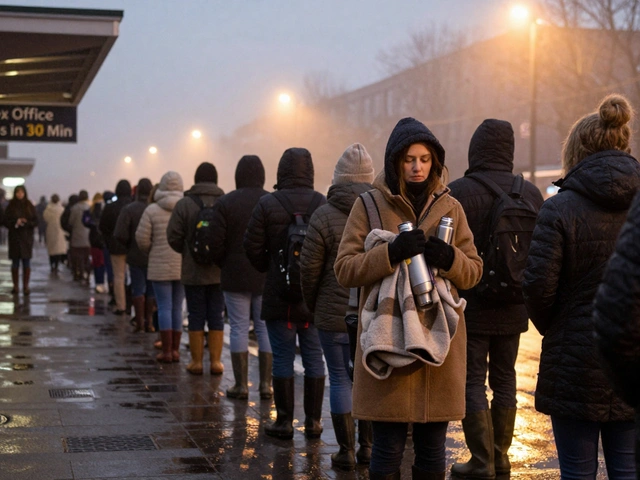

It’s 2026, and you’ve been saving for months to see your favorite band at Coachella or Lollapalooza. You finally hit ‘buy’-only to see the final price: $897. That’s not just the ticket. That’s fees, parking, service charges, and a mandatory merch bundle. You’re not alone. Millions of fans are asking the same question: why are music festival tickets so expensive?
Most people assume the band pockets the big chunk. They don’t. For a $400 ticket, the artist might get $50 to $80-sometimes less. The rest? It’s split between promoters, venues, ticketing platforms, security, insurance, and logistics. In 2025, Live Nation reported that only 17% of gross ticket revenue went directly to artists. The rest covers the massive machine behind the show.
Big festivals like Tomorrowland or Glastonbury spend $20 million to $50 million just to set up. That’s temporary stages, power grids, sanitation, medical tents, fencing, and staff. A single stage can cost $1.2 million to build and tear down. You’re not just paying for the music-you’re paying for a temporary city.
When you buy a ticket through Ticketmaster, StubHub, or Eventbrite, you’re not just paying the face value. There are service fees, processing fees, delivery fees, facility fees, and sometimes even “convenience” fees. A $150 ticket can end up costing $210 before you even leave the house. Some platforms hide these fees until the final step. That’s called price discrimination-making the base price look low so you feel like you’re getting a deal.
It’s not just the platforms. The companies that run the ticketing systems take a cut. Ticketmaster’s parent company, Live Nation, controls over 70% of the U.S. concert market. That kind of monopoly means they can set fees without competition. In 2024, the U.S. Department of Justice sued Live Nation for anti-competitive practices. The case is still ongoing, but the result? Prices keep climbing.
Robots don’t sleep. They don’t have jobs or kids. They don’t care about your favorite song. They’re programmed to buy hundreds of tickets the second they go on sale. Then they flip them on secondary markets for 3x, 5x, even 10x the original price.
In 2023, a study by the University of Toronto found that 85% of tickets for top-tier festivals were bought by bots within the first 90 seconds. That’s not fans. That’s automated systems. And when real people can’t get tickets at face value, they turn to resale sites. That’s where the real price surge happens.
Some artists try to fight back. Taylor Swift’s team used verified fan programs and CAPTCHAs. Beyoncé’s team partnered with Ticketmaster to limit resale. But these systems are expensive to build and still get hacked. Scalpers adapt faster than anyone can patch them.
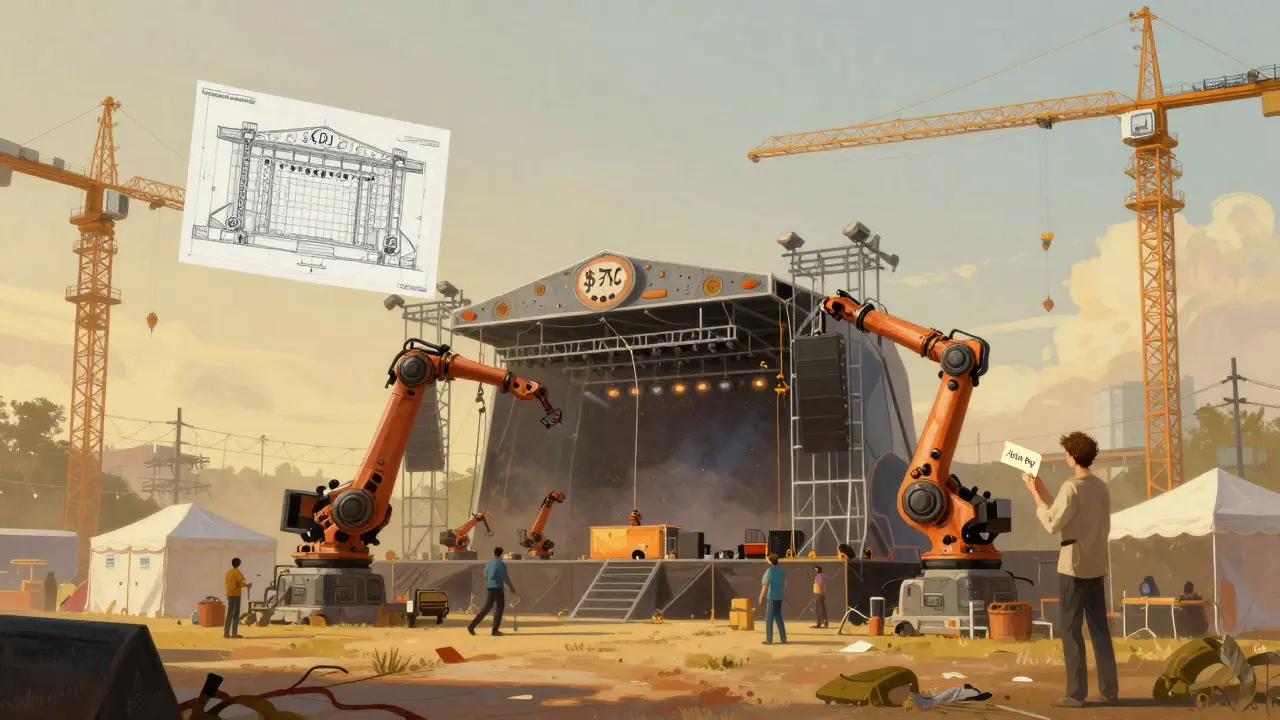
Today’s festivals aren’t just bands on a stage. They’re full sensory experiences. Fireworks synced to bass drops. Holograms of dead artists. Drones forming logos in the sky. LED walls that stretch 200 feet high. All of this costs money.
Imagine a headliner like Billie Eilish or Kendrick Lamar. Their stage design might include 300 moving lights, 12 custom speakers per side, pyrotechnics, and a moving platform that lifts the artist 30 feet in the air. That’s not just lighting-it’s engineering. Each of these elements is rented, transported, and operated by specialists. A single drone show can cost $150,000. And that’s just for one night.
These aren’t luxuries anymore. Fans expect them. If you don’t have lasers and smoke machines, you’re not seen as “big” anymore. The pressure to outdo last year’s show pushes costs-and prices-higher.
After incidents at festivals in 2021-2023-crowd crushes, heat deaths, drug overdoses-organizers had to overhaul safety plans. Now, every event needs:
In 2025, the average festival spent 18% of its budget on safety and insurance. That’s up from 6% in 2019. Insurance premiums alone jumped 200% after three major lawsuits. That’s money you’re paying for-whether you’re aware of it or not.

You see Coca-Cola logos everywhere. So does Bud Light, Samsung, and Amazon Prime. You might think these sponsors lower your ticket price. They don’t. In fact, they make it worse.
Sponsors pay for branding, not tickets. They want exclusivity. So instead of selling $10 water bottles, you’re forced to buy $7 ones from the sponsor. You can’t bring your own snacks. You can’t even use your own power bank-some festivals now ban non-branded chargers.
And here’s the kicker: sponsors often demand that their products be the only ones sold. That means higher prices, fewer choices, and no competition. You’re not just paying for the music-you’re paying for the corporate takeover of the experience.
Some artists are trying new models. Phoebe Bridgers started selling $25 tickets to small venues and letting fans pay extra if they could. The band Grimes offered free tickets to people who brought a friend who’d never been to a show. In New Zealand, local acts like L.A.B. run “pay-what-you-can” nights at community halls.
There are also fan-owned platforms like Resonate and Musician’s Guild that cut out the middlemen. They take only 10% fees-far less than Ticketmaster’s 30%. But they’re small. They don’t have the scale to book arenas or festivals.
Some cities are stepping in. In 2025, Seattle passed a law capping ticket fees at 15%. London banned resale above face value. Australia introduced a “fan-first” ticketing registry. But these are exceptions. Most places still let corporations run the show.
Until there’s real competition in ticketing, until artists reclaim control, until governments regulate fees and bots-prices will keep rising. The music industry isn’t broken. It’s working exactly as designed. Profit over access. Scale over intimacy. Spectacle over song.
But you still have power. You can choose to support smaller venues. You can boycott festivals that don’t cap fees. You can demand transparency. You can join fan coalitions pushing for change. The music won’t disappear. But if we don’t push back, it’ll only be for those who can afford it.
Ticket fees rise because the companies running them-like Live Nation and Ticketmaster-have near-total control over the market. With little competition, they can raise service fees, processing charges, and facility fees without fear of losing customers. Inflation and higher safety costs also play a role, but the biggest driver is lack of regulation and monopolistic practices.
Artists make far more from tickets than streaming. A single stream on Spotify pays about $0.003. To earn $1,000, an artist needs over 330,000 streams. A single concert ticket, even after fees, can net them $50-$100. That means one show can equal millions of streams. That’s why touring is the main income source for most musicians-even the big ones.
Yes-but they’re small. Local festivals like Wellington’s Rhythm & Vines (in New Zealand) or Iceland’s Secret Solstice cap prices and limit fees. Some European festivals like Primavera Sound in Barcelona offer tiered pricing based on income. In the U.S., events like Noise Pop in San Francisco and SXSW’s indie showcases keep tickets under $100. They rely on community support, not corporate sponsorships.
You can try. Buy directly from the venue or artist’s website-never through resale platforms like StubHub unless it’s your only option. Use verified fan programs if available. Avoid “premium” seating upsells. And always check the final price before confirming. Some sites hide fees until the last step. If you see a price that seems too good to be true, it probably is.
It’s a pricing trick. Multi-day passes look like a deal, but they’re designed to lock you in. A single-day ticket might cost $150, but a three-day pass is $350-not $450. That makes you feel like you’re saving $100. But in reality, you’re paying more per day if you only want to go once. It’s psychology: people assume bundled = cheaper, even when it’s not.


Rubina Jadhav
This is insane. I can't believe I'm paying more for a ticket than my monthly rent.
Shivani Vaidya
The structural imbalance in revenue distribution is deeply concerning. Artists are the creative core, yet they receive negligible compensation while corporate intermediaries extract disproportionate value. This model is unsustainable and ethically indefensible.
sumraa hussain
Bro. I went to a festival last year and the drone show literally made me cry. But then I saw the final bill and cried harder. Like… we’re paying for a sci-fi movie but getting stuck in a mud pit with overpriced kombucha.
Raji viji
Oh wow, another ‘poor fan’ sob story. Let me guess-you also think Netflix should be free because you ‘like’ shows? The market works, dumbass. If you can’t afford it, don’t go. Stop whining and get a second job. Or better yet-stream. At least then you’re not paying for 2000 security guards to watch you dance in a field.
Rajashree Iyer
We are not just buying tickets-we are purchasing fragments of collective euphoria, temporary utopias carved out of concrete and chaos. The price isn’t for the music-it’s for the soul-space we rent from the universe for three days. And isn’t that worth more than a car payment?
Parth Haz
While the pricing structure is problematic, it’s important to recognize the immense logistical complexity behind these events. Safety, infrastructure, and production have grown exponentially. Perhaps the solution lies not in outrage, but in supporting grassroots alternatives and advocating for transparent fee structures.
Vishal Bharadwaj
lol you guys think ticketmaster is the problem? Try looking at the real villain-fans. If people stopped buying resale tickets, scalpers would vanish overnight. But nooo, everyone wants to pay $2000 for a ‘VIP’ spot next to a guy who’s already drunk at 11am. You’re the reason this is broken.
anoushka singh
Wait so you’re saying I can’t bring my own water? That’s wild. I just bought a $12 bottle of Fiji and now I feel like a traitor to the planet. Also, why is the merch so ugly? I paid $70 for a shirt that says ‘I Survived Lollapalooza 2026’ and it’s 100% polyester. 😅
Jitendra Singh
I’ve been to three small local festivals in Bangalore where tickets were under $30 and the vibe was better than Coachella. The artists were passionate, the crowd was respectful, and no one was screaming at a drone. Maybe we need to stop chasing spectacle and start valuing connection.
Madhuri Pujari
Ohhh so now it’s ‘corporate takeover’? Let me guess-you also think Starbucks should serve free coffee because ‘it’s a human right’? You’re not a fan-you’re a entitled consumer with zero understanding of supply chains. The fees are high because YOU keep paying them. Stop being a victim and start being a smart buyer. Or don’t go. Either way, stop pretending you’re the moral center of this.
Sandeepan Gupta
Good breakdown. One thing missing: the rise of AI-driven dynamic pricing. Algorithms now adjust ticket prices in real time based on demand, browser history, and even how long you’ve hovered over the ‘buy’ button. That’s why your friend pays $50 less for the same seat. It’s not just fees-it’s manipulation. Always check prices on multiple devices and clear cookies before purchasing. Also, consider buying single-day tickets on the day of the event-sometimes last-minute drops happen.