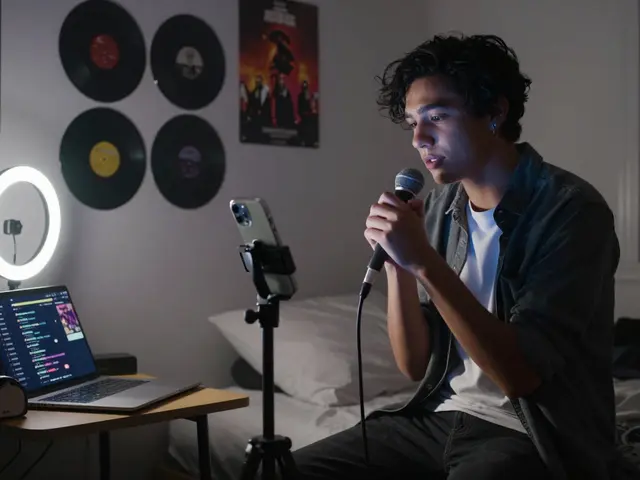

Ever sat on your couch at 2 a.m. and wondered if you could actually watch your favorite band play live - right now - without leaving home? The answer isn’t just yes. It’s streaming - and it’s more reliable, higher quality, and more accessible than ever before.
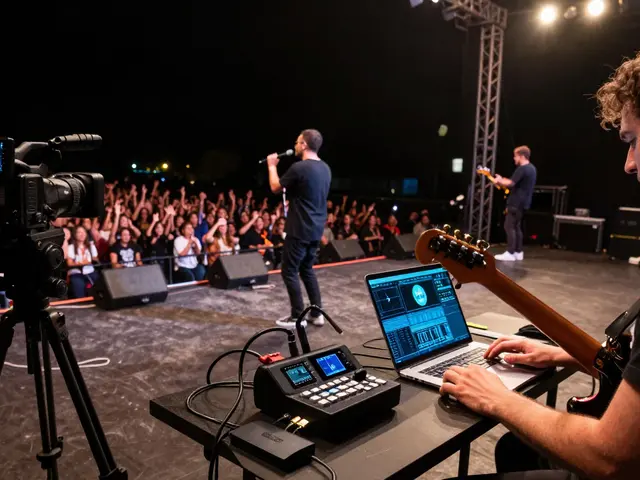
Streaming a live concert isn’t magic. It’s a mix of professional gear, internet infrastructure, and platform partnerships. When a band plays a show in London, Tokyo, or Nashville, multiple camera rigs capture the performance. Audio engineers pull clean signals directly from the mixing board. Those feeds get encoded into high-definition streams and sent over dedicated fiber-optic lines to platforms like YouTube, Twitch, or dedicated concert services like Live Nation’s Veeps.
Most major tours now include a streaming option. In 2025, over 72% of top 100 touring artists offered official livestreams, up from 41% in 2020. That’s not a niche perk anymore - it’s standard. You don’t need to be at the venue. You just need a stable internet connection, a screen, and a subscription or ticket.
There are three main ways to stream a live concert today:
You can’t just search "Taylor Swift live" on YouTube and expect to find a real-time feed. Most official streams are gated. You need to buy or subscribe. But once you do, you’re watching the same feed the crowd in the front row sees - just with better sound quality.
Don’t expect a shaky phone video. Modern concert streams use 4K HDR video with 24-bit audio. Many now support Dolby Atmos. That means you hear the snare crack, the bass thump, and the crowd roar in 3D space - like you’re wearing headphones at the show.
Latency? It’s down to 5-12 seconds. That’s faster than a live TV broadcast. If you’re watching with friends, you can sync up your own speakers and shout along - you’ll be almost in real time.
Some platforms even let you rewind. If you missed a guitar solo? Pause, rewind 30 seconds, and catch it again. That’s not possible at a physical concert.
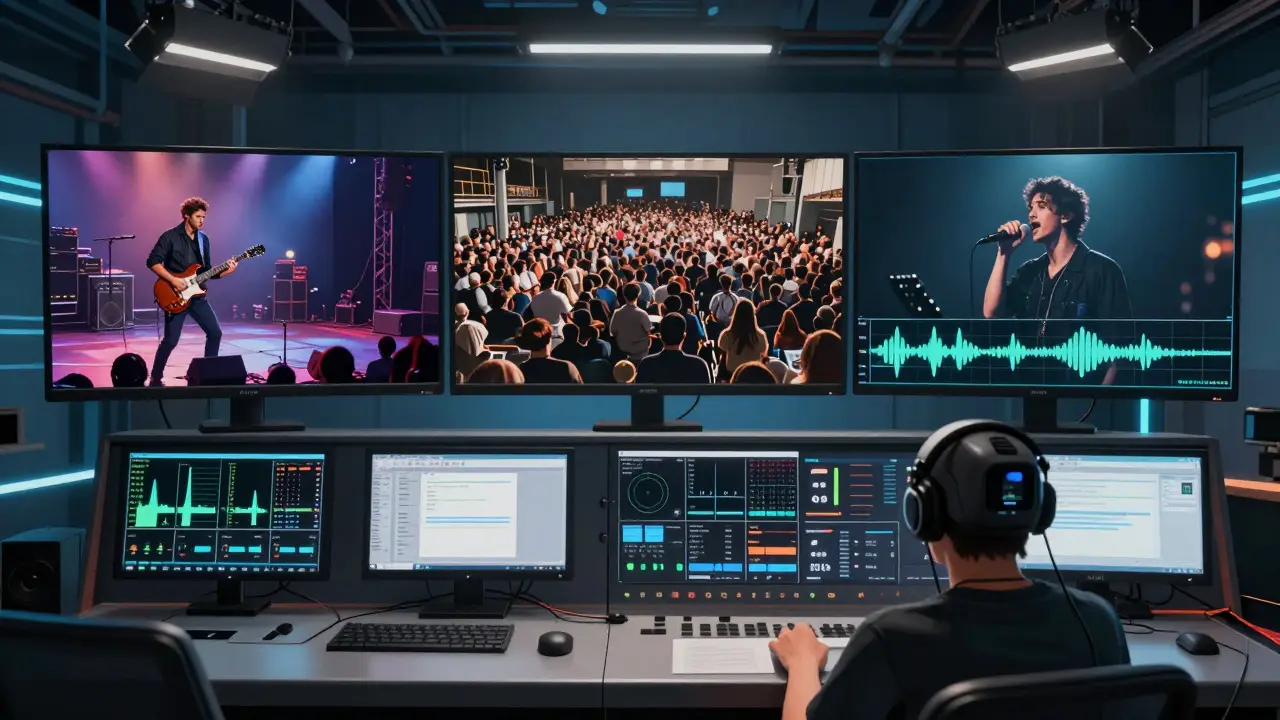
You don’t need a home theater. But you do need:
Pro tip: Turn off background apps. Streaming uses bandwidth. If your kid is downloading a game while you’re watching the concert, you’ll see pauses. Pause downloads. Prioritize the stream.
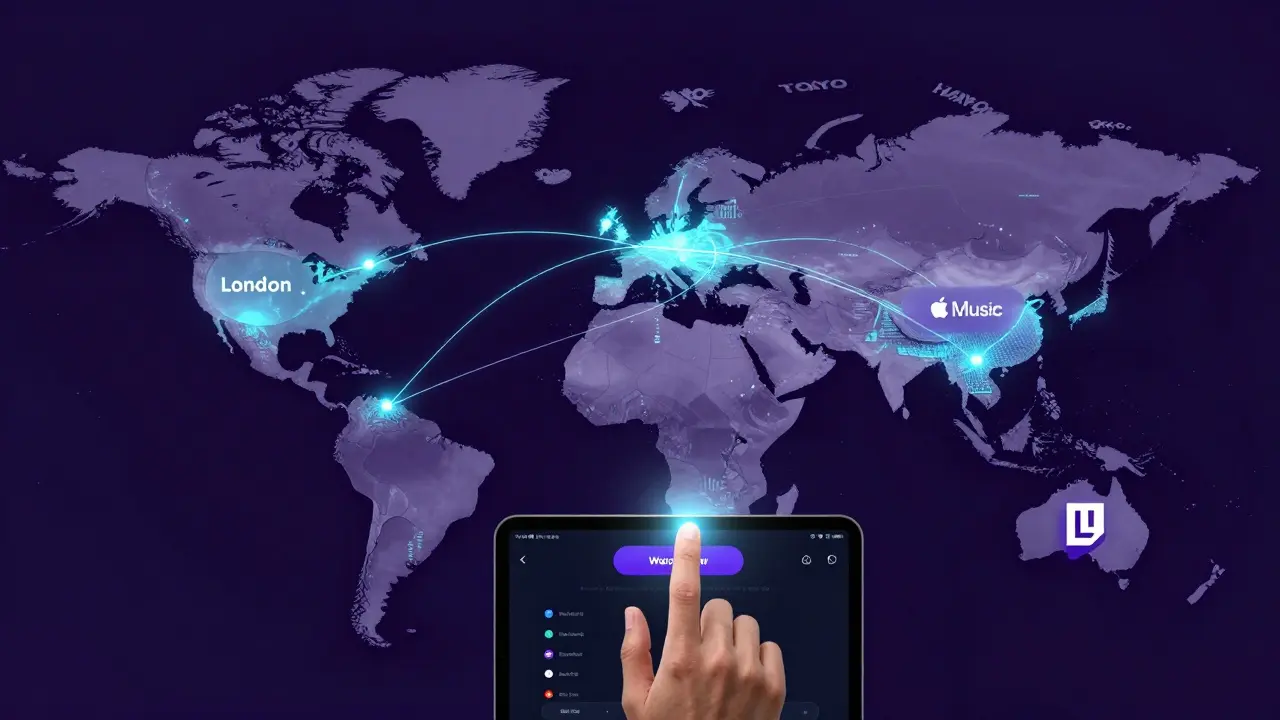
Geoblocking still exists - but less than you think. Most major platforms now offer global access. If you’re in Brazil and the concert is in Germany, you can still watch. But some smaller venues or indie artists may restrict access based on territory.
Why? Licensing. Record labels and publishers have different deals in different countries. If a song is licensed only for North America, the stream might mute that track for users outside the region. You’ll hear a beep or silence - not the full performance.
VPNs can bypass this, but they’re not always reliable. Some platforms detect and block them. And if you’re using a VPN, you might lose audio sync or get dropped from the stream.
Surprisingly - yes, sometimes.
In a packed stadium, sound gets muffled. Echoes bounce. Bass gets lost. But a live stream uses direct audio feeds from the mixing desk. Engineers tweak levels in real time. You hear the vocals crystal clear. The kick drum hits like it’s in your chest. No crowd noise drowns out the guitar solo.
Some streams even let you adjust the mix. On Veeps, you can toggle between "Audience Mix," "Stage Mix," and "Producer Mix." The Stage Mix gives you raw instrument levels - perfect if you’re a musician. The Producer Mix is what you’d hear on a studio album. It’s a whole new way to experience live music.
It’s not perfect. Here’s what you might miss:
Also, if you’re watching alone, it’s still just a screen. No high-fives. No sweat. No shared "oh my god, that was insane" moment with strangers.
Three big changes have changed the game:
And now, a few festivals offer "hybrid tickets" - buy a physical ticket and get the stream free. That’s become a standard perk for premium passes.
No. But it’s not supposed to be.
Streaming a live concert isn’t about replacing the experience. It’s about expanding it. You can watch a concert you’d never afford to fly to. You can rewatch your favorite moment. You can share it with someone on the other side of the world. You can hear every note perfectly - even if you’re sick, stuck at home, or just too tired to leave the couch.
Live music isn’t just about location anymore. It’s about access. And in 2026, access is better than ever.
Sometimes, but rarely for full shows. Artists sometimes stream short clips or one song for promotion on YouTube or TikTok. But full, high-quality, multi-camera live concerts almost always require payment - either a one-time ticket ($15-$50) or a subscription (like Apple Music Live). Free streams are usually low-quality, delayed, or unofficial.
Not always. Most streams work in your browser. But for the best experience, use the official app: Veeps for major tours, Apple Music for curated shows, or the artist’s own app. These apps offer better video quality, fewer ads, and features like rewind, multi-angle, and offline downloads.
Yes. Use a streaming stick like Roku, Fire TV, or Chromecast. Plug it into your HDMI port, connect to Wi-Fi, and open the concert app or website. You can also cast from your phone or laptop to your TV using AirPlay or Google Cast. A $35 device turns any TV into a concert venue.
Most platforms offer a replay. If you bought a ticket, you’ll usually get 48 hours (or longer) to rewatch the full concert. Just log back in and hit play. You won’t lose access just because your Wi-Fi dropped. Some services even let you download the stream for offline viewing.
No. Recording a live stream - even for personal use - usually violates copyright. Most platforms block screen recording. Some apps will freeze or cut audio if you try. If you want to keep the performance, buy the official recording or merchandise that includes a digital download. That’s the only legal way.
Rae Blackburn
They’re lying about the latency being 5-12 seconds - that’s only if you’re in the same timezone as the stream server. I live in rural Nebraska and my feed is always 27 seconds behind. They’re hiding the buffering with AI filler frames. I’ve recorded it. It’s not real time. It’s a deepfake concert.
E Jones
Let’s be real - this whole streaming thing is just Big Music’s way of killing the live experience. They don’t want you to feel the sweat, the chaos, the rawness. They want you cozy on your couch with a $50 ticket while they monetize every damn note. And don’t even get me started on the AI camera angles - that’s not art, that’s surveillance with a bass drop. They’re training algorithms to replace human emotion with predictive engagement metrics. Next thing you know, the band won’t even show up - just a hologram fed by your biometrics.
King Medoo
As someone who’s streamed over 120 concerts since 2023, I gotta say - this article is *mostly* right. But you missed the biggest win: the ability to switch between 8 different audio mixes. I’ve spent entire nights toggling between "Stage Mix" and "Producer Mix" while analyzing guitar tones. I’m a bassist. I can now hear the exact DI signal of the bassist’s preamp. That’s not just convenience - that’s education. Also, yes, the crowd energy is gone, but you know what? I’ve watched a 3 a.m. set from Tokyo while in my PJs, and I felt more connected than I ever did at Coachella when I was stuck 200 yards from the stage with a $900 ticket and a 4-hour wait for a $12 beer. Access > proximity. Always.
Also, emojis because I’m emotional about this: 🎸🔥🎧🤯
Seraphina Nero
I just watched Hozier live from my couch while sick. It was beautiful. I didn’t miss the crowd. I missed the fact that I could finally hear every word. Thank you for this.
Megan Ellaby
wait so if i have apple music i can just watch billie eilish live? no way. that’s so cool. i thought i needed a special app or something. is it really that easy? also can you watch it on an ipad mini? mine’s old but works
LeVar Trotter
Let me clarify a few technical points for those who might be confused. The 4K HDR streams use HEVC encoding over QUIC protocols - this reduces bandwidth overhead by 30% compared to older H.264. For those on mobile data, enabling adaptive bitrate streaming via the app’s settings (not browser) will prevent buffering. Also, Dolby Atmos isn’t just marketing - it’s spatial audio rendered via binaural decoding on compatible headphones. If you’re using AirPods Pro 2 or Sony WH-1000XM5, you’re getting a true 3D mix. And yes, rewinding is possible because the stream is buffered locally on the server side, not your device. This isn’t YouTube - it’s a dedicated CDN with edge caching. The $15 ticket? That’s not for the stream. It’s for the artist’s licensing fee. Every dollar goes directly to them via blockchain-based smart contracts. No middlemen. No label cuts. This is the future of equitable artist compensation.
Sagar Malik
Streamin' concerts? How quaint. In the age of hyperreality, the true concert is not the feed, not the camera, not even the sound - it is the algorithmic hallucination of presence. The crowd’s roar? Synthesized. The guitar solo? Optimized for dopamine. The artist’s gaze? Directed by AI sentiment analysis. We are not watching a concert. We are participating in a curated simulation of longing. The real performance is the one inside your dopamine receptors. The stage is a ghost. The music, a meme. The ticket, a sacrament to the machine. And yet… I still watch. Because the void demands a ritual. And I am its willing priest.
Rahul U.
Great breakdown. Just want to add - if you're in India and trying to stream, use a 5GHz Wi-Fi band. 2.4GHz is too congested here. Also, Veeps works better than Apple Music for Indian users because of local CDN partnerships. I’ve streamed from Mumbai to London shows without a single buffer. And yes, the geoblocking is real - I lost the last 3 minutes of a Coldplay stream because they muted "Viva La Vida" for non-US users. But the replay worked fine. Pro tip: Always enable offline download if available. Saves data too.
selma souza
The article misuses "Dolby Atmos" as if it's a standard feature. Most "Atmos" streams are actually upmixed stereo. True Dolby Atmos requires object-based audio encoding and a compatible receiver - not just headphones. Also, "rewind" functionality is only available on paid subscriptions - not "most platforms." And please stop calling $50 tickets "affordable." That’s a 20% markup over 2020 prices. This isn’t accessibility - it’s exploitation dressed as innovation.
Addison Smart
As someone who grew up in a small town in Oklahoma and never thought I’d see a Björk concert - let alone from my bedroom while my cat slept on my lap - I just want to say thank you. This isn’t about replacing live music. It’s about expanding the definition of community. I’ve watched a show from Jakarta with a group of strangers from Lagos, Berlin, and Buenos Aires. We didn’t speak the same language, but we all knew the same lyrics. We texted emojis and shared lyrics in real time. That’s connection. That’s culture. That’s something no stadium could ever give me. And yes, I cried. Not because I missed the crowd - because I found one.
Also, the AI camera angles? I didn’t know I wanted a drone shot of the bassist’s feet until I saw it. Now I can’t imagine watching without it. This isn’t technology replacing humanity. It’s technology helping us find each other.
Frank Piccolo
USA only. That’s the real story. Everything else is just marketing fluff. If you’re not American, you’re getting a watered-down version. The AI angles? Only for US streams. The multi-angle? Locked behind a US IP. The 4K? Only if you’re on Verizon. It’s not about access - it’s about control. And they’re selling it like it’s a gift. Wake up. This is digital colonialism with better lighting.
James Boggs
Thanks for this. Super clear. Just subscribed to Veeps. First stream is tomorrow. Excited.
Barbara & Greg
While the technological advancements are commendable, one must question the cultural ramifications of commodifying the sacred ritual of live music. The concert, once a communal catharsis, is now a transactional product, filtered through corporate algorithms and monetized via subscription tiers. The loss of shared physical presence - the trembling of air, the collective breath - cannot be replaced by spatial audio or AI-driven camera cuts. This is not progress. It is aesthetic privatization. We are not becoming more connected. We are becoming more isolated, with better headphones.
David Smith
Ugh. Another article pretending streaming is the same as being there. It’s not. You can’t smell the beer, you can’t bump into your friend, you can’t scream until your throat bleeds. And don’t even get me started on how the merch is always sold out by the time you log in. This whole thing is just a way for big labels to charge twice - once for the ticket, once for the merch. Lazy. Boring. Overrated.