

When you pay extra for VIP concert tickets, you’re not just buying a better seat-you’re buying an experience. But one question keeps coming up: Do VIP tickets include food? The short answer? Sometimes. It depends on the artist, the venue, and how the package is built. There’s no universal rule. Some VIP packages come with gourmet meals, others offer a snack pack, and many give you nothing but a wristband and a backstage photo op.
VIP concert packages aren’t one-size-fits-all. They’re customized by promoters, venues, and artists. But most include a mix of these perks:
Food? That’s the wildcard. It’s not guaranteed. Even when it’s offered, it’s often limited to light bites-not a full meal. Think artisanal sliders, mini tacos, or a charcuterie board. Not a three-course dinner.
Some artists go all out. Taylor Swift’s Eras Tour VIP packages in 2024 included a pre-show dinner at select venues. Attendees got a plated meal with choices like herb-crusted chicken or wild mushroom risotto, served in a private lounge an hour before the show. It wasn’t just a snack-it was a full dining experience.
Similarly, Beyoncé’s Renaissance World Tour offered VIP guests a curated tasting menu at select stadium shows. The menu featured dishes inspired by the album’s themes: plant-based bites, champagne cocktails, and dessert stations with gold-dusted macarons.
These aren’t random. They’re strategic. Artists with high production budgets and luxury branding use food to elevate the VIP experience into something memorable-and shareable. You’re not just seeing a concert. You’re living a moment.
Most VIP packages don’t include food. Why? Cost. Venue restrictions. Logistics. Many arenas don’t have kitchens that can handle private catering. Others have exclusive contracts with food vendors that don’t allow outside catering, even for VIPs.
At smaller venues like the O2 Academy or Red Rocks Amphitheatre, VIP tickets might get you a private bar area with free drinks, but no food at all. You’ll still need to buy snacks from the concession stands. And if you’re going to a festival like Coachella or Lollapalooza, VIP passes often include lounge access and priority viewing, but food is always extra.
Here’s a real example: A fan bought a $750 VIP ticket for a Foo Fighters show in Chicago. The package included front-row seats, a signed guitar pick, and a private lounge with free beer and wine. No food. The fan left hungry and tweeted: “I paid $750 to sit closer and drink wine. My stomach didn’t get the memo.”

You can’t assume. You have to check. Here’s how:
Pro tip: If food is listed, it’s usually described in detail. “Complimentary appetizers and non-alcoholic beverages” means snacks. “Full plated dinner” means a real meal. Be precise.
Don’t panic. Even if your VIP ticket doesn’t include food, you’re still getting value. Here’s how to make the most of it:
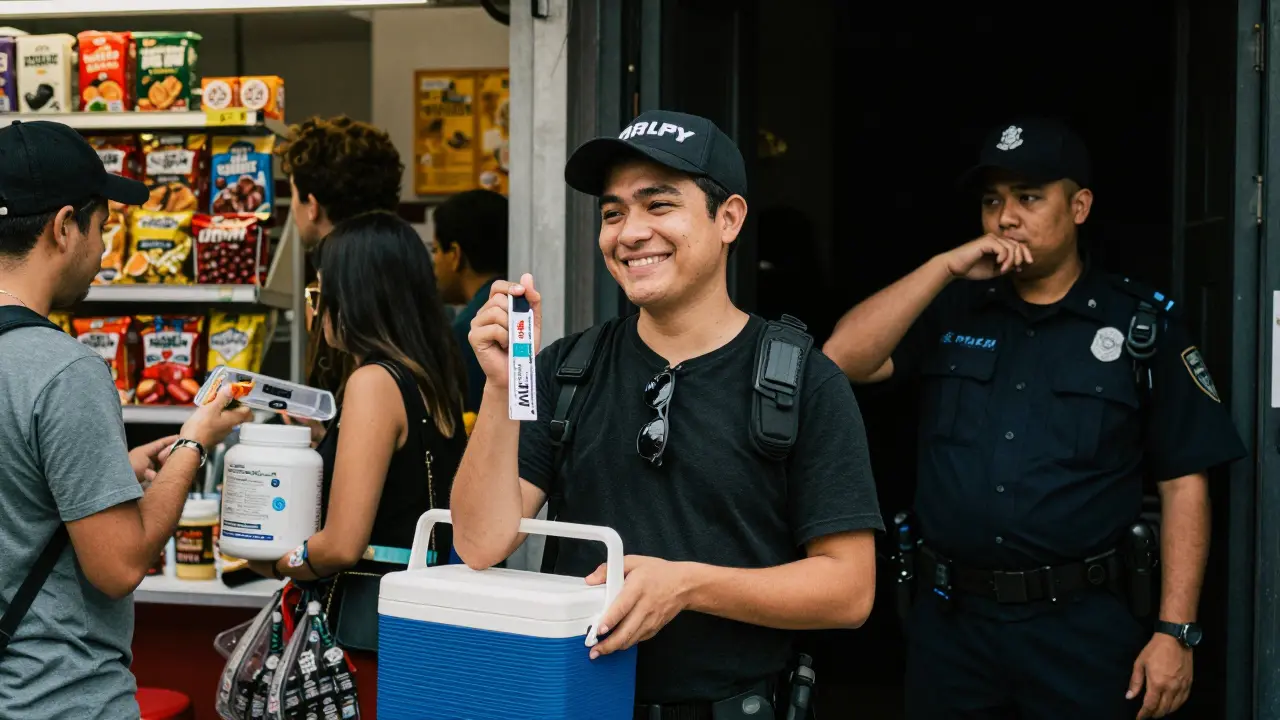
One fan at a Coldplay show in London brought a small cooler with sandwiches. She got stopped at security-until she showed them her VIP wristband. The guard smiled and said, “We’ll let it slide. You’re one of the few who actually planned ahead.”
It’s not laziness. It’s complexity. Catering for 200 VIP guests requires:
For smaller tours, the cost of food can eat up 30% of the VIP package profit. That’s why many artists stick to drinks, merch, and access. It’s simpler, faster, and more scalable.
More artists are starting to offer food. It’s becoming a differentiator. In 2025, Post Malone’s tour announced a partnership with a national meal delivery service to offer VIP guests a choice of three pre-ordered meals. You pick your dish online when you buy the ticket. It’s delivered to your seat before the show.
Other artists are testing AI-powered menus. You scan a QR code in the VIP lounge, answer a few questions (“Are you vegan? Any allergies?”), and get a personalized snack pack delivered in minutes.
Expect this trend to grow. As concertgoers demand more from their tickets, food will become a standard perk-not a luxury.
Do VIP tickets include food? Sometimes. Always check the fine print. If food matters to you, don’t just assume. Dig into the details. Call the venue. Read recent reviews. Ask questions.
And if you’re buying a VIP ticket just for the food? You might be disappointed. But if you’re buying it for the experience-and food is a bonus-you’ll walk away with more than just a great seat. You’ll walk away with a story.
No, not all VIP concert tickets include food. Food is an optional perk that depends on the artist, venue, and package tier. Some VIP packages offer gourmet meals, others give you snacks or drinks only, and many include nothing edible at all. Always check the official ticketing site for the full list of inclusions.
When food is included, it’s typically light bites: mini sliders, tacos, charcuterie boards, or dessert stations. In rare cases, like Taylor Swift’s Eras Tour or Beyoncé’s Renaissance World Tour, you might get a full plated meal. But don’t expect a full restaurant experience unless it’s explicitly advertised.
Most venues ban outside food, even for VIP guests. However, some allow sealed, non-glass containers like protein bars or small snacks. Always check the venue’s policy before arriving. If you’re unsure, call the box office. VIP status doesn’t automatically override security rules.
Yes, drinks are far more common than food in VIP packages. Most include complimentary beer, wine, soda, or water. Some high-end packages offer premium cocktails or champagne. Always check whether alcohol is included, as some venues restrict it based on local laws.
Check the details as soon as you buy the ticket. VIP package offerings can change even weeks before the show. Don’t wait until the day of the concert. Review the official website, read recent fan reviews, and if in doubt, call the venue directly. The more time you have, the better your chances of adjusting your plans.
lucia burton
The fundamental flaw in most VIP package marketing is the conflation of access with value. When you're paying premium pricing, you're not just purchasing a seat-you're investing in a curated ecosystem of experiential touchpoints. The absence of food isn't an oversight; it's a strategic cost-allocation decision. Catering introduces operational complexity: allergen protocols, temperature-controlled logistics, staffing overhead, and regulatory compliance that most venues simply can't scale affordably. The marginal utility of a charcuterie board doesn't justify the marginal cost of a licensed kitchen crew. What you're really buying is temporal sovereignty-priority entry, reduced friction, and psychological exclusivity. Food is a luxury add-on, not a baseline expectation. If you're expecting a three-course meal, you're mistaking a VIP pass for a Michelin-starred reservation.
Bottom line: The ROI on VIP isn't in calories-it's in reduced wait times, elevated social capital, and the emotional resonance of being treated like a stakeholder, not a spectator.
Denise Young
Oh please. Let's not pretend this isn't just another way for promoters to nickel-and-dime fans while calling it 'luxury.' You pay $800 for a 'premium experience' and get a plastic cup of wine and a sticker that says 'I survived the Eras Tour.' Meanwhile, Taylor Swift's team drops a full plated dinner with herb-crusted chicken and wild mushroom risotto-and suddenly it's 'innovative.'
Here's the real kicker: the same venues that can't serve food to VIPs because of 'licensing restrictions' have no problem serving $18 craft beer to general admission. It's not about logistics-it's about perceived value. They'll give you a $500 merch bundle because it's tangible, but a $12 appetizer? Too risky. Too messy. Too human.
And don't get me started on the 'complimentary non-alcoholic beverages' line. That's code for 'we'll let you sip lukewarm soda while the rest of the crowd chugs $12 water.'
Next time, just call it what it is: a VIP ticket is a loyalty tax. Pay extra to feel special, but don't expect a meal ticket.
Sam Rittenhouse
I just want to say how much I appreciate how thoughtful this breakdown is. There's so much noise out there about concert experiences, and this actually cuts through it with real nuance.
I remember going to a Phoebe Bridgers show last year with a VIP pass. No food. Just a lounge with wine and a poster. I was disappointed at first-until I realized I was sitting in a room with 30 other people who all knew every lyric, who all shared the same quiet awe. We didn't need food. We had connection.
It's funny how we've come to equate value with consumption. But sometimes the greatest luxury isn't what's on the plate-it's the silence between songs, the shared breath before the chorus, the fact that you didn't have to wait 45 minutes just to get inside.
Food is nice. But presence? That's priceless.
Peter Reynolds
I bought a VIP ticket once and it had no food but I still got my money's worth because the seat was front row and I got a signed setlist and the line was way shorter. Also the drinks were free so I didn't need to buy anything. The venue had a taco truck outside and I just walked over and got one. Easy.
Fred Edwords
It is imperative, from a consumer protection standpoint, that the term "VIP package" be legally defined and standardized across jurisdictions. As it currently stands, the phrase is a legally unregulated marketing construct, which allows for egregious misrepresentation. The Federal Trade Commission should intervene. A "VIP" designation without explicit, itemized, and verifiable inclusions constitutes deceptive trade practice. The absence of food is not merely an omission-it is an intentional obfuscation of value proposition.
Furthermore, the use of ambiguous terminology such as "gourmet bites" or "catered reception" is a linguistic loophole designed to elicit false expectations. "Gourmet" implies culinary sophistication; "catered" implies full-service provision. Neither should be permissible absent a detailed menu, service duration, and allergen disclosure.
Legislation is overdue. Until then, consumers must treat "VIP" as a marketing euphemism for "pay more for less."
Sarah McWhirter
Have you ever stopped to think that maybe food isn't included because they're using the VIP experience to collect biometric data? I mean, think about it-when you walk into a "private lounge," you're scanned, tagged, tracked, and your preferences are logged. And then? You get a "complimentary" snack. But who made it? Who sourced it? Who tested it?
I read a whistleblower report last year that showed how one major promoter partnered with a data analytics firm to track VIP attendees' eating habits-then sold that data to food brands. So your "free" mini-tacos? They're not free. You paid for them with your metabolic profile.
And don't get me started on the "personalized QR menu" thing. That's not innovation-that's a gateway to neural profiling. Next thing you know, your ticket price adjusts based on how much you ate last time. "Oh, you liked the vegan tacos? We'll charge you more next time because you're clearly a high-value food consumer."
They're not selling concerts. They're selling you. And your appetite.
Wake up. It's all a scheme.
Ananya Sharma
Let me be the first to say this: the entire VIP concert industry is a capitalist farce built on the delusion that experience can be commodified. You think you're getting something exclusive? You're just another data point in a corporate algorithm designed to extract maximum profit from fans who have internalized scarcity as status.
And now they're going to use AI to serve you a "personalized snack pack"? How utterly predictable. You're not being catered to-you're being conditioned. The moment you scan a QR code to select your "dietary preferences," you've surrendered your autonomy to a system that already knows your consumption patterns better than your therapist.
Meanwhile, real fans-those who camp out for days, who trade tickets, who memorize setlists-are treated like cattle. But you? You pay $1,000 to sit in a room with air conditioning and get a cookie labeled "artisanal"? That's not luxury. That's psychological manipulation dressed in velvet rope.
And don't even get me started on the environmental cost of single-use plates and compostable packaging that ends up in landfills anyway. This isn't innovation. It's performative waste.
Real culture doesn't need VIP lounges. It needs community. Not caviar.
Stop buying into this. It's not a gift. It's a trap.
kelvin kind
I brought my own protein bars. No one cared. Got in fast, sat front row, drank free wine. Good deal.
Ian Cassidy
The food thing is overrated. VIP is about access. The real win is skipping the line and not having to fight for a view. I’ve been to shows where the general admission crowd was a human pileup. VIP? I walked in, got a drink, sat down, and watched the whole thing without a single elbow to the ribs.
Food? I ate before I got there. If I’m hungry, I’ll buy a pretzel. $8 is nothing compared to the stress of waiting 90 minutes just to get in.
Also-free drinks. That’s the real value. You can’t buy that kind of buzz.
Zach Beggs
I think the real takeaway is that VIP tickets are about control. You pay more to reduce uncertainty-where you sit, when you enter, what you drink. Food is just noise. If you care that much about eating, plan ahead. The experience isn't ruined if you're hungry. It's ruined if you're stuck in a crowd with no view. And that’s what VIP fixes.