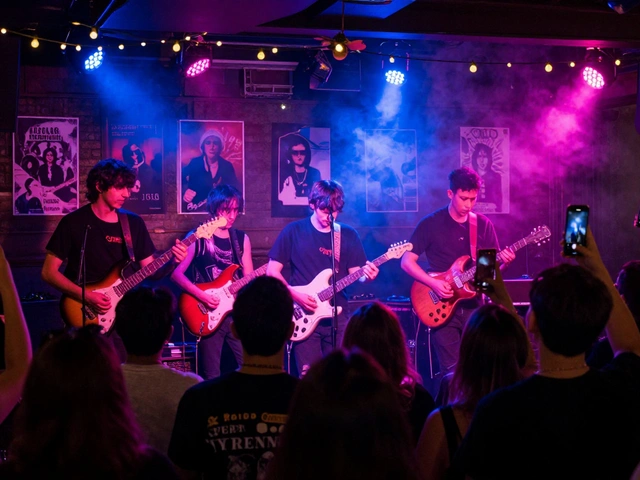

How much does a music concert cost? It’s not a simple question. One ticket can run you $40. Another might set you back $400. And if you’re chasing a headliner at a major festival, you could easily spend over $1,000 - not counting food, transport, or a hotel. The truth is, there’s no single answer. But there are clear patterns. And if you know where to look, you can plan your next concert without blowing your budget.
In 2026, the average ticket price for a mid-sized music concert in New Zealand is around $85. That’s up from $68 in 2023. In cities like Auckland and Wellington, prices have climbed faster than inflation. A local indie band at a 500-seat venue? You’ll likely pay $50-$70. A national act like Lorde or Six60? Expect $90-$130. International headliners - think Taylor Swift, Beyoncé, or Ed Sheeran - are hitting $180-$250, even in secondary markets.
Why the jump? Several factors. Labor costs for crew and security have risen. Venue rental fees are up. And streaming royalties? They don’t cover artists anymore, so live shows are their main income. That’s why even smaller acts now charge more.
If you’re thinking of a music festival, the numbers change completely. A single-day pass to a regional festival like WOMAD a world music and arts festival held annually in New Zealand since 1993 in 2026 costs $165. A three-day pass? $420. That’s before you factor in camping fees, food, or transport.
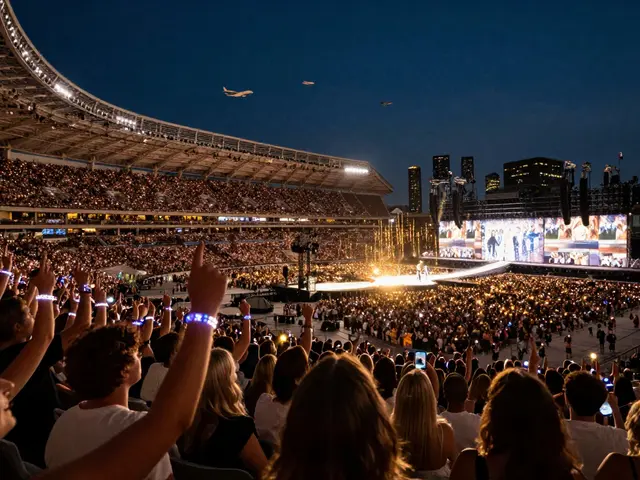
Big international festivals like Coachella a major U.S. music festival attracting global acts and over 125,000 attendees annually or Glastonbury a UK-based music and performing arts festival with a 200,000+ capacity cost far more - $600-$1,000 just for the ticket. And if you’re flying in from New Zealand? Add $1,200-$2,000 for flights alone.
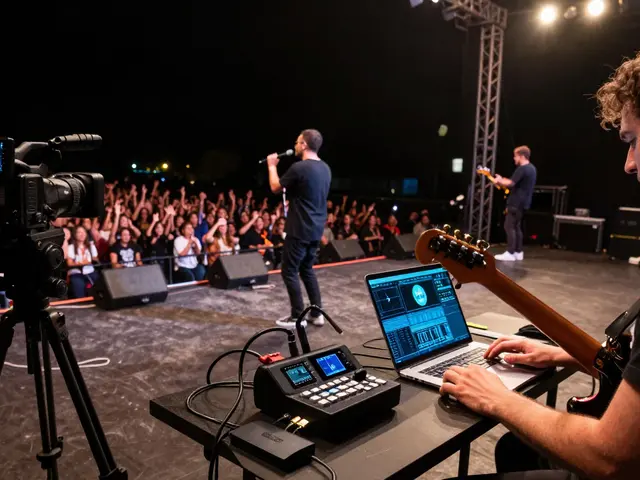
Here’s what you’re really paying for: stage production, lighting, sound engineering, medical staff, portaloos, and security. Festivals aren’t just music - they’re temporary cities.
Ticket price isn’t the whole story. You’ve got fees. Lots of them.
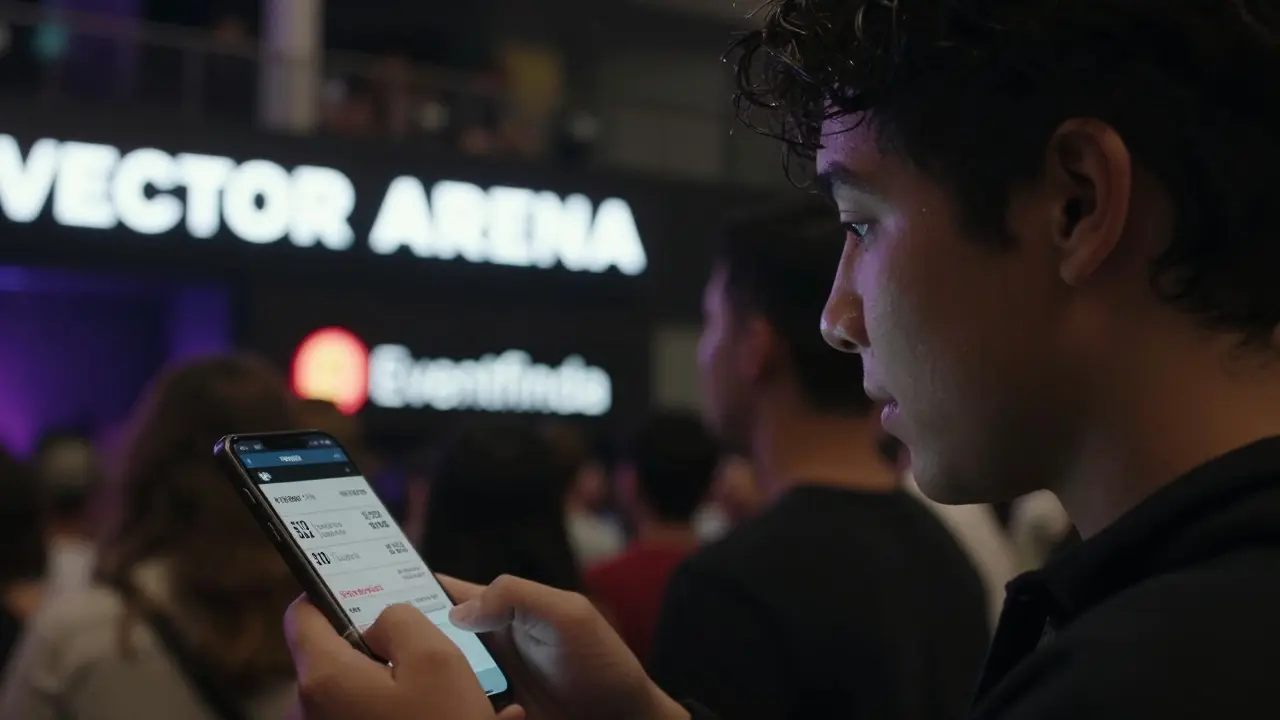
And then there’s parking. At Auckland’s Vector Arena, it’s $20. At a rural festival? $15-$30, if there’s even space. Public transport? Often the smarter move. Many festivals now offer free shuttles from city centers.
Food and drinks? Don’t assume you can bring your own. Most venues ban outside food. A beer at a concert? $12. A burger? $18. A bottle of water? $8. If you’re spending eight hours at a festival, you could easily drop $60-$100 on snacks alone.
There are ways to cut costs without skipping the show.
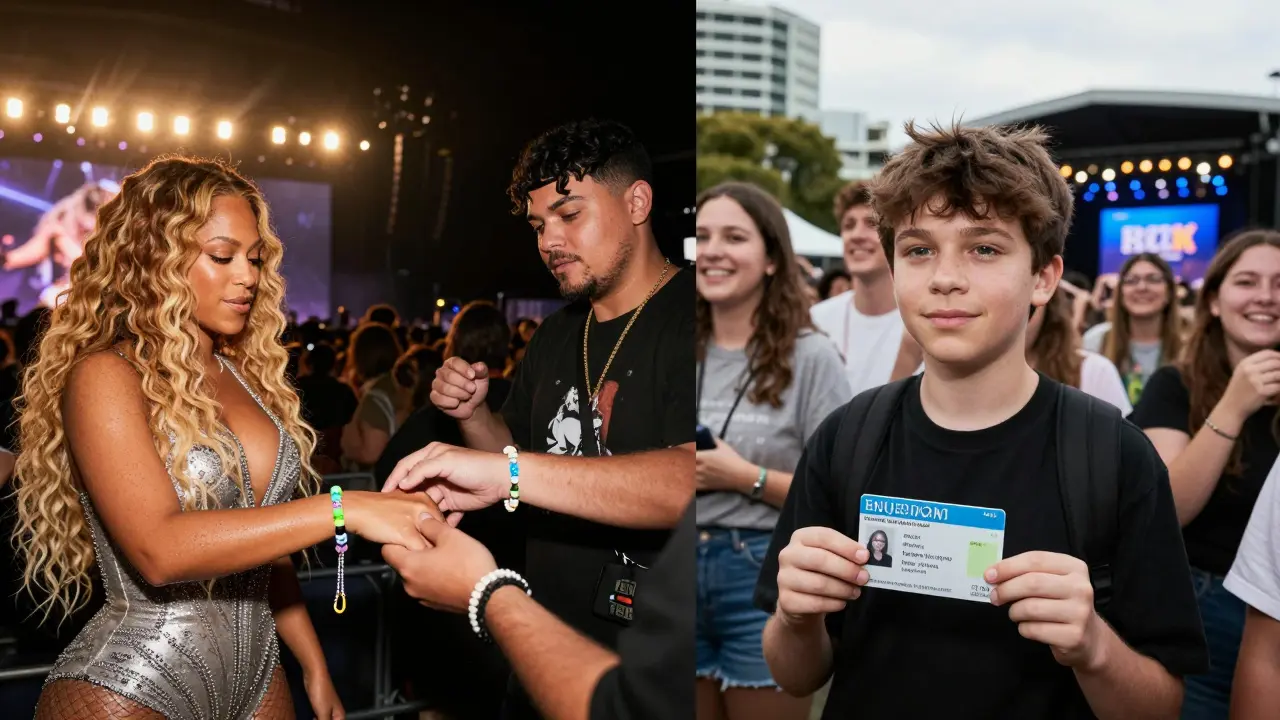
And if you’re a student? Always ask. Many venues offer student discounts - just show your ID at the box office. Some even have free entry for under-18s to early shows.
The priciest ticket in New Zealand this year? A Beyoncé American singer and global superstar known for her high-energy live performances show at Eden Park. The top-tier VIP package - front-row seats, meet-and-greet, exclusive merch - was $1,250. Only 200 were sold. The average ticket? $320.
Internationally, the record holder was a U2 Irish rock band with a decades-long legacy of stadium tours tour stop in Sydney. A single ticket sold for $1,800 on a resale platform. That’s more than most people pay for a flight to Europe.
Why so high? Limited supply. High demand. And no real cap on what fans will pay. If you really want to see your favorite artist, you might have to pay a premium. But you don’t have to.
Let’s be real - concerts aren’t cheap. But they’re not just entertainment. They’re memories. The scream of a crowd singing along. The rush when the lights go down. The way a song you’ve listened to alone suddenly becomes something shared.
For many, the cost is worth it. For others, it’s not. If you’re on a tight budget, focus on local gigs. Go to openers. Attend free summer festivals. Many cities offer free outdoor concerts - Wellington’s Free Friday Nights a seasonal series of free live music events in Wellington’s CBD draws 10,000 people every week in summer.
And if you’re saving up for a big show? Set a monthly goal. $50 a month for six months = $300. That’s a solid ticket. No stress. No last-minute panic.
Concert prices will keep rising - but so will alternatives. Virtual concerts are getting better. Some artists now offer livestreams with interactive elements - like choosing the setlist or seeing backstage footage. A premium stream might cost $25. It’s not the same as being there. But it’s close. And way cheaper.
For now, the best advice? Know your budget. Shop smart. Don’t get fooled by fees. And remember - the music doesn’t have to be loud to matter. Sometimes, the best show is the one you didn’t even know you needed.
Yes. In New Zealand, average concert ticket prices rose 25% between 2023 and 2026. Festival passes jumped even more - up 35%. Inflation, labor costs, and venue upgrades all contributed. International acts now charge more to cover global travel and production expenses.
Usually not. Most tickets are non-refundable. Some venues offer exchanges if the event is rescheduled, but not for personal reasons. Always check the ticket seller’s policy before buying. Resale platforms are your best bet if you need to sell your ticket.
Yes, but not everywhere. Many mid-sized venues and festivals still offer 10-20% off for students with valid ID. Big international tours rarely do. Always ask at the box office or check the event page - some only offer discounts for presales.
Go local. Look for small, community-run festivals like Hawke’s Bay Roots or Otago Folk Festival. They charge $40-$80 for a full weekend. Bring your own food, camp in a tent, and carpool. You can cut total costs under $150.
Only if they’re official. Stick to platforms like Eventfinda’s resale section or Ticketmaster’s Verified Resale. These guarantee the ticket is real and transferable. Avoid third-party sites like Viagogo or StubHub - they often charge 50%+ over face value and don’t protect buyers.

Michael Jones
Concerts aren't just about the music anymore they're about survival. Artists have to charge more because streaming pays zip and venues are run like corporate prisons. I get it. I really do. But it still feels like we're being milked dry. And don't even get me started on fees. You pay for the show then pay again for the privilege of sitting down. It's madness.
allison berroteran
I've been going to shows since I was 15 and I can tell you the experience hasn't changed so much as the cost of having one. Back then we'd camp out overnight for tickets now you need a credit score and a side hustle. I still believe in the magic of live music but I also believe in budgeting for it like it's a mortgage. I set aside $30 a month for concerts and it's saved me from panic-buying last-minute tickets. It's not glamorous but it works.
Gabby Love
Just wanted to clarify one thing from the post: the $12 beer and $18 burger prices are accurate for most venues in the US too. I went to a show in Chicago last month and paid $14 for a can of soda. The math doesn't lie. Also, free shuttles are a lifesaver. I saved $40 on parking by taking the bus from downtown. Always check the event website for transport info.
Jen Kay
Let's be honest. The whole system is rigged. Ticketmaster, Eventfinda, the venues, the labels - they're all playing the same game. And we're the ones who end up paying for their inflated overhead. I don't blame artists. I blame the infrastructure. Maybe we should start boycotting secondary platforms and demand transparency. Or just… stop going. Which is what I'm doing. For now.
Michael Thomas
US artists make way more than NZ ones. You think $1250 is expensive? Try seeing a band in Vegas. You'll pay $2000 and still be in the nosebleeds. Get over it. If you can't afford it don't go. Simple.
Abert Canada
I'm from Canada and I've seen the same trend. We've got more free outdoor shows than you'd think. Montreal has this thing called Osheaga where you can get a 3-day pass for $280 if you camp. And the food trucks? Amazing. But yeah the fees… man. I had a $90 ticket turn into $130 with fees. Felt like a scam. I only buy from official resale now. No more StubHub.
Xavier Lévesque
I used to think festivals were about the music. Now I think they're about branding. You pay for the experience of being in a crowd of people who all bought the same merch. I went to one last year and spent more on hats than on the tickets. And the Wi-Fi? Dead. So I couldn't even post about it. Guess I'm just not cool enough anymore.
Thabo mangena
In South Africa we have a different reality. Concerts are rare. When they happen, tickets are often subsidized by government arts grants. We do not have the luxury of choice. We are grateful for any performance. The notion of paying $1,200 for a ticket is almost alien. Perhaps we should not compare economies but rather celebrate access where it exists.
Karl Fisher
I saw Beyoncé in LA. Front row. Met her. Got a hug. It was worth every penny. You think $1250 is a lot? Try the emotional cost of never seeing your idol live. I cried. I screamed. I posted 17 stories. It was transcendent. If you didn't feel it you weren't there. And if you didn't pay… well you just don't get it.
Buddy Faith
Concert prices are fake. It's all about the algorithm. They know you'll pay more if you're desperate. They wait till the last minute to release tickets. They make you think it's scarce. It's not. There are 5000 seats. They only sell 2000. Then they flip the rest. Same with hotels. Same with flights. Same with everything. Wake up.
Scott Perlman
I save $20 a month for concerts. Got my first ticket last month. It was a local band. Two hours. No frills. Just good music. I didn't even buy a drink. Just sat there and smiled. Best $50 I ever spent. You don't need a VIP package to feel something.
Sandi Johnson
I love how people act like $85 is outrageous. That's less than a pair of decent sneakers. You want to see a band? Buy a new pair of shoes. Sell the old ones. Done. Problem solved. Also - stop complaining about fees. You're the one who clicked "buy". No one held a gun to your head.
Eva Monhaut
There's something sacred about the moment the lights go out and the first note hits. I've been to shows where I didn't know a single song and still left with my soul rearranged. That's why I keep going. Even if it costs a month's groceries. Even if the beer is $12. Even if the line for the portapotty is 45 minutes long. It's not about the price. It's about the pulse. The shared breath. The collective hum. That's the real currency.
mark nine
Free Friday Nights in Wellington? That's the real deal. No fees. No parking. No stress. Just music. I went last summer. Sat on the grass. Ate my own sandwich. Listened to a 20-year-old singer with a ukulele. Best night of the year. You don't need a stadium to feel something.