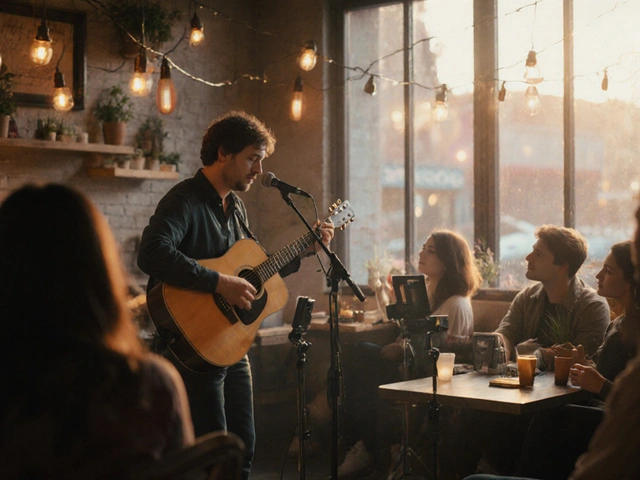

Standing under the spotlight, the crowd roaring, your guitar slung low or your mic in hand - this is the moment you’ve practiced for. But what do you actually say when it’s time to introduce yourself? Too stiff and you lose the vibe. Too casual and you seem unprepared. The right words don’t just announce your name - they connect you to the people in front of you.
There’s no script that fits every genre. What matters is alignment. Your intro isn’t a speech. It’s an extension of your sound.
Top performers know this. Billie Eilish says “Hi, I’m Billie” before launching into “Happier Than Ever.” Ed Sheeran often just says, “This one’s called ‘Photograph’” - no last name, no fanfare. Even big names skip the full introduction because the music does the talking.
Try this formula: Name + Band (if applicable) + One line about the next song or vibe. That’s it. Three to seven seconds. Less than the time it takes to inhale.
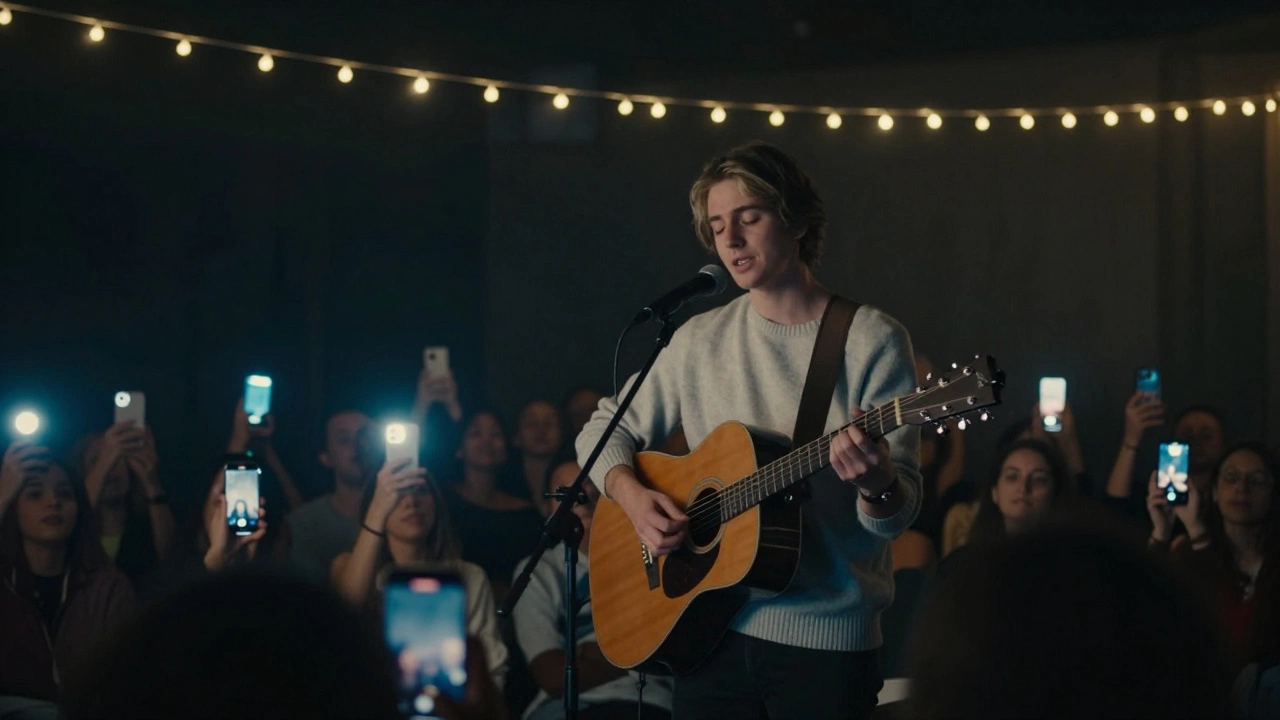
If it’s a quiet room, a slow clap, or a sea of phones up - don’t force loudness. Instead, say, “Thanks for being here. This next one’s called ‘Empty Chair’ - it’s about missing someone who never showed up.”
Reading the room isn’t a trick. It’s respect. You’re not performing to a wall. You’re sharing space with real people. Let their energy guide your tone.
Most listeners don’t need metaphors. They need emotion. If your song is sad, let the lyrics and your voice carry it. If it’s wild, let the drums do the talking. Your words should open the door - not lock it with unnecessary detail.
Think of your intro like a movie trailer. You don’t explain the plot. You show the feeling.
Record yourself saying your intro three times: once too fast, once too slow, once just right. Play it back. Which one feels natural? Which one makes you smile? That’s the one.
Try saying it while standing in the same spot you’ll stand on stage. Move your body the way you will. Breathe like you will. Your mouth and muscles remember what your mind forgets.
One guitarist we worked with practiced his intro while brushing his teeth. He said it 27 times a day for two weeks. On stage, it sounded like he’d said it a thousand times - because he had.
These phrases shift focus from the music to the logistics. Your job on stage is to disappear into the sound. Not explain how you got here.
Don’t panic. Don’t fake it. Just smile, take a breath, and say something honest: “Wow. I was ready for this, but now I’m just happy to be here.”
That’s it. No fancy words. No script. Just real. And people remember real more than perfect.
One singer told us she once froze for 12 seconds. She finally whispered, “I’m Sarah. I think I forgot my name.” The crowd laughed, cheered, and sang the next chorus louder than she’d ever heard.
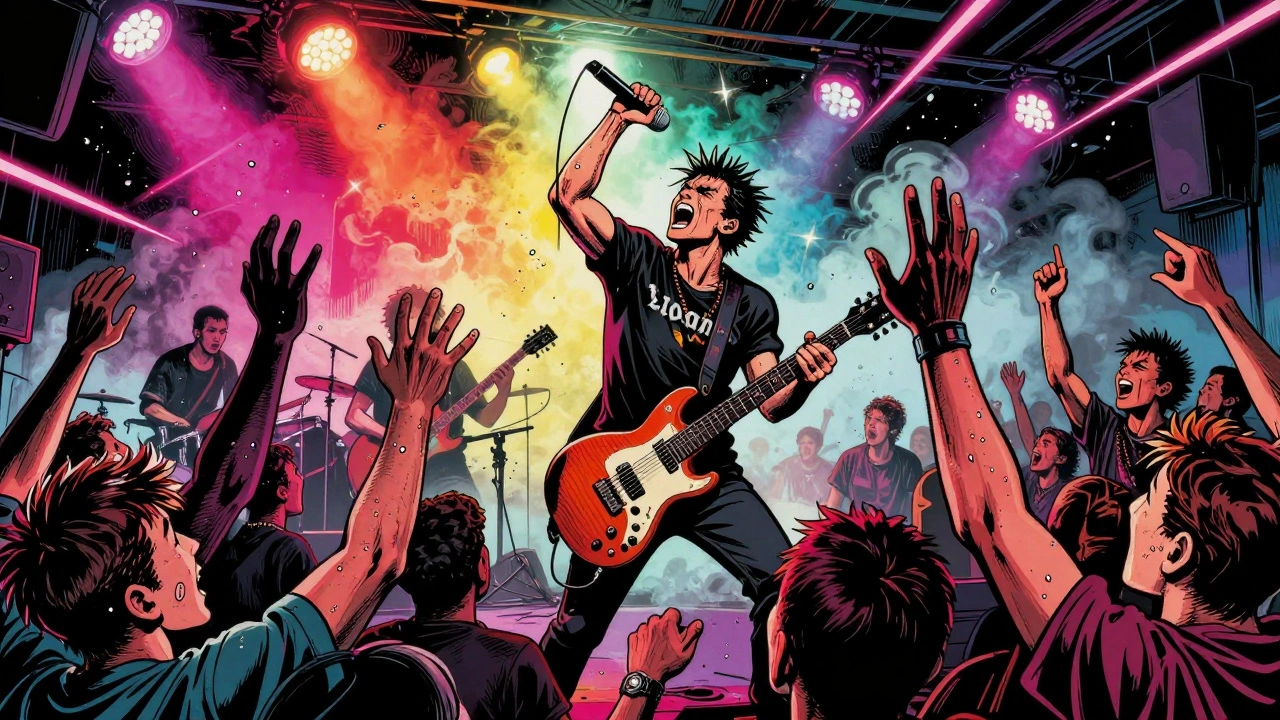
Instead of saying, “We’re The Echo Line,” then stepping back - say, “We’re The Echo Line. And this is how it all started.” Then hit the first chord on the downbeat.
That tiny bridge between speech and sound is where magic happens. The crowd doesn’t need to hear you breathe. They need to feel the next note coming.
Notice the pattern? No fluff. No names spelled out. No long sentences. Just identity, emotion, and momentum.
Start with confidence, not apology. Say your name, your band, and one reason they should care: “We’re The Hollow Roads. We’ve played 300 shows this year - and we still get nervous. That’s why we play like our lives depend on it.”
Then play like you mean it. People remember how you made them feel - not how long you were on stage.
When you introduce yourself, you’re not giving information. You’re handing out an invitation - to feel, to move, to lose yourself for a few minutes.
So say what’s true. Say it fast. Say it loud enough to be heard, but quiet enough to be felt. And then - let the music do the rest.
Mbuyiselwa Cindi
Just played an open mic last night and used the 'name + one line about the song' formula. Ended up saying, 'I’m Mbuyi. This one’s for the people who still believe in love even after the Wi-Fi goes out.' The crowd actually cheered. I didn’t expect that. Turns out, less is more when you’re not trying to impress anyone but yourself.
Also, practicing your intro while brushing your teeth? Genius. I’m doing that tomorrow.
Krzysztof Lasocki
Wow. A whole essay on saying three words. Next up: How to breathe without sounding like a HVAC technician.
Jk. Kinda. This is actually solid. I once said, 'We’re not famous, but we’re loud.' The crowd screamed back. No one cared I didn’t spell my name right. Music’s the spell, not the bio.
Henry Kelley
Man I love this. I used to overthink every intro like I was giving a TED Talk. Then one night I just said 'Hey. We're the drifters.' And the guy in the front yelled 'I KNOW!' and threw a sock. Best moment of my life.
Also, blanking? Happens. I once said 'Uh... I'm... uh... the guy with the guitar?' and the whole place lost it. No script needed. Just be human.
Also also, don't say sorry. Ever. You're not apologizing for existing. You're here to make noise. Make it loud.
Victoria Kingsbury
As someone who’s studied performance psychology and sonic branding, this is refreshingly grounded. The cognitive load theory applies here: audiences have limited attentional bandwidth, so reducing linguistic overhead increases emotional resonance.
Also, the ‘movie trailer’ analogy is spot-on. We’re not delivering exposition-we’re priming affective states. The phrase ‘Let the music do the talking’ isn’t poetic-it’s neurologically accurate. Mirror neurons fire more when ambiguity is left intentionally.
That said, ‘empty chair’? Overused. Try ‘This one’s for the ghosts in the rearview.’ More visceral. Less cliché.
And yes, practicing while brushing teeth? That’s motor memory encoding. Do it. Your somatic memory will thank you.
Tonya Trottman
Okay, first of all, the article says ‘You’re not a speaker. You’re a signal.’ That’s not even grammatically correct. You’re either a speaker OR a signal? That’s a false dichotomy. And ‘handing out an invitation’? That’s a mixed metaphor. You can’t hand out an invitation to feel. Feelings aren’t physical objects.
Also, ‘We’re Måneskin. You’re loud. We’re louder.’ - that’s not a sentence. That’s a fragment. And ‘I think I forgot my name’? That’s not ‘real,’ that’s cringe. Real people don’t say that unless they’re drunk or in a Wes Anderson movie.
And why does everyone keep saying ‘the music does the talking’? That’s been said since 1972. Originality? Overrated.
Also, ‘lunar eclipse’? You’re not writing a poetry slam. Stop pretending you’re a mystic. Just say the damn song title.
Rocky Wyatt
Most of you are missing the point. This isn’t about ‘connecting’ or ‘vibes.’ It’s about dominance. The stage isn’t a therapy circle. It’s a throne. You don’t ask for permission. You take it.
Billie Eilish says ‘Hi, I’m Billie’ because she owns the room. You don’t say ‘I’m Lena’ like you’re asking for a hug. You say it like you already won.
And if you blank? Good. That means you’re not faking it. Most people on stage are robots. You? You’re alive. Let the silence eat them alive.
Also, if you’re opening for someone big? Don’t try to win them over. Burn them out. Make them wish they were you.
Santhosh Santhosh
I come from a small village in Kerala where we don’t have stages, just open fields and a single microphone wired to a car battery. When I first played for 200 people under a banyan tree, I didn’t know what to say. So I just smiled and held up my guitar like it was a child. Someone in the back shouted, ‘Tell us the song’s name!’ and I said, ‘It’s called ‘Waiting for Rain.’’ Then I played.
No one cared if I had a band name or if I’d played 300 shows. They cared because my hands were shaking and my voice cracked on the high note. That’s when they leaned in. Not because I was perfect. Because I was real.
It took me three years to stop memorizing intros. Now I just feel the air. The crowd breathes with me. I don’t speak. I listen. And then I play.
Maybe the stage isn’t about saying anything. Maybe it’s about being still enough to hear what the silence wants to say back.
Veera Mavalwala
Oh honey. You think you’re being profound with your ‘one line about the song’? That’s just code for ‘I’m too lazy to write a real intro.’
And ‘empty chair’? Please. That’s been done to death since 2014. Try something spicy. ‘This one’s for the ex who stole my cat and my dignity.’ Or ‘This is for the bartenders who still remember my name even though I owe them $200.’
And don’t get me started on ‘I forgot my name.’ That’s not vulnerability-that’s a cry for attention disguised as humility. Real artists don’t beg for empathy. They make you feel it without asking.
Also, if you’re practicing your intro while brushing your teeth, you’re not a musician. You’re a performance coach with commitment issues.
Ray Htoo
This is actually the most useful thing I’ve read in months. I used to think intros were just filler. Now I see them as emotional gateways. Like a door that doesn’t open wide-but swings just enough to let you in.
Also, the ‘movie trailer’ analogy? I’m stealing that. I’m gonna start scripting my intros like I’m selling a Netflix docu-series about my soul.
And the ‘practice while brushing teeth’ thing? I’m trying it. I’ve already said ‘We’re Ray & The Static’ 47 times today. My dentist is confused. My cat is judging me. Worth it.
Natasha Madison
Who wrote this? Some corporate artist coach? This is brainwashing. You’re being told to suppress your identity. To shrink your story. To sound ‘authentic’ by sounding like everyone else.
And why are all the examples white American bands? What if you’re from a culture where silence is respect? Where names aren’t shouted? Where music is prayer, not a performance?
This isn’t advice. It’s a cultural export. You’re being sold a version of ‘real’ that only works in Brooklyn or Austin. What about the rest of us?
And why is no one talking about the fact that most of these ‘pros’ are funded by labels? Their ‘authentic’ intros are PR scripts written by interns.
Don’t let them tell you how to be real. Be real on your own terms. Even if it’s silent. Even if it’s strange. Even if they don’t get it.
Krzysztof Lasocki
Wait, Natasha just went full conspiracy theory on the intro. I love it. But also… she’s kinda right? Like, why do we all sound the same now? ‘Hi, I’m… this song’s for…’ It’s like we’re all reading from the same 2018 Spotify playlist manual.
Maybe the real rule is: don’t say anything at all. Just walk on, nod, and start playing. Let the first chord be your name.
…I’m gonna try that next show. If I die, send my guitar to a landfill.