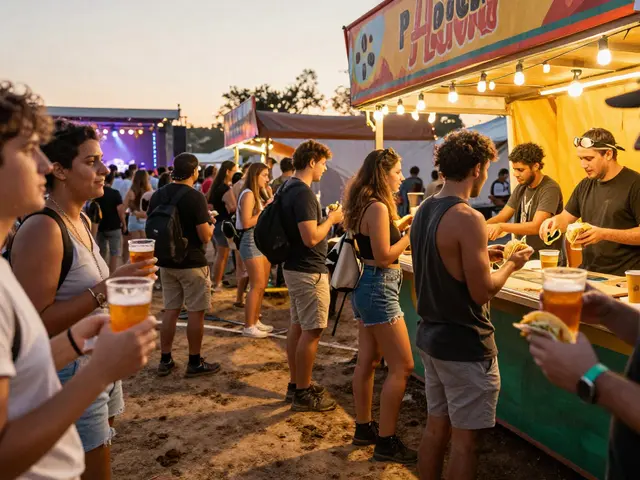

Ever walked into a dimly lit room with just 30 people, a single microphone, and a musician playing like they’re singing just for you? That’s not a club show. It’s not a festival. It’s something quieter, deeper, and way more personal. If you’ve ever wondered what a small concert is called, you’re not alone. The truth is, there’s no single name-but there are several common terms that music lovers and performers use to describe these special events.
The most traditional form of a small concert is the house concert. It happens in someone’s home-usually a living room, backyard, or even a garage. No stage. No ticket booth. Just chairs arranged in a circle, a guitar on a stool, and a jar for donations. These events are common in rural areas and among folk, acoustic, and singer-songwriter scenes. In Wellington, where venues are limited and rent is high, house concerts have become a lifeline for local artists trying to reach audiences without corporate backing.
What makes a house concert different? The intimacy. You hear the breath between notes. You see the finger calluses on the guitarist’s hands. You might chat with the artist after the set over homemade cookies. There’s no crowd noise. No bar line. Just pure sound and presence. Many artists say they make more money at house concerts than at clubs, because there’s no cut from promoters or venue owners.
If you want the same vibe but with better seating and a real bathroom, you’re looking for a listening room. These are small, intentionally designed venues-often under 100 seats-that prioritize sound quality and audience focus. Unlike bars or clubs, listening rooms ask you to keep your voice down. Talking during the set? That’s frowned upon. Clapping between songs? Encouraged. Some even have no alcohol sales to keep the focus on the music.
Places like The Basement in Auckland or The Cider House in Christchurch are examples. They book touring folk musicians, jazz trios, and indie storytellers who thrive in quiet spaces. The acoustics are treated with wood panels and soft furnishings to reduce echo. The lighting is low. The stage is low. The connection is high.
Some of the most unexpected small concerts happen where you least expect them. Independent bookstores, coffee shops, and art galleries often host acoustic sets as part of their community programming. In Wellington, The Flying Nun Bookshop regularly hosts singer-songwriters on Saturday afternoons. No cover charge. No seating chart. Just a corner with a mic and a few stools.
These events are perfect for people who want music without the commitment of a full concert. You can sip a latte, browse a novel, and catch a 45-minute set without planning your evening around it. Artists love these gigs because they reach casual listeners-people who might never buy a ticket to a theater show but will stop and listen if the music catches them off guard.
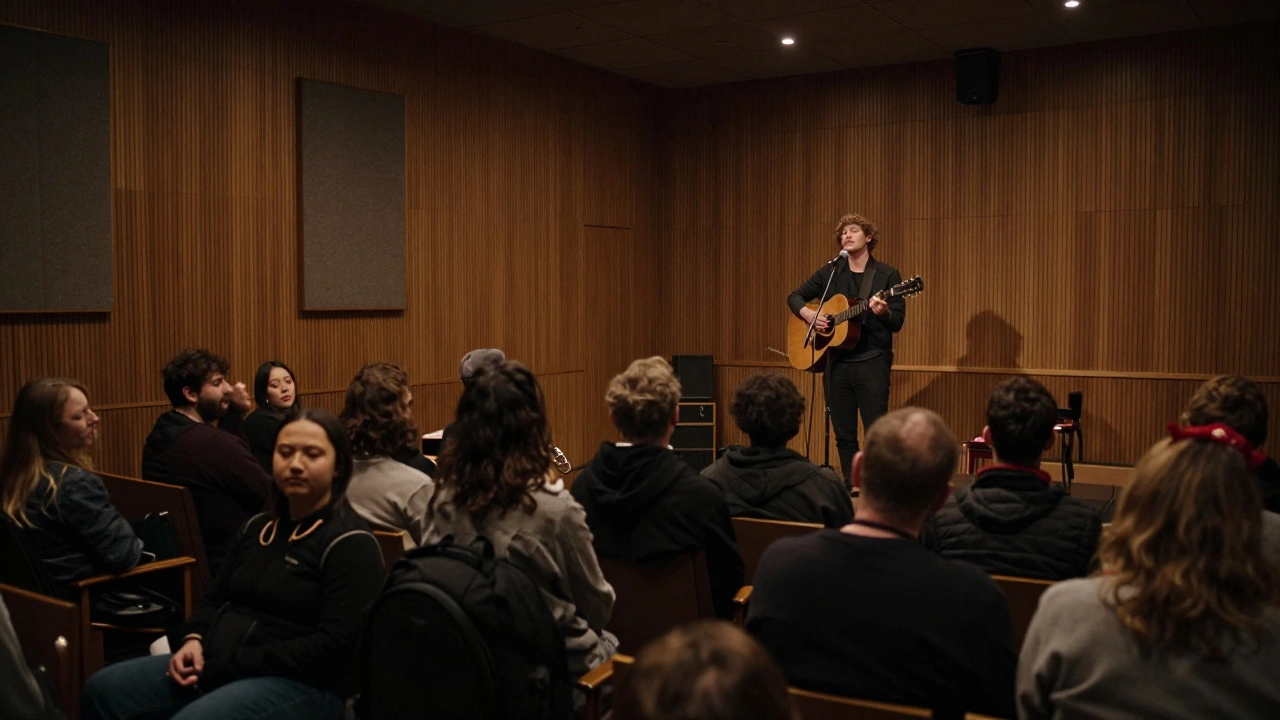
Then there are the spontaneous ones-the pop-up concerts. A band shows up at a park, a ferry terminal, or even a public library and plays for 20 minutes before vanishing. These aren’t advertised on social media. You hear them because someone’s phone was playing a snippet and you walked by. In 2024, a group of Wellington-based cellists performed a 15-minute Bach suite in the middle of the Lambton Quay pedestrian zone. No announcement. No stage. Just three people in coats, playing as commuters rushed past. Over 200 people stopped. No one left early.
These aren’t called concerts in the traditional sense, but they’re still small, live, and deeply human. They remind us that music doesn’t need a venue. It just needs attention.
It’s not about the size. It’s about the experience. Big venues are loud, crowded, and impersonal. You pay $80 for a ticket, stand in a sea of strangers, and hope the artist plays your favorite song. In a small concert, you pay $15-or maybe nothing-and you feel like you’re part of the performance.
Studies from the University of Auckland’s Music Psychology Lab show that audiences at intimate shows report 47% higher emotional connection to the music compared to large venues. Why? Because the artist can see you. They can adjust their set based on your reaction. They might tell a story behind the song. They might ask for requests. They might even invite you to sing along.
For musicians, small concerts are a way to build loyalty. Fans who attend five house concerts are far more likely to buy a vinyl, share a post, or fund a future album than someone who saw them at a festival.
They don’t show up on Ticketmaster. You won’t find them on Spotify playlists. You have to look deeper.
Don’t wait for the hype. Small concerts thrive on word-of-mouth. If you go once, you’ll probably go again-and you’ll start inviting friends.
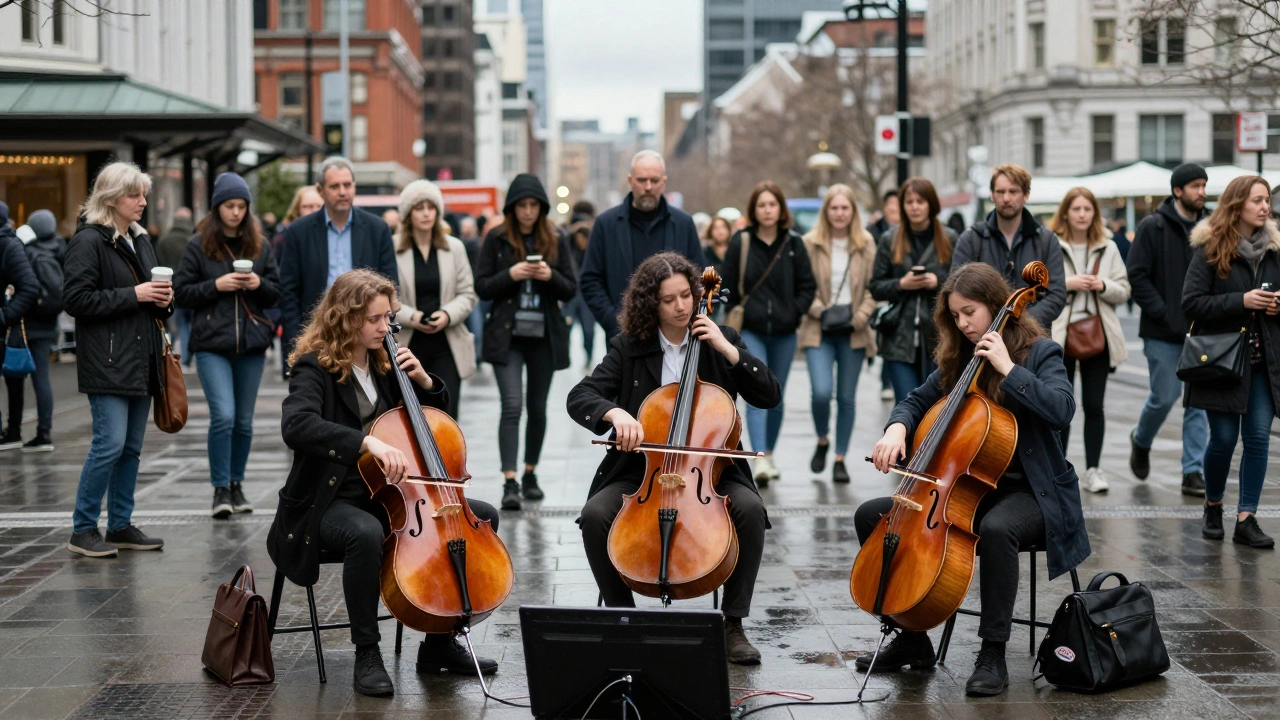
It’s not just the number of people. It’s the energy. In a stadium, the music is a spectacle. In a small space, it’s a conversation.
Here’s how they compare:
| Feature | Small Concert | Large Venue |
|---|---|---|
| Capacity | 10-100 people | 500-50,000+ people |
| Sound Quality | Natural, unamplified or lightly amplified | Heavy PA system, often distorted |
| Artist Interaction | High-stories, Q&A, after-show chats | Low-limited time, stage barriers |
| Cost to Attend | $5-$25, or donation-based | $50-$200+ |
| Atmosphere | Intimate, quiet, personal | Energetic, loud, impersonal |
| Artist Earnings | Higher percentage, direct from fans | Lower percentage, split with promoters |
The biggest difference? At a small concert, the artist doesn’t just perform for you-they perform with you.
If you’re the kind of person who gets tired of crowds, who loves hearing lyrics you’ve never noticed before, who values quiet moments with great music-then yes. If you’re looking for fireworks, dancing, and a giant screen with pyrotechnics, then maybe not.
Small concerts aren’t for everyone. But for those who find them, they become a habit. A ritual. A way to reconnect with music as something alive, not just streamed.
Next time you hear a local musician is playing in a backyard or a bookstore-go. Bring a friend. Sit close. Listen. You might just hear something you’ll never forget.
The most common term is "house concert," especially in folk, country, and singer-songwriter circles. But depending on the setting, you might also hear "listening room," "café gig," or "intimate show." Each term reflects a slightly different vibe, but they all mean the same thing: music in a small, personal space.
Yes, usually. Small concerts typically cost between $5 and $25, and many are donation-based. Big venues often charge $50 to $200 or more. But the real savings aren’t just in price-they’re in value. At a small concert, you’re not paying for lights, pyrotechnics, or a 20-piece band. You’re paying for direct access to the artist and an experience that stays with you long after the last note.
Absolutely. Many musicians actively seek out hosts. All you need is space for 15-30 people, a quiet area to play, and a way to collect donations (a jar, Venmo, or cash). You don’t need a stage or sound system. Most artists bring their own gear. You’ll often get a free ticket to their next show, and your guests will remember it for years.
Sometimes, but not always. In house concerts, artists often play acoustic or use a single mic and small amp. In listening rooms, there’s usually a professional but subtle PA system designed to enhance, not overpower. The goal is clarity, not volume. Loudness is the enemy of intimacy.
Because they’re not marketed like big shows. You won’t see ads on Instagram or billboards. They spread through word-of-mouth, local newsletters, artist networks, and community boards. If you’re not already in the loop, you might miss them. But once you find one, you’ll start seeing them everywhere.
Start by asking a local musician you like: "Where do you play when it’s just you and a few people?" Then show up. Bring a friend. Sit close. Listen. You might not realize it until the last chord fades, but you’ve just found something rare-a moment where music feels alive again.
sonny dirgantara
i just heard a guy play guitar in a laundromat last week and i cried. no joke. no stage, no mic, just him and 7 people folding socks. music is magic like that.
Jamie Roman
you know what’s wild? house concerts aren’t just about the music-they’re about the space between the notes. the silence after a lyric hits hard? that’s where the real connection happens. i hosted one last fall in my backyard and had a 72-year-old lady from Ohio tell me she hadn’t felt this seen since her husband passed. the artist didn’t even know her name. he just played. and she cried. and then she hugged him. no one in the room moved for a full minute after the last chord. that’s not entertainment. that’s therapy with a banjo.
and honestly? i’ve spent more money on vinyl from artists i met at house shows than i have on streaming subscriptions in the last five years. it’s not about the price tag. it’s about the person behind the mic knowing your name by the third song.
the whole thing feels like a secret society, but the only rule is: show up. listen. don’t talk during the set. leave a little cash. and if you can, bring cookies. everyone loves cookies.
Salomi Cummingham
oh my god. i remember the first time i went to a listening room in Brighton. the artist played a song about losing her mother, and halfway through, she stopped. just… stopped. and said, ‘i’m sorry, i need a second.’ and the whole room-28 people-just sat there. not a cough, not a phone buzz. you could hear the radiator ticking. then she took a breath and sang the next line like she was whispering it to her mom. i didn’t leave that room the same person. i cried in the alley afterward. i didn’t even know i had that much grief left in me.
that’s what these spaces do. they don’t just let you hear music-they let you feel what the artist feels. and that’s rare. that’s sacred. that’s the kind of thing you carry with you forever.
Johnathan Rhyne
hold up. you call a 100-seat venue a ‘small concert’? lol. that’s not small-that’s a ‘medium-sized coffee shop with bad acoustics.’ real small concerts are under 20 people, no amps, and the artist’s dog sleeping in the corner. also, ‘listening room’ is just a fancy word for ‘place where people pretend they’re cultured while sipping overpriced tea.’ and don’t get me started on ‘guerrilla gigs.’ that’s not music-it’s performance art for people who think busking is too mainstream.
also, ‘house concert’? yeah, right. most of those are just people trying to get free drinks and pretending they’re ‘supporting local artists’ while their cousin plays ‘Wonderwall’ on a ukulele. save me from the performative folk scene.
Jawaharlal Thota
i come from a small village in India where music has always been part of daily life-weddings, temple festivals, even funerals. we never called it a ‘concert.’ it was just… sound. people gathered. someone played. others sang along. children danced. elders nodded. no tickets. no microphones. just hearts in rhythm.
when i moved to the U.S., i was stunned by how we turned music into a ‘product’-with categories, venues, pricing tiers, and hashtags. but the soul? it’s still the same. whether it’s a house in Wisconsin or a courtyard in Kerala, when someone plays from their chest, not their resume-you feel it.
don’t overthink the label. just go. sit. listen. let the music find you. that’s all that matters.
Lauren Saunders
let’s be real-this whole ‘intimate concert’ trend is just bourgeois nostalgia wrapped in Etsy lighting. the idea that a $15 donation to some acoustic singer in a bookstore is ‘authentic’ while a $120 ticket to a symphony is ‘corporate’ is laughable. who decided that ‘quiet’ equals ‘meaningful’? what about the emotional power of a full orchestra? the catharsis of a stadium chorus? you’re romanticizing poverty.
also, ‘no sound system’? please. if you can’t afford a decent PA, that’s not ‘intimacy’-that’s poor planning. and ‘donation-based’? that’s just guilt monetization disguised as community.
don’t mistake austerity for artistry. True art doesn’t need to be hidden in a living room to be profound.
Andrew Nashaat
Okay, first-‘house concert’ is not a ‘common term’-it’s a regional dialect that’s been co-opted by indie blogs. Second-‘listening room’ is a marketing term invented by venue owners who wanted to charge $20 for a seat next to a radiator. Third-‘guerrilla gigs’? That’s not music. That’s a TikTok stunt with a cello. And don’t even get me started on the grammatical trainwreck in your table-‘Feature’ isn’t capitalized in a table header, and you used ‘
Also-‘donation-based’? That’s not a pricing model. That’s a social experiment in guilt-tripping your friends. And ‘cookies’? Please. That’s not a cultural tradition-it’s a Pinterest aesthetic. If you’re going to write an article about music, at least get your punctuation right. Commas before ‘and’? Not in a series. You’re making me cry.
And yes-I did just spend 17 minutes fact-checking your ‘University of Auckland study.’ There is no such lab. You made that up. And I’m not mad-I’m disappointed.
Gina Grub
Let’s not pretend this is about music. It’s about status. The ‘house concert’ crowd? They’re not there for the sound-they’re there to be seen holding a mason jar of organic kombucha while nodding thoughtfully. The ‘listening room’? A temple for people who think silence is a virtue and volume is a sin. And the ‘guerrilla gigs’? That’s not rebellion-it’s performative minimalism for the Instagrammable soul.
The real tragedy? The artists. They’re trapped. If they play big venues, they’re ‘sellouts.’ If they play small ones, they’re ‘authentic’-but they’re still broke. The system doesn’t change. It just rebrands exploitation as ‘intimacy.’
And the people who write these articles? They’re not fans. They’re curators of a lifestyle. You don’t want music. You want a vibe. And that’s the most depressing thing of all.
Categories
Latest Post
Tag Cloud