
When people talk about the most famous concert ever, they’re not just thinking about loud music or big crowds. They’re thinking about moments that changed culture, brought people together across divides, or became legends before the internet even existed. There have been thousands of huge shows - stadiums packed, global broadcasts, superstar performances - but only a handful truly stuck in the collective memory.
Woodstock isn’t just a concert. It’s a symbol. Over 400,000 people showed up on a dairy farm in upstate New York for a three-day music festival that turned into a cultural earthquake. Rain turned the grounds to mud. Porta-potties ran out. Food ran short. And still, no riots. No violence. Just music, shared blankets, and strangers helping each other survive.
Artists like Jimi Hendrix, Janis Joplin, and Santana played under muddy skies. Hendrix’s version of the U.S. national anthem, distorted and screaming through his guitar, became an instant icon - a sonic protest that said more than any speech could. The event wasn’t even supposed to be that big. Organizers expected 50,000. They got ten times that. And yet, Woodstock became the blueprint for every music festival that came after it.
It wasn’t just about the music. It was about the idea that a massive group of young people could gather peacefully, without police brutality or chaos. That alone made it legendary. Today, you can still find Woodstock T-shirts in thrift stores, documentaries on streaming platforms, and grandparents telling their grandkids, "I was there."
If Woodstock was about freedom, Live Aid was about responsibility. On July 13, 1985, two concerts happened at the same time - one at Wembley Stadium in London, the other at JFK Stadium in Philadelphia. They were broadcast live to 1.9 billion people across 150 countries. The goal? Raise money for famine relief in Ethiopia.
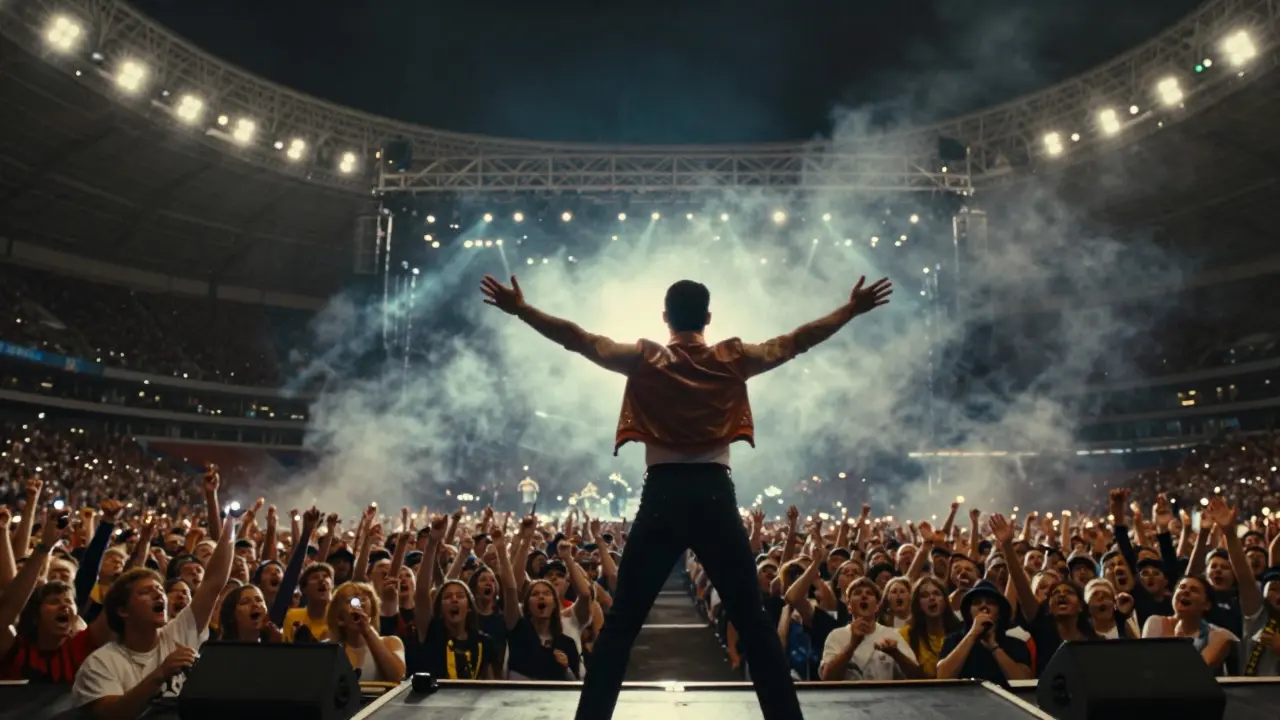
Queen’s set at Wembley is often called the greatest live performance in rock history. Freddie Mercury owned the stage like no one else could. He didn’t just sing - he commanded a stadium of 72,000 people like a choir conductor. When he held out his hand and the crowd roared back in perfect unison during "Radio Ga Ga," it wasn’t a concert moment. It was a spiritual one.
Brian May later said the crowd’s response during "We Will Rock You" felt like the whole planet was stomping together. The concert raised over $127 million (equivalent to nearly $350 million today). It proved music could move governments, corporations, and ordinary people to act. And it showed that a concert could be more than entertainment - it could be a lifeline.
Some say the most famous concert wasn’t even the biggest. It was the last one. Queen’s performance at Wembley Stadium on July 11, 1986, during their Magic Tour, was their final show with Freddie Mercury before his health declined. The crowd of 72,000 didn’t know it would be the end. But the band did. And you can feel it in every note.
Mercury, thin and visibly ill, gave everything. He danced, he sang, he held the mic with one hand while waving to fans with the other. He didn’t just perform "Somebody to Love" - he turned it into a prayer. The crowd sang every word back to him, louder than the PA system. The footage of him walking off stage after "Love of My Life," holding the mic stand like a staff, still gives people chills.
That show was recorded and later released as Live at Wembley ’86. It’s not just a concert film. It’s a farewell. A monument. A reminder that greatness isn’t always about volume - sometimes it’s about presence.
Not all famous concerts happen in stadiums. Sometimes, they happen on a TV stage in front of a live studio audience. Michael Jackson’s performance of "Billie Jean" at the Motown 25: Yesterday, Today, Forever TV special in 1983 wasn’t a sold-out arena show. But it reached over 50 million viewers in the U.S. alone.
When he first did the moonwalk - a move he didn’t invent but perfected - the world stopped. Kids across America tried to copy it in their living rooms. Adults who had never cared about pop music suddenly watched. The performance was so powerful, it didn’t just boost his album sales - it redefined what a pop star could be. Black artists had been on TV before. But no one had ever commanded that kind of attention, that kind of magic, in that moment.
It wasn’t just about the dance. It was about the precision, the silence before the beat dropped, the way he made the whole stage feel like it was breathing with him. That 4-minute performance changed music videos, stage choreography, and pop culture forever.
Not every massive concert becomes legendary. Some have bigger crowds. Some have newer technology. Some have better sound systems. But fame isn’t about scale. It’s about meaning.
Woodstock captured a generation’s hope. Live Aid turned music into humanitarian action. Queen’s Wembley show became a quiet, heartbreaking farewell. Michael Jackson’s moonwalk turned a dance into a global language.
Compare those to modern mega-shows like Taylor Swift’s Eras Tour - which broke records for ticket sales and revenue - or Beyoncé’s Coachella performance, which was hailed as a cultural reset. Those are incredible. But they’re not yet woven into history the same way. Why? Because time hasn’t had a chance to test them.
True fame takes decades to settle. It needs to outlive trends. It needs to be remembered by people who weren’t even born when it happened. The most famous concerts aren’t just heard - they’re felt, retold, and passed down.
There’s no formula. But if you look at the top few, they all share something:
Modern concerts are bigger, louder, and more expensive. But they rarely carry the same weight. Why? Because today’s shows are often about spectacle, not soul. About algorithms, not emotion. About selling merch, not changing minds.
The most famous concerts weren’t the loudest. They were the ones that made people feel something they couldn’t explain - and then made them want to tell someone else about it.
Maybe. But it would have to break the mold.
Imagine a show where a rising artist, unknown to the mainstream, uses their platform to speak out during a global crisis - and the crowd doesn’t cheer for the music, but for the courage. Or a livestreamed concert from a war zone that unites listeners across borders, not with pop hooks, but with raw humanity.
Or maybe it’s not about the artist at all. Maybe the next legendary concert is the one where fans, not performers, become the story - like when thousands sang "Bohemian Rhapsody" in unison at stadiums after Freddie’s death, turning grief into a shared anthem.
History doesn’t record the biggest concert. It records the one that changed how people felt about music - and about each other.
Woodstock is often called the most famous because of its cultural impact, not just attendance. It symbolized a generation’s ideals - peace, music, unity - during a time of deep division. While other concerts had bigger crowds or higher revenue, few changed how society saw music and youth culture the way Woodstock did.
As of 2026, Taylor Swift’s Eras Tour holds the record for highest-grossing concert tour, earning over $1 billion. But money doesn’t equal fame. Live Aid raised more in real-world impact - over $127 million for famine relief - and reached more people globally in real time. Fame isn’t measured in dollars, but in lasting memory.
It was Freddie Mercury’s final full performance before his illness worsened. The emotion in his voice, the way he connected with the crowd, and the knowledge that this might be the last time made it unforgettable. It wasn’t the biggest show, but it was one of the most human. Fans still watch it today not for the lights or the pyrotechnics - but for the heart.
No concert broadcast has surpassed Live Aid’s 1.9 billion viewers across 150 countries. Even major events like the Super Bowl halftime show or the 2012 London Olympics opening ceremony reached fewer people globally. Live Aid’s power came from its urgency - people weren’t watching for entertainment. They were watching because they wanted to help.
It’s arguably the most famous single moment. Michael Jackson’s moonwalk during Motown 25 wasn’t just a dance move - it became a global phenomenon overnight. Children copied it. Adults debated it. It redefined pop performance and turned a TV special into a cultural landmark. No other single gesture in concert history has had that kind of universal, immediate impact.

chioma okwara
woodstock wasnt even the biggest crowd ever. that was ravi shankars 1971 bangalore concert with over 800k people. and no one talks about it because it wasnt in america. also the word is 'porta-potties' not 'porta potties' you guys are killing me.
John Fox
live aid was cool but honestly the moonwalk was the moment that stuck with everyone. even my grandma knows what that is. no one cares about the money or the stats. its about that one second when the world held its breath.
Tasha Hernandez
oh my god another article pretending woodstock was sacred. please. it was a muddy disaster with half the attendees high on something that wasn't music. and queen? yeah sure freddie was a genius but he was also a man who died of aids and now we're turning him into a saint like he never had flaws. the moonwalk? iconic. but it was choreographed by a guy who stole it from a black dancer in the 70s. we're not talking about the real history are we. just the sanitized version that sells t-shirts.
Anuj Kumar
all these concerts are fake. the real event was the 1973 concert in cuba where che guevara secretly performed with a band of exiled musicians. the us government buried it. live aid was a cia operation to distract from ethiopia. and the moonwalk? that was a hologram. jackson was already dead in 1983. they used his body double. the government needed a distraction from the iran-contra scandal.
Christina Morgan
the real magic of these concerts isn't the stage or the lights. it's how they made ordinary people feel like they were part of something bigger. i remember watching the live aid broadcast with my dad. we didn't have much money but we donated five bucks. that moment changed how i saw music. it wasn't just entertainment. it was connection. and that's why these moments still matter.
Kathy Yip
im wondering if the next legendary concert will be one that happens in virtual reality. like a live stream from mars or something. or maybe when an ai artist performs and the crowd realizes theyre singing with a machine. will that feel as real as freddie mercury holding a mic like it was his last breath? i dont know. but i hope so.
Bridget Kutsche
you know what i love about these moments? they remind us that music can be a bridge. even if you dont like rock or pop, you can still feel the weight of what happened at woodstock or live aid. its not about the genre. its about the humanity behind it. if you ever feel disconnected from the world, watch the footage of queen at wembley. youll remember what it means to be alive together.
Jack Gifford
someone mentioned the eras tour. yeah its broke records. but you know what? taylor swift made people cry in the stands because she remembered their names. she wrote songs about them. that's the new woodstock. its not about the crowd size. its about the personal connection. she turned a concert into a hug for 500k people. that's wild.
Sarah Meadows
american culture is being erased by these foreign narratives. woodstock was a communist plot. live aid was a british propaganda stunt. the moonwalk? that was a product of hollywood brainwashing. the only real american concert was the 1984 super bowl halftime show with michael jackson. that was pure american genius. everything else is just noise.
Nathan Pena
the entire premise is flawed. fame is a construct of media hegemony. the so-called 'iconic' concerts were amplified by corporate broadcasting monopolies. queen's performance was syndicated through abc and cbs. michael jackson's moonwalk was engineered by motown's marketing division. these are not organic cultural phenomena. they are commodified spectacles dressed in nostalgia. the true art was lost when the camera started rolling.
Mike Marciniak
they never tell you that the rain at woodstock was caused by chemtrails. the government was testing weather manipulation on hippies. the mud? it was laced with hallucinogens. and the reason no one fought? because they were all sedated. the whole thing was a psyop to pacify the youth. you think you remember peace? you remember a controlled environment.
VIRENDER KAUL
it is incorrect to state that live aid reached 1.9 billion viewers. this figure is an extrapolation based on television penetration rates and not actual viewership data. furthermore, the attendance figures for wembley 1986 are disputed. official records indicate only 68,000 were present. the rest were either miscounted or fabricated for cinematic effect. the truth is often buried beneath emotional rhetoric.
Mbuyiselwa Cindi
i watched the queen concert on my cousin's phone in johannesburg. we didn't have electricity that night but the battery lasted just long enough. i cried. not because he was dying. but because he made us feel like we mattered. music doesn't need a stadium. it just needs someone to listen.
Krzysztof Lasocki
you guys are all missing the point. the real legend isn't any of these concerts. it's the fact that people still care enough to argue about them 40 years later. we're still talking. still sharing. still crying over a video of a man singing on a stage. that's the real magic. not the moonwalk. not the rain. just us. still here. still feeling it.
Henry Kelley
im just here to say i saw the eras tour last year. when she sang 'all too well (10 minute version)' the whole crowd went silent. then someone started singing. then another. then everyone. no one led it. it just happened. that moment? that was woodstock. that was live aid. that was the moonwalk. all rolled into one. and it happened in a parking lot in minnesota. who knew the future of legendary concerts was just... us?