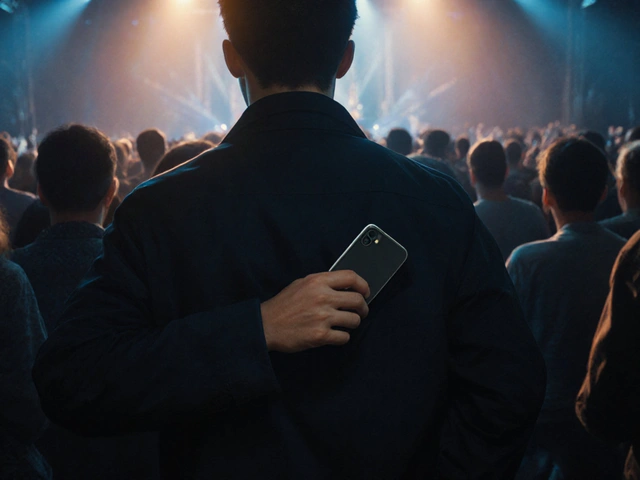

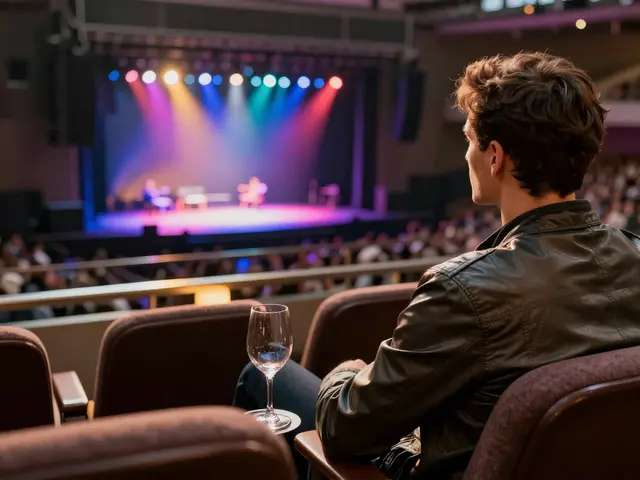
You’re at a concert. The lights drop. The crowd roars. You pull out your phone, open your favorite app, and hit record. You want to share this moment-maybe with friends who couldn’t make it, or just to capture the energy. But then you pause. Livestream concert-is that even legal?
Just because you can livestream a concert doesn’t mean you should. The real question isn’t whether your phone can handle it-it’s whether you have permission. Concerts aren’t just performances. They’re complex legal products. Behind every setlist, every light cue, every drum fill, there are multiple rights holders: the artist, the record label, the venue, the promoter, and sometimes even the songwriters and publishers.
When you livestream without permission, you’re not just sharing a video. You’re distributing copyrighted material. That includes the musical composition, the sound recording, and even the performance itself. Under international copyright law, including the Berne Convention and local laws like New Zealand’s Copyright Act 1994, these rights are protected. Even if you’re not making money from it, you’re still violating those rights.
Artists and labels don’t control livestreams because they’re stingy. They control them because their income depends on it. Official streams generate royalties, ticket sales, merchandise buzz, and data that helps them plan tours. Unofficial streams? They drain all of that. A fan livestream of a sold-out show can easily get 50,000 views-while the official stream might only hit 5,000. That’s not just unfair. It’s economically damaging.
Most concert venues have rules posted at the entrance. Look for signs that say “No recording” or “No professional cameras.” Those signs aren’t just for cameras-they include phones. Many venues now use digital signage or even audio announcements before the show: “Please keep your phones in your pockets. This is a live experience, not a livestream.”
Why? Because venues have contracts with artists and promoters that require them to enforce exclusivity. If fans are livestreaming, it reduces ticket demand for future shows. It also makes it harder for the artist’s team to control the quality of how their performance is presented. Imagine a shaky, dark, muffled video going viral-now that’s how thousands of people remember the show. That’s bad branding.
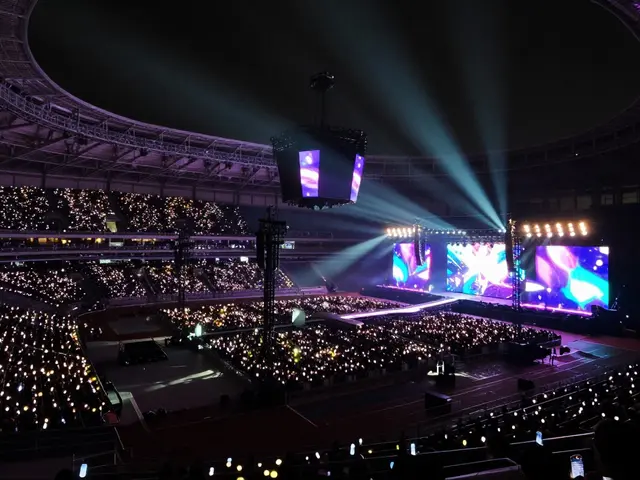
Some venues have gone further. In 2024, a major festival in Australia started using RF jammers to block cellular signals in the main arena during performances. Not to stop phones entirely-just to prevent livestreaming. It was controversial. But it worked. Attendance at official streams went up 40% the next month.
Some artists do allow it. But they’re the exception, not the rule.
Grimes livestreamed her own 2023 tour using a custom app that let fans record and upload clips-only if they tagged her and used a specific hashtag. She then curated the best clips into a fan-made documentary. That was a controlled, intentional move. She owned the platform, the branding, and the rights.
Similarly, the band Phish has a long history of letting fans record shows. But they’ve always done it under a specific license called the “Phish.net Taping Policy.” You can record, but you can’t sell it. You can’t livestream it. You can only share the recording privately with friends. Even then, you need to follow their rules.
These cases are rare. Most artists don’t have the infrastructure-or the trust-to let fans stream freely. And if they do, they’ll say so clearly on their website, social media, or ticketing page.
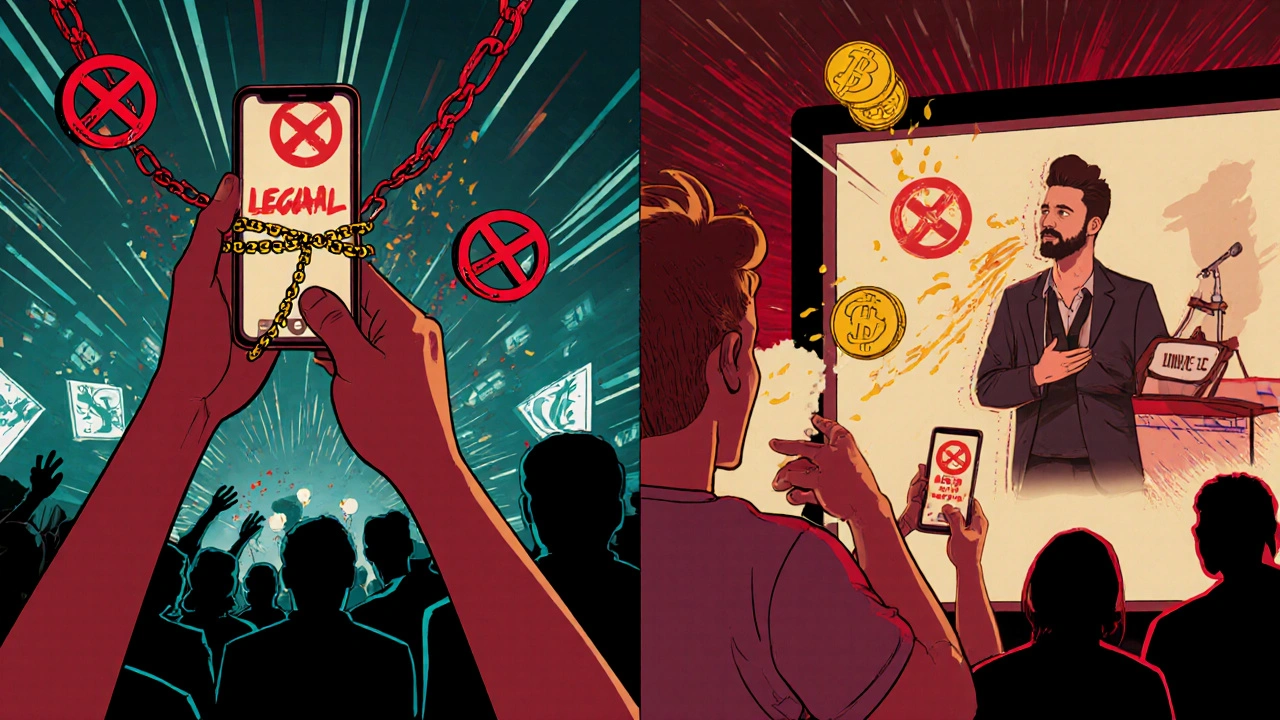
If you livestream a concert without permission, the most common outcome? Your stream gets taken down. Within minutes. Platforms like YouTube, TikTok, Instagram, and Facebook use automated systems that detect copyrighted audio in real time. If your phone picks up even 10 seconds of a song, the system flags it. The video disappears. Your account might get a strike.
More serious cases? You could get banned from the venue. Staff may ask you to leave. In rare cases, especially if you’re using professional gear or broadcasting from a high-profile show, you could face legal notices. In 2023, a fan in Germany was sent a cease-and-desist letter after livestreaming a Coldplay show with 200,000 viewers. He wasn’t fined-but he had to pay legal fees to prove he didn’t profit from it.
And yes, record labels do monitor. They have teams that scan platforms daily for unauthorized streams. They don’t go after every fan. But if your stream goes viral? You’re on their radar.
There are ways to stream concerts without breaking the law.
The key is intention. Are you trying to share the experience-or replace the experience? If you’re streaming to give others a taste, you’re risking harm. If you’re streaming because you can’t afford a ticket and want to feel part of it? That’s understandable. But it’s still not legal.

Think of it this way: every time you livestream a concert without permission, you’re taking money out of the musician’s pocket. Not just the artist-but the sound engineer, the lighting tech, the road crew, the merch seller. Touring is how most musicians make a living. Streaming kills ticket sales. And when ticket sales drop, tours shrink. Smaller venues close. Local bands get fewer opening slots.
It’s not about being a “bad fan.” It’s about understanding how the system works. You love the music. So do the people who make it. But they need to eat, pay rent, and keep making songs. If everyone livestreams, the next concert you want to see might never happen.
The industry is changing. Some labels are experimenting with revenue-sharing models. Imagine if, when you livestream a show, a small percentage of ad revenue goes to the artist. That’s already happening on platforms like StageIt and Veeps.
And fans are pushing for change. A petition in the UK last year asked for “fair streaming rights” for fans-allowing non-commercial livestreams if they link to official ticketing. It got 87,000 signatures. No law changed yet. But the conversation did.
For now, the rule is simple: if it’s not official, don’t stream it. If you want to support the music, buy the ticket. If you want to share the moment, record it privately. And if you really love the artist? Share their official stream instead.
No. Charging money doesn’t make it illegal-it’s the lack of permission that does. Even free livestreams of concerts violate copyright law because you’re distributing protected content without authorization. The law doesn’t care if you’re making a profit. It cares if you have the right to share it.
If the artist or their official team broadcasts the concert through their own channel-like their YouTube, Instagram, or website-then you’re free to share that link. But you still can’t record and re-stream it yourself. The official stream is licensed. Your personal recording isn’t.
It depends. Small bands often don’t have the resources to enforce copyright. But that doesn’t mean it’s legal. Always ask the band or venue first. Many indie artists are happy to let fans stream if you tag them and link to their merch or upcoming shows. A quick message like, “Can I livestream your set?” goes a long way.
Yes-if you’re broadcasting publicly. You’d need licenses from performance rights organizations (like APRA AMCOS in New Zealand, ASCAP/BMI in the U.S., or PRS in the UK) for the music, and from the rights holder for the sound recording. Most fans don’t have these. That’s why official streams exist-they handle the licensing for you.
It comes down to business strategy. Big acts with global followings often restrict streams to protect ticket sales. Smaller acts or niche genres (like jazz or folk) may encourage it to grow their audience. Some festivals use livestreams as a marketing tool-only offering them to ticket buyers. There’s no universal rule. Always check the event’s official policy.
You don’t have to choose between loving music and respecting it. The easiest way to support artists is to experience their work the way it was meant to be seen-live, in person, with others. If you can’t be there, watch the official stream. Buy the merch. Share the link. Leave the phone in your pocket. The music will thank you.
Adithya M
Let me break this down for you with proper grammar and zero chill: livestreaming a concert without permission is a direct violation of copyright law under Berne Convention Article 11(1)(ii), and you're not some noble rebel-you're just a guy with a phone ruining the business model of people who actually work for this. The fact that you think 'it's just for friends' doesn't make it legal. It makes you a liability.
Donald Sullivan
Bro. I get it. You wanna share the vibes. But if you’re livestreaming a Taylor Swift show because you couldn’t afford a ticket, you’re not a fan-you’re a leech. The band didn’t get paid. The stagehand didn’t get paid. The merch girl? Still out here crying over unpaid rent. Put the phone down. Be present. Or better yet-buy a ticket next time.
Tina van Schelt
Ugh. I just got back from a Phish show last weekend and I swear, the energy was electric-but I didn’t touch my phone once. Not even to snap a pic. Why? Because I didn’t want to miss the way the bass vibrated in my chest, or the way the crowd sang along like a church choir. Sometimes the best memories aren’t recorded-they’re lived. And honestly? That’s the real magic.
Ronak Khandelwal
Love this breakdown 🙌 Seriously, this is the kind of content that reminds us we’re not just consumers-we’re part of a community. If you love the music, support the humans behind it. Buy merch. Share the official stream. Even just telling a friend to go see the artist live? That’s power. Let’s keep the music alive, not just online. 💛🎶
Jeff Napier
Who says copyright law even matters anymore? The system is rigged. Labels own everything. Artists get pennies. So why should I play by their rules? If I livestream and it helps someone discover a band they’d never find otherwise, that’s not theft-that’s activism. The real criminals are the corporations hoarding music like it’s gold. Free the tunes.
Sibusiso Ernest Masilela
How utterly pedestrian. You treat music like a commodity? How quaint. Real art is not meant to be monetized, controlled, or sanitized for corporate consumption. The fact that you think a ‘license’ from ASCAP legitimizes anything is proof you’ve lost touch with the soul of live performance. The true fan doesn’t need permission-they need presence. And you? You’re just another bureaucrat with a smartphone.
Taylor Hayes
I get where both sides are coming from. On one hand, artists need to make money. On the other, fans just want to feel connected. Maybe the answer isn’t ‘ban all livestreams’ but ‘create better official options’-like low-cost, high-quality streams with artist commentary or behind-the-scenes footage. Make it worth paying for. That’s how you win hearts, not enforce rules.
Sanjay Mittal
For those asking about small local bands: always ask first. Most indie artists will say yes if you tag them, don’t monetize it, and link to their Bandcamp or upcoming shows. I’ve seen this work wonders-bands grow their audience, fans get to share the experience, and no one gets sued. It’s not about legality-it’s about respect. A quick DM can change everything.
Mike Zhong
If copyright law is the only moral framework you have for art, then you’ve already lost. The moment you reduce a live performance to a set of legal rights, you strip it of its humanity. The artist’s soul is in that moment-not their licensing agreement. The real crime isn’t livestreaming. It’s believing the system is fair.
Jamie Roman
I used to livestream everything-until I realized I was more focused on getting the shot than feeling the music. Then I started going to shows just to be there. No phone. Just me, the crowd, the lights, the bass. And you know what? I remember those nights way better than any video I ever recorded. It’s not about being perfect-it’s about being present. Try it. You might be surprised how much louder the music sounds when your phone’s in your pocket.
Salomi Cummingham
Oh my god, this post hit me right in the feels. I remember seeing my first concert-16 years old, standing in the rain, soaked to the bone, screaming lyrics I knew by heart. I didn’t record a single second. I just… lived it. And now, years later, when I close my eyes, I can still feel that moment. That’s what music is for. Not for algorithms. Not for clout. For memory. For soul. For the quiet, sacred space between the notes where you feel alive. Please, just… be there.
Johnathan Rhyne
Technically speaking, the article misuses ‘fair use.’ You can’t claim fair use for livestreaming a full concert, even if it’s non-commercial. Fair use applies to commentary, criticism, parody, or education-not broadcasting a full performance. Also, ‘no profit’ doesn’t equal ‘no violation.’ You’re still distributing protected content. And before you say ‘but everyone does it’-that’s not a defense, it’s a trend. And trends don’t override copyright law. Grammar check: done. Law check: done. You’re welcome.
Mark Tipton
Let me be clear: the entire premise of this article is a corporate propaganda piece disguised as ethical advice. The real issue isn’t livestreaming-it’s that the music industry has turned live performance into a gated experience. You want fans to ‘buy a ticket’? Then stop pricing them out of $300+ VIP packages. Stop forcing them to pay $150 just to hear a 90-minute set. Stop letting Ticketmaster gouge them with fees. Then maybe-just maybe-fans won’t feel like they’re stealing when they share a clip. The system is broken. Don’t blame the fans. Blame the monopolies.