

When you buy a ticket to a concert, the first thing you probably check is the seat location. But here’s the real question: does sitting higher up give you a better experience than being right up front? The answer isn’t simple. It depends on what you’re looking for - the energy, the sound, the view, or just a little breathing room.
Sound quality here can be unpredictable. Speakers are angled toward the crowd, but the front rows get hit with direct, unbalanced audio. High frequencies can be piercing. Low end can feel like a punch in the gut - fun for a minute, exhausting after three songs. Many seasoned concertgoers avoid front row unless they’re seeing a small, intimate act like an acoustic set or indie band where detail matters more than spectacle.
At venues like Madison Square Garden or the O2 Arena, these seats often cost less than VIP packages but deliver 90% of the experience. You can also see the crowd reaction - something you miss when you’re buried in the front. And if the artist walks the catwalk or comes downstage, you’re still in the action zone.
From the upper levels, you see the concert as a whole. You watch the band move across the stage, see how the lighting shifts with each song, and catch the choreography of dancers and backup musicians. It’s like watching a movie on a big screen instead of staring at a close-up. For orchestras, operas, or theatrical pop shows (think Beyoncé, Taylor Swift, or Coldplay), the elevated view reveals the artistry behind the spectacle.
Sound here is often smoother. High-frequency speakers are aimed downward, so treble doesn’t blast your ears. Bass is less overwhelming, which helps if you’re sensitive to loud noise or want to enjoy the music without ringing in your ears afterward. Many audiophiles and older fans prefer this. One survey by Live Nation in 2024 found that 68% of attendees over 40 rated upper-level seats as their favorite for sound clarity and comfort.

Here’s the truth: if you just want to see the show, a regular ticket in the mid-level section will give you more value. VIP tickets cost 2-4 times more. You pay extra for the hype, not necessarily the sightline. Unless you’re obsessed with getting a selfie with the artist or collecting limited-edition items, the extra cost rarely justifies the trade-off in sound or view.
Stage designers work the same way. They plan lighting cues, pyrotechnics, and video projections for viewers 40-60 feet away. Front-row fans often miss the visual storytelling because they’re too close. One lighting director told me, “We design for the eyes of someone who can see the whole canvas. Not someone staring at a single brushstroke.”
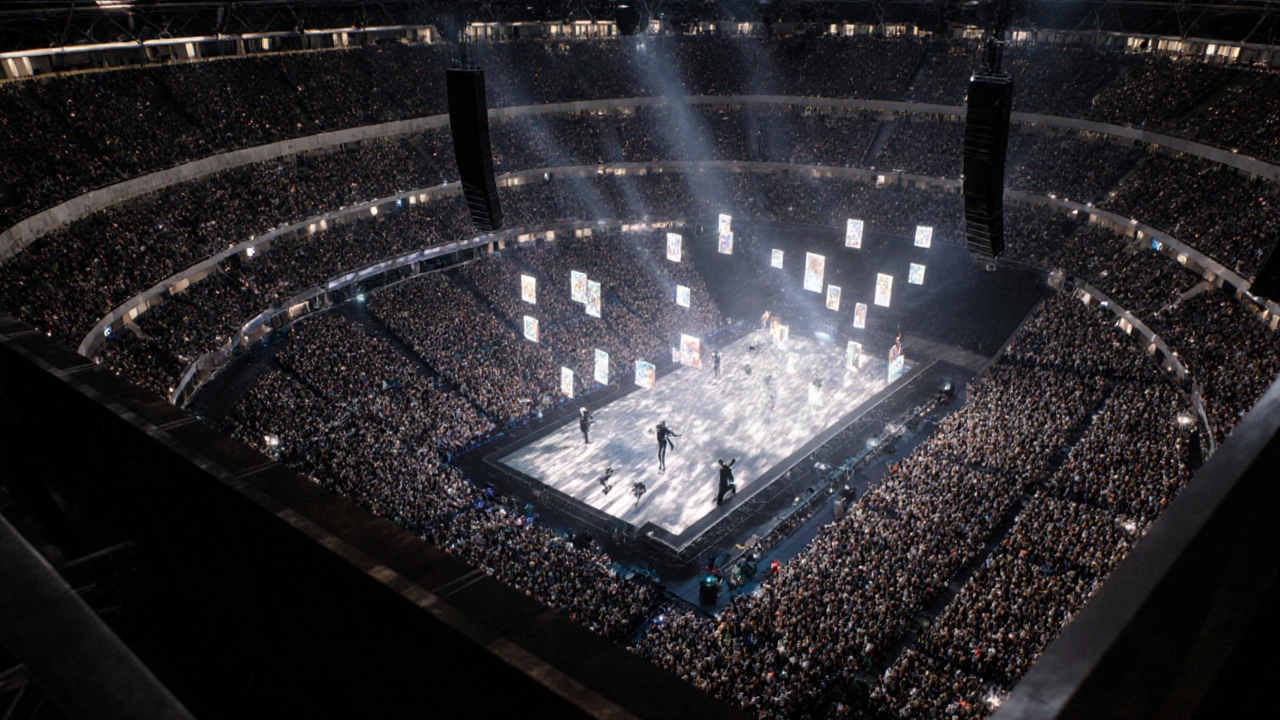
For classical concerts, the difference is even clearer. In Carnegie Hall, the best acoustics are in the middle of the upper balcony - not the front. That’s where the sound blends naturally. Front-row seats in a symphony hall often sound thin or tinny because you’re too close to the instruments.
Pro tip: Use venue seating tools like SeatGeek or Ticketmaster’s interactive map. Look for seats labeled “Optimal Viewing” or “Best Sound.” Those aren’t marketing fluff - they’re based on real acoustical testing.
So next time you’re choosing seats, ask yourself: Do I want to be in the middle of the storm - or to watch the whole sky change color?
It depends on what you value. Front row gives you energy and closeness but often distorts sound and hides the full stage. Balcony seats offer a complete view, clearer sound, and better comfort. For most people, mid-level seats in the lower bowl strike the best balance.
Only if you care about perks like meet-and-greets, exclusive merch, or early entry. VIP seats are often not the best viewing spots - they’re just closer to the stage. You pay for the experience, not necessarily the sightline. Always check the exact seat location before buying.
Sound engineers mix for the middle of the crowd, not the front. Upper-level seats receive a more balanced mix because they’re farther from the direct blast of speakers. High frequencies don’t overpower, and bass is less overwhelming. Many audiophiles and older fans prefer this clarity.
Yes. Stage lighting, video screens, and pyrotechnics are designed for viewers 40-60 feet away. From the balcony, you see the full choreography, lighting transitions, and stage movement. Front-row fans often miss these details because they’re too close to the action.
The middle of the upper balcony. Classical venues like Carnegie Hall are engineered for sound to blend naturally from that position. Front-row seats can sound thin or unbalanced because you’re too close to individual instruments. The goal is to hear the orchestra as one instrument - not separate parts.
If you’re still unsure, ask a friend who’s seen the artist live. Or check YouTube videos shot from different sections - you’ll see exactly what each seat looks like in real time. Your ears and eyes will thank you.


Michael Thomas
Front row? Only if you like your ears bleeding and your view blocked by some dude’s hoodie. Real fans know the upper deck is where the sound actually works. American venues are built for crowds, not idiots in the first row.
Abert Canada
My first concert was Metallica in Toronto, front row. Felt like my ribs were gonna crack. Second time? Upper balcony. Heard every guitar note, saw the whole stage light up like a damn movie. Canadian logic: why suffer for proximity when you can enjoy the whole thing?
Xavier Lévesque
So you’re telling me the people who paid $400 for a VIP ticket are just sitting there like they won the lottery… while missing the entire light show because they’re too busy staring at a pair of boots? Classic. I’d rather be in the balcony with my coffee and my dignity.
Thabo mangena
It is with profound respect for the art of musical performance that I must emphasize the acoustic integrity of the upper balcony. In institutions such as Carnegie Hall, the design of the space ensures that sound waves converge optimally at mid-elevation. To sit closer is to disrupt the harmonic balance intended by the composer and engineer alike. One does not drink fine wine by pouring it directly into one’s throat.
Karl Fisher
Ugh, I saw Taylor Swift from the front row and let me tell you - it was *transcendent*. The way her eyelashes caught the spotlight? The way the pyrotechnics exploded behind her? I cried. I’m pretty sure I had a spiritual experience. The people in the balcony? They were just… watching. Like it was a documentary. How do you even live with that level of emotional detachment?
Buddy Faith
the whole thing is a scam
they want you to think the middle is best
but the truth is the front row is where the magic is
they just dont want you to know because they make more money off the balcony
the sound engineers are in on it
they dont mix for the middle they mix for the rich people in the back
trust me i read a forum once
Scott Perlman
just go where you feel good
if you like loud and close then front row
if you like to hear everything then up high
no need to overthink it
music is for feeling not for winning
Sandi Johnson
Oh wow. So the person who wrote this is basically saying the only way to be a real music fan is to sit far away and pretend you’re above the rabble? I’m sure the guy who paid $1500 for front row merch and a backstage pass is just… confused. Like he missed the memo that ‘authenticity’ means being in the nosebleeds.