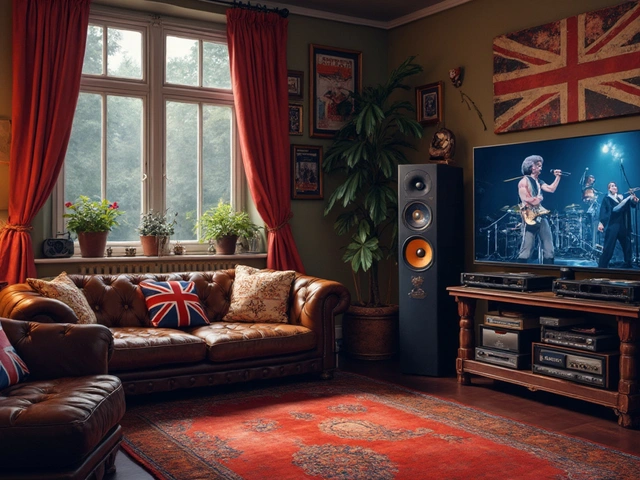

Ever sat through a rainy Tuesday night wishing you could be front row at a Bowie concert, or feel the bass shake your chest at a live Radiohead show - without leaving your couch? That’s the promise Qello makes. But after years of streaming services coming and going, it’s fair to ask: is Qello actually worth it? Or is it just another digital ghost of live music that’s hard to access and even harder to justify paying for?
Qello is a streaming platform focused entirely on full-length, professionally recorded live concerts. Unlike YouTube clips or TikTok snippets, Qello offers high-definition, multi-camera, audio-optimized recordings of performances from artists across genres - from classical orchestras to punk rock bands. It launched in 2013, built on partnerships with major concert producers like Live Nation and AEG Presents. By 2025, it had over 12,000 concert titles in its library, with new additions every week.
What sets Qello apart isn’t just the quantity - it’s the quality. These aren’t fan-recorded phone videos. These are full-stage productions with professional lighting, sound mixing, and editing. Many were originally filmed for TV broadcasts or DVD releases. Some even include behind-the-scenes footage, artist interviews, and setlist commentary.
Qello’s catalog leans heavily on legacy acts and classic performances. You’ll find complete shows from David Bowie at Live Aid (1985), Johnny Cash at Folsom Prison (1968), Pink Floyd at Pompeii (1971), and Aretha Franklin at the Fillmore West (1971). But it’s not just nostalgia. Recent additions include Billie Eilish’s 2022 world tour, Taylor Swift’s Eras Tour highlights, and Travis Scott’s Astroworld Festival sets.
Classical and jazz fans also get solid coverage: Berlin Philharmonic, Vienna State Opera, and Miles Davis live at Montreux. Even niche genres like flamenco, gospel, and Afrobeat have dedicated collections. The platform doesn’t chase trends - it builds archives.
One thing it doesn’t have? Most new indie artists. If you’re into emerging acts from Bandcamp or SoundCloud, Qello won’t help you discover them. It’s not a discovery tool. It’s a museum.
Qello works like any subscription service. You pay monthly or yearly, and get unlimited access to the entire library. No ads. No limits on how many shows you watch. You can download concerts for offline viewing on iOS and Android apps. The interface is clean, with filters by artist, genre, year, and venue. Search is fast. Navigation is intuitive.
Playback quality is top-tier. Most shows are available in 1080p HD, with Dolby Digital 5.1 audio. Some newer recordings even offer 4K and immersive audio formats. The app works well on smart TVs (Apple TV, Roku, Fire Stick), and you can cast to Chromecast or AirPlay.
There’s no free trial. But you can test it with a one-month subscription at $9.99 USD. After that, it’s $7.99/month if you pay yearly - or $12.99 if you go month-to-month.
| Feature | Qello | Veeps | LiveXLive | YouTube (Official) |
|---|---|---|---|---|
| Library Size | 12,000+ full shows | 3,000+ (mostly recent) | 8,000+ (mix of live and clips) | Unlimited, but mostly low-quality |
| Video Quality | Up to 4K, Dolby Audio | 1080p, stereo | 1080p, stereo | Mostly 480p-720p |
| Exclusive Content | Yes - classic archival | Yes - artist livestreams | Yes - festival exclusives | No |
| Offline Viewing | Yes | Yes | Yes | No |
| Price (Yearly) | $7.99/month | $10.99/month | $9.99/month | Free |
| Artist Revenue Share | Yes - artists paid per stream | Yes - direct artist payouts | Yes - split with labels | No |
Veeps is better if you want to watch brand-new livestreams from indie artists. LiveXLive has more festival content and interactive features like chat rooms. But if you care about pristine quality and deep archives - Qello wins. YouTube is free, sure. But unless you’re okay with shaky phone footage and missing songs, it’s not a real substitute.
Qello isn’t for everyone. If you’re 18 and chasing the next viral TikTok sound, you’ll find it dull. But if you’re someone who:
Then Qello isn’t just worth it - it’s essential.
One user I spoke to, a 62-year-old retired teacher from Portland, told me she uses Qello every Sunday night to relive her 1979 Springsteen concert. She says, “I don’t just watch it. I feel it. That’s the difference.”
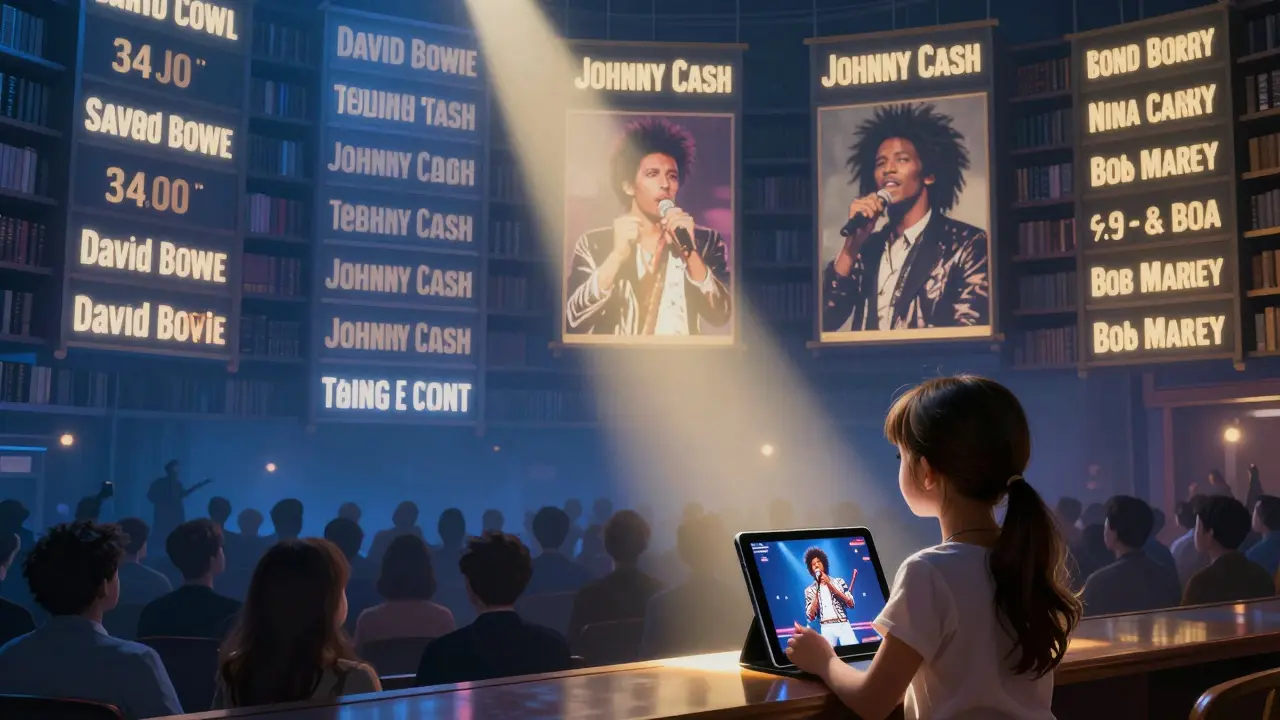
Beyond entertainment, Qello plays a quiet but vital role in preserving music history. Many of these concerts were never released on CD or streaming. Some were only shown on TV once, decades ago. Qello digitized them. Without it, they’d be lost.
For example, the 1983 Bob Marley concert in Zimbabwe - filmed for a documentary but never officially released - is now only available on Qello. Same with Prince’s 2011 Super Bowl halftime show, which was pulled from YouTube after legal disputes. Qello kept it alive.
This isn’t just convenience. It’s cultural stewardship.
Let’s break it down. $8 a month is less than one coffee a week. That’s one full concert per week - or two if you skip weekends. You’re not paying for a new album. You’re paying for hundreds of hours of live music history, preserved in the best possible quality.
Compare that to Spotify: you pay $11 for access to 80 million tracks - but almost none of them are live. You can’t hear Elvis at the Aloha Stadium. You can’t hear Joni Mitchell at Carnegie Hall in 1976. You can’t hear David Gilmour soloing on “Shine On You Crazy Diamond” in front of 80,000 people in 1994.
Qello gives you that. Not clips. Not snippets. The whole thing - from the opening chord to the final bow.
Is it worth it? If you love music - truly love it - then yes. It’s not just a service. It’s a time machine.
Qello isn’t flashy. It doesn’t have influencers or algorithm-driven playlists. It doesn’t try to be everything to everyone. It does one thing, and it does it better than anyone else: it brings the power, emotion, and raw energy of live music into your home - in the highest quality possible.
If you’ve ever stood in a crowd, felt the music in your bones, and thought, “I wish I could feel that again,” Qello is your answer. It’s not a luxury. It’s a lifeline for music lovers who refuse to let history fade.
Try the one-month subscription. Watch three shows. If even one of them gives you chills - you already know the answer.
No, Qello is not free. It requires a paid subscription. There’s no free tier or ad-supported version. However, you can test it with a one-month trial for $9.99, which gives you full access to the entire library. After that, the monthly rate drops to $7.99 if you pay yearly.
Yes. The Qello app for iOS and Android lets you download any concert for offline viewing. This is useful for travel, flights, or areas with spotty internet. Downloads are stored locally on your device and can be deleted anytime. There’s no limit to how many you can download.
Yes, but not as frequently as services like Veeps or LiveXLive. Qello focuses more on archived performances than real-time livestreams. That said, it does add new full-length shows from current artists regularly - including Billie Eilish, Taylor Swift, and Phoebe Bridgers. It’s not the best place to catch a brand-new livestream the night it happens, but it does keep its catalog updated with recent major tours.
YouTube has tons of live clips, but almost none are full, high-quality recordings. Most are fan-shot, low-resolution videos with bad audio. Qello offers professionally produced, multi-camera, audio-mastered full shows. If you want to experience a concert like you were there - with clear vocals, balanced instruments, and perfect lighting - YouTube won’t cut it. Qello does.
Yes. Qello works on Apple TV, Roku, Amazon Fire Stick, and Android TV. You can also cast from your phone or tablet using AirPlay or Chromecast. The TV app has a simple interface designed for remote control navigation, with large buttons and clear menus. No need to use a keyboard or mouse.
Yes. Qello pays artists and rights holders directly for each stream. Unlike YouTube, where revenue is split with labels and distributors, Qello has transparent licensing agreements. This means your subscription helps support musicians directly - even those who passed away decades ago. Their estates still receive royalties.
Still unsure? Watch one show - just one. Pick a performance from an artist you love. Put on headphones. Turn off the lights. Press play. Let it take you somewhere else. If you feel something - even for five minutes - you’ll know. Qello isn’t just worth it. It’s necessary.
poonam upadhyay
Okay but like… have you SEEN the 1971 Fillmore West Aretha performance on Qello? I cried. Like, full-on ugly cry while eating ramen at 2am. This isn’t streaming-it’s time travel. And the audio? Honey, my dog stopped barking and sat down like he was at a funeral. That’s power. Also, why is no one talking about how they digitized Prince’s Super Bowl? That was a miracle. Someone was gonna let it vanish forever. Qello didn’t let that happen. I’m not just subscribing-I’m donating to a museum.
Shivam Mogha
Worth it. Watched Bowie’s Live Aid. Worth the price alone.
Anand Pandit
I’ve been using Qello for over two years now and I can’t believe how many gems I’ve rediscovered. My dad used to play vinyls of Johnny Cash and Pink Floyd, and now I can show my 8-year-old the real deal-clean, crisp, and full of soul. The offline download feature is a game-changer for road trips. And yes, artists get paid-that’s huge. Most platforms forget that music is made by humans, not algorithms. Qello remembers. If you love music, this isn’t a luxury. It’s a responsibility.
Reshma Jose
I thought I’d hate this because I’m all about new indie stuff-but then I watched Nina Simone at Montreux 1976 and I was hooked. Like, physically moved. Qello doesn’t chase trends, it preserves legacy. And honestly? That’s rarer than you think. I just upgraded to yearly. My mom’s obsessed with the Berlin Philharmonic clips. We watch together on Sundays. It’s become our thing. No ads. No algorithm. Just pure, uncut emotion. I didn’t know I needed this until I had it.
rahul shrimali
Just tried it for a week. Bowie. Cash. Hendrix. Done. Paid for the year. No regrets
Rajat Patil
It is a quiet, profound gift that this service exists. Many of us have lost the physical experience of live music. But through Qello, we are not merely watching-we are remembering. The care taken in restoration, the dignity given to artists long gone, the absence of commercial noise-it is rare. I do not speak lightly when I say this platform honors the soul of music.
deepak srinivasa
Does Qello have any performances from Indian artists? Like R.D. Burman live? or Ustad Zakir Hussain? I’ve been looking for something like this for local classical too.
pk Pk
Deepak asked about Indian artists-and I’ll tell you something: Qello’s library is massive, but it’s not perfect. That doesn’t mean you wait. Start a petition. Email them. Tag them on socials. They listen. I did it for flamenco last year and now they added five new sets. If you care about your culture’s music, don’t just ask-make noise. The archive grows because people demand it. You got this.
NIKHIL TRIPATHI
I used to think live concerts were just about the crowd, the energy, the sweat-but Qello changed that. I watched a 1983 Bob Marley show in Zimbabwe last night. No audience noise, no crowd shots… just the music, the wind, the drums echoing across a field. It felt sacred. I didn’t realize how much I missed the silence between notes until I heard it in perfect clarity. And yeah, I cried. Again. This isn’t entertainment. It’s communion. Also, the app works flawlessly on my Fire Stick. Zero lag. Zero ads. Just music. Pure.
Shivani Vaidya
The preservation of cultural heritage through such a platform is an act of profound reverence. The meticulous restoration of audiovisual archives, the ethical compensation of rights holders, and the absence of commercial intrusion collectively constitute a model of digital stewardship rarely seen in contemporary media. One may question the utility of subscription-based access; however, the moral imperative to safeguard these artifacts transcends mere convenience. This is not merely a service-it is an archive of the human spirit.