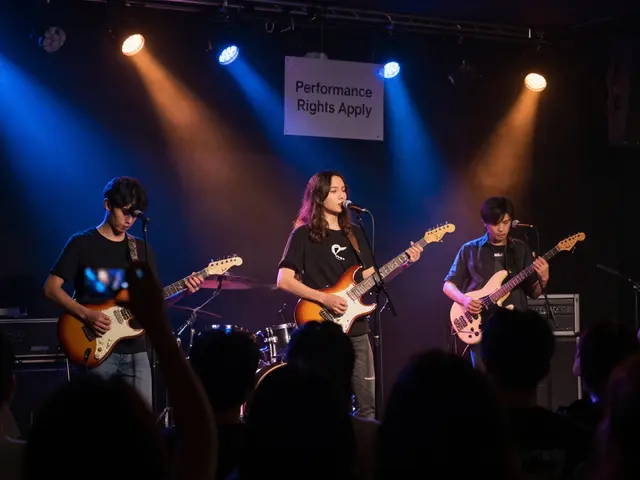

At its core, a defined as a concert is a live musical performance given by one or more musicians in front of an audience. While that sounds simple, the actual application involves a mix of intent, organization, and the relationship between the performer and the listener. It's not just about the music; it's about the event structure.
To separate a random jam session from a formal concert, we look for a few specific markers. First, there's the intent. If you're just practicing in your garage and a neighbor happens to hear you, that's not a concert. If you invite that neighbor and five others to watch a set at 7 PM, you've just organized a concert.
Then there's the audience. A concert requires a listener. This doesn't mean you need 50,000 people at a stadium; a small room with three people can still be a concert. The key is that the performance is directed outward. The musician isn't just playing for themselves; they are communicating through music to a group of people.
Finally, there's the structure. Most concerts have a beginning and an end. Even an open-mic night, where performers rotate quickly, is viewed as a collective concert event because it has a designated timeframe and a specific purpose: showcasing music.
Not all concerts are created equal. Depending on the scale, the venue, and the vibe, they fall into very different buckets.
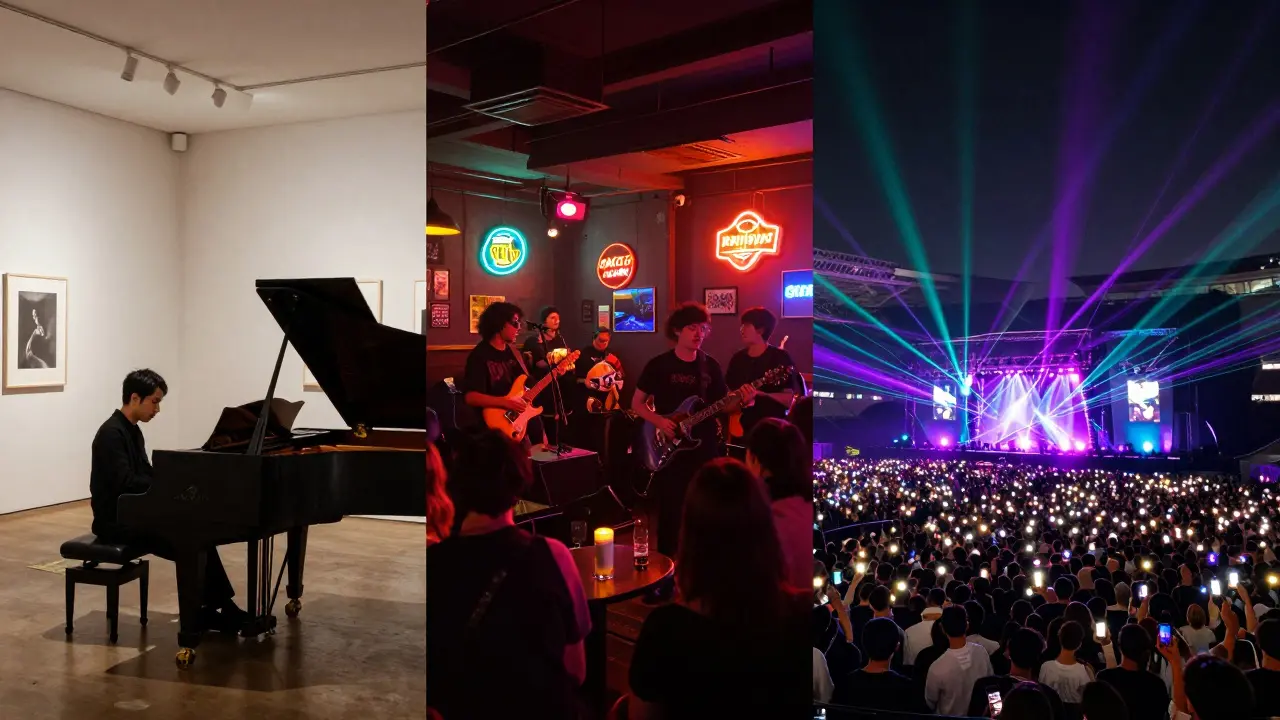
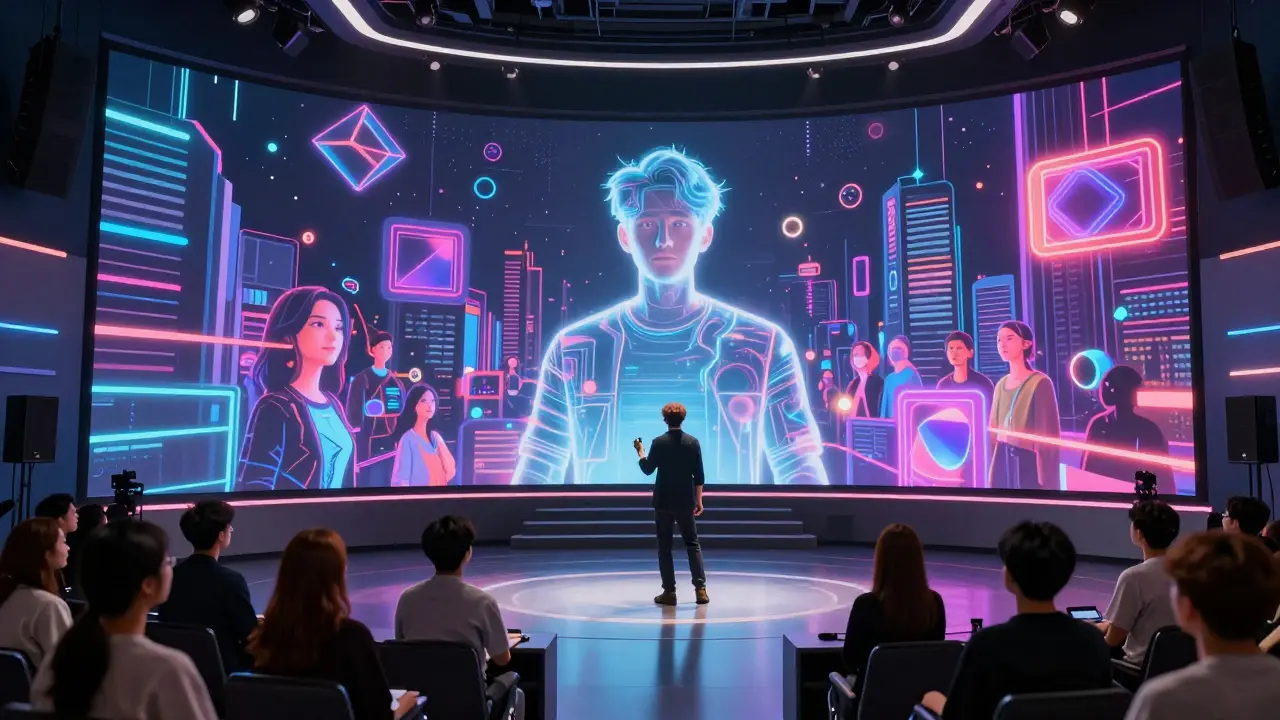
You might ask if a performance in a subway station counts as a concert. Technically, yes, but in the industry, we distinguish between busking and a concert. Busking is street performing for gratuities, where the audience is often transient and unplanned. In a concert, the audience typically makes a conscious decision to attend the event, even if they just happened to walk into a free show. The venue also dictates the legal and financial definitions. For example, a venue must often have a Performance License to legally host a concert. This license ensures that artists get paid through royalty organizations. If a cafe has a singer in the corner, it might be "background music," but once the lights dim and everyone turns to face the singer, it has transitioned into a concert. The last few years have completely flipped the script on what we call a concert. We've seen the rise of Virtual Concerts, where an artist performs in a digital space. Does a performance inside a video game like Fortnite count? From a technical standpoint, it fits the criteria: there is a performer, an audience, and a structured event. However, the "venue" is now a server. These events are often categorized as "digital experiences," but the music industry treats them as concerts because they generate ticket sales and streaming revenue. Then there are hybrid events-live streams where a band plays in a studio for a physical crowd while thousands watch via a web browser. This blends the intimacy of a small gig with the reach of a stadium tour. In these cases, the concert is defined by the broadcast rather than the physical location.
If you're organizing an event, the word "concert" carries a lot of weight. Insurance companies and city councils don't view a concert as just "music playing." They see it as a gathering of people, which introduces risks. For a city official, a concert is defined by the expected crowd density and decibel levels. This is why a small acoustic set in a park might not need a permit, but a concert with a drum kit and amplifiers requires a noise variance permit. From a tax perspective, the definition often hinges on whether there is an admission fee. If you charge for entry, the event becomes a commercial enterprise. This changes how the revenue is reported and how the performers are classified-either as independent contractors or employees for the duration of the show. One big myth is that a concert must be a full-length show. In reality, a 15-minute set at a showcase is still a concert. Another is that it must be professional music. A high school band playing in the gym is putting on a concert. Some people confuse concerts with musical theater. While a Broadway show has music, the primary entity is a "play" or "musical." The music serves the plot. In a concert, the music *is* the plot. The primary goal is the auditory experience of the performance itself, not the progression of a scripted story. Yes. While DJs mix existing recordings, the act of live curation, beat-matching, and engaging a crowd in real-time constitutes a musical performance. Most industry standards treat electronic dance music (EDM) sets as concerts. Generally, street performing is called busking. The main difference is the intent of the audience. In a concert, the audience usually goes to the music; in busking, the music goes to the audience. "Gig" is a more colloquial term often used by musicians to describe a paid performance, usually in a smaller, less formal setting. "Concert" is a broader, more formal term that covers everything from a local recital to a world tour. Yes, as long as there is a scheduled performance and an audience. They are categorized as virtual concerts and are recognized by the industry as valid live performance entities. No. Whether there is one person or one million, the defining factor is the intentional act of performing for an audience, not the size of that audience.Feature Busking Gig / Club Show Recital Stadium Concert Audience Intent Accidental Intentional Intentional High Intent Ticketing Tips Cover Charge/Ticket Ticket/Free Professional Ticket Production Minimal Basic PA Acoustic/Piano Full AV/Lighting Setting Public Space Nightclub/Bar Hall/Gallery Arena/Stadium Digital and Hybrid Concerts: The New Frontier
Legal and Insurance Definitions
Common Misconceptions
Does a DJ set count as a concert?
Is a street performance technically a concert?
What's the difference between a gig and a concert?
Do virtual events in games count as concerts?
Does the number of people matter for it to be a concert?

Nathaniel Petrovick
Totally agree with the breakdown on gigs versus concerts, it's basically just a vibe check most of the time.
Jane San Miguel
The distinction between a recital and a gig is far too simplistic. One must acknowledge that the prestige of the venue often dictates the classification more than the technical skill of the performer. It is quite naive to suggest that a simple change in lighting transforms a background act into a concert.
Dave Sumner Smith
Funny how this mentions performance licenses. You think it is just about noise? It is about surveillance and control. The city councils use these labels to track who is gathering and where, creating a database of every 'concert' to monitor social movements. They don't care about the music, they care about the crowd density for a reason. Wake up and see that the bureaucratic definition of a concert is just a tool for state mapping and behavioral control.
Jeroen Post
the concept of a digital venue is a joke because there is no physical resonance anyway.. its just data streams pretending to be art while the industry captures every click for the algorithm. the real music is gone when it becomes a server event
Honey Jonson
love this!! i always thot my jam sessions w my buddies were just hangouts but guess we actually throwin concerts lol
Geet Ramchandani
This entire attempt to categorize live music is an absolute disaster of logic because it completely ignores the socioeconomic implications of venue ownership and the sheer incompetence of the industry's licensing standards which are outdated and frankly laughable. You cannot just say 'intent' is the marker when the actual power dynamics of who is allowed to perform in a public space are dictated by corporate interests and zoning laws that this article just glosses over with a shallow table. It is honestly insulting that anyone would think a 15-minute showcase is the same as a curated experience when the production value and the emotional labor involved are worlds apart, yet here we are pretending a high school gym performance is functionally identical to a professional set just to make the definition 'broad' and inclusive. The lack of critical depth here is staggering and it just shows how lazy these definitions are in the first place.
Sara Escanciano
Charging people for entry to a 'concert' while the artists barely see a dime of the ticket revenue is a moral failure of the industry!
Sally McElroy
It's honestly sad how we've reduced the spiritual act of music to 'crowd density' and 'decibel levels'!!! We are losing the soul of art to these clinical definitions!!!
Sumit SM
The duality of the street vs the stage... it's all a cosmic dance!!! Who are we to say where the music starts and the street ends???
Paul Timms
The point about busking is very fair.
Pooja Kalra
Labels are merely shadows of the truth. Whether it is a gig or a concert, the silence after the music is what truly matters.
Destiny Brumbaugh
Usa concerts are the only ones that realy matter cuz we have the best stadiums and the biggest stars anyway!!!
Bob Buthune
I just feel like virtual concerts are so lonely compared to the warmth of a real crowd, and it honestly hurts my heart to think that a server is replacing a physical connection 😭💔. It feels like we are just drifting further apart in this digital void where the music doesn't even touch our souls anymore 🌊😔.
Cait Sporleder
The juxtaposition of a transient busking audience against the curated intentionality of a concert attendee provides a fascinating sociological lens through which we can examine human behavior. It is quite marvelous how the mere act of paying a cover charge transforms the psychological expectation of the listener into something far more rigid and demanding of the performer's virtuosity.