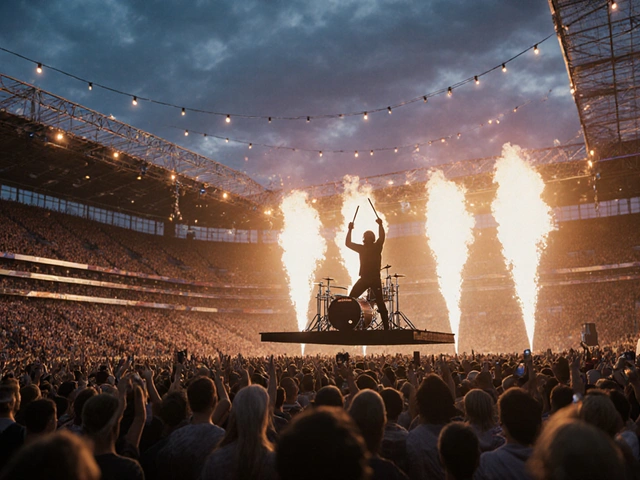

The word concert doesn’t mean what you think it does. If you’ve ever stood in a crowd, headphones off, feeling the bass shake your ribs as a band plays live, you’re experiencing the modern version of a word that once had a much quieter, more intellectual life.
Go back four hundred years, and a concert wasn’t a loud rock show with flashing lights and pyrotechnics. It wasn’t even a symphony orchestra in a grand hall. Back then, a concert was a conversation - not between people, but between instruments.
The word concert comes from the Latin conserere, which means "to join together" or "to sow together." Think of planting seeds in a row - each one separate, but part of a unified whole. That’s the core idea: harmony through unity.
From Latin, it moved into Italian as concerto, which kept the sense of things working in unison. But in 16th-century Italy, concerto didn’t mean a performance. It meant a group of musicians playing together in agreement - not just playing the same notes, but listening, responding, adapting to each other. It was musical dialogue.
In the 1500s, you’d hear phrases like concerto di voci - a concert of voices - meaning a small ensemble of singers blending their tones. Or concerto di strumenti - a concert of instruments - where violins, lutes, and harpsichords played in careful balance. No conductor. No sheet music for everyone. Just musicians listening, adjusting, and creating something greater than the sum of their parts.
This wasn’t entertainment for crowds. It was an intimate art, often performed in private homes or courts. Nobles hired musicians not to fill a room with noise, but to create a space of refined connection. The concert was the moment when separate sounds became one voice.
By the 1700s, things started changing. As cities grew and the middle class gained wealth, music began to move out of palaces and into public spaces. The first public concert halls opened in London and Paris. People paid to sit and listen. The nature of the event shifted.
Composers like Handel and Bach wrote pieces meant for larger audiences. The concerto became a formal structure - a solo instrument (like a violin or piano) in dialogue with an orchestra. That’s where the modern term began to take shape. The word concert started to mean not just the act of playing together, but the entire event where that happened.
By the 1800s, concerts were big. Orchestras had dozens of players. Audiences wore formal clothes. Silence was expected. Applause came only at the end of a piece. The concert became a ritual - a shared experience of emotional and intellectual unity.
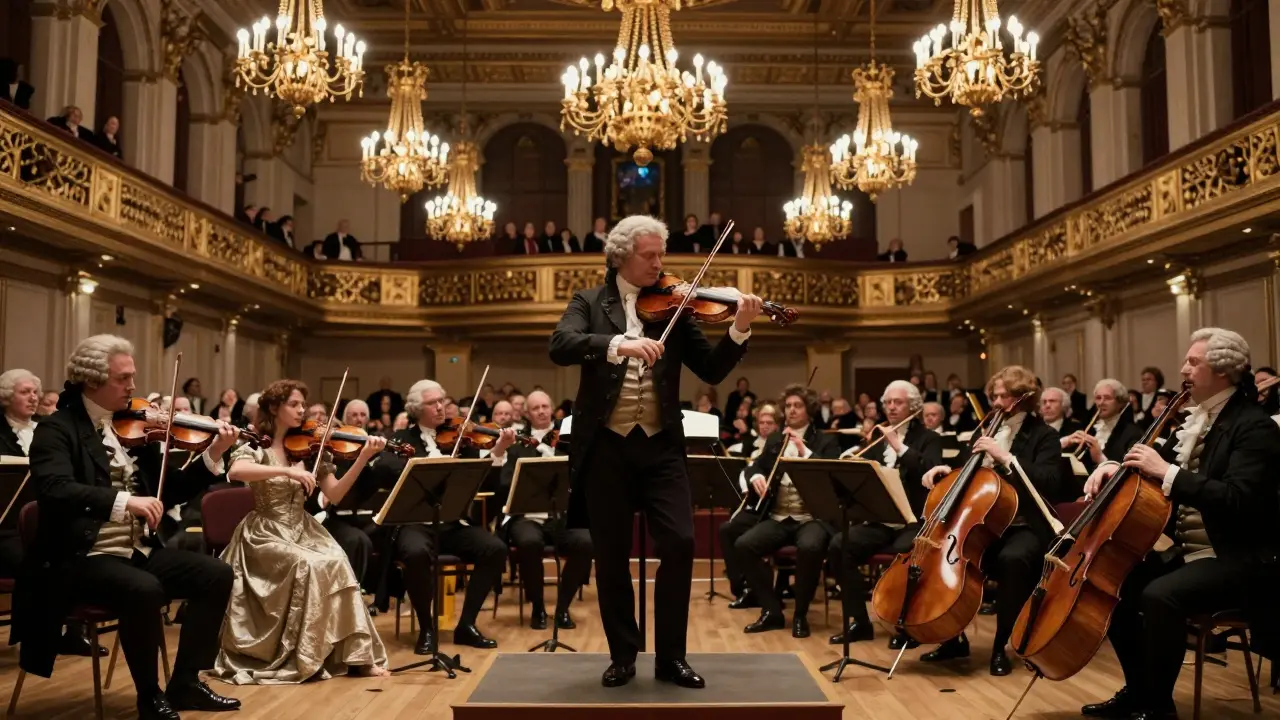
When you go to a concert now, you’re not just hearing music. You’re participating in a tradition that began as a quiet act of alignment - instruments finding harmony, voices blending, minds connecting through sound.
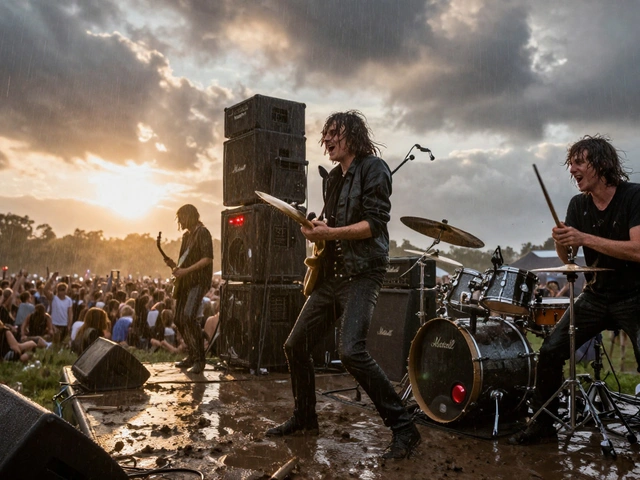
Even at a heavy metal show, where guitars scream and drums explode, the magic still lies in that original idea: separate elements coming together to make something unified. The guitarist, the bassist, the drummer, the singer - each plays their part, but they listen. They react. They lock in. That’s the literal meaning of concert: to join together.
It’s why a bad concert feels wrong. Not because the volume is too loud, but because the musicians aren’t in sync. You can feel it. The energy drops. The connection breaks. That’s when the word’s true meaning is lost.
People often use these words interchangeably, but they’re not the same.
That’s why a Taylor Swift concert feels different from a Taylor Swift show. The concert is the music - the songs, the harmonies, the live instrumentation. The show is the spectacle. The concert is the soul.

Understanding the literal meaning of concert changes how you listen. When you realize it’s about joining together, you start noticing things you never did before.
That subtle shift in timing between the bass and the kick drum? That’s the band locking in. That moment when the violinist and cellist glance at each other before a phrase? That’s the old Italian concerto alive.
Even in electronic music, where beats are programmed, the best artists still build concerts - layers of sound that breathe together, respond to each other, rise and fall as one.
The word didn’t change. The world did. But the heart of it? That’s still the same. A concert is where separate things become one.
Ever been to a concert where the sound was off? Where the vocals were drowned out by the drums? Where the band seemed to be playing their own songs?
That’s not a concert. That’s a mess. The literal meaning demands connection. If the musicians aren’t listening to each other, if the sound engineer isn’t balancing the mix, if the crowd isn’t feeling the rhythm - the concert fails.
Modern technology makes it easier to fix mistakes. Auto-tune, click tracks, backing tracks. But none of that replaces the human act of listening and adjusting in real time. That’s what makes a live concert worth remembering.
Some bands now use in-ear monitors so they can hear themselves perfectly. But the best ones still leave one ear open - to hear the room, the crowd, the other musicians. That’s the original spirit of concert: to join together, not just play together.
Every time you go to a live show, you’re taking part in a tradition that’s been around for five centuries. The word didn’t evolve to mean noise or spectacle. It evolved to mean unity.
So next time you’re at a concert, don’t just watch. Listen. Feel how the music connects the performers. Notice how the crowd sways in rhythm. Watch how the drummer locks eyes with the guitarist before a solo.
That’s the literal meaning of concert. Not the lights. Not the merch. Not the hashtags.
It’s the joining.
Historically, no. In the 16th and 17th centuries, 'concert' could refer to any kind of agreement or harmony - between people, ideas, or even political factions. For example, you might hear of a 'concert of nations' meaning a diplomatic alliance. But since the 1700s, the word has become almost exclusively tied to musical performance.
It often is - the terms are used interchangeably today. But traditionally, a recital emphasizes the solo performer’s skill and interpretation, while a concert implies a broader musical experience, often with multiple pieces, multiple performers, or an ensemble. A solo piano event can be called either, depending on context and tradition.
Yes. Both come from the Latin conserere - to join together. A 'concerted effort' means multiple people working in harmony toward a common goal. Just like musicians in a concert, each person contributes, but the result only works if they’re aligned.
Absolutely. In fact, choral concerts were among the earliest forms of public concerts in Europe. A choir is the perfect example of the literal meaning - many voices, blending into one sound. The word 'concert' was first used this way in Renaissance Italy.
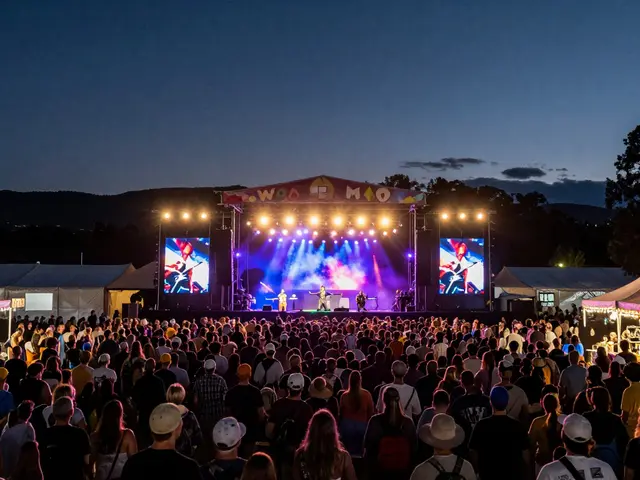
Yes. A concert is one event, usually featuring one or two main acts, focused on a single musical experience. A festival is a collection of concerts - multiple stages, multiple genres, multiple days. A festival has concerts within it, but it’s a broader event, more like a gathering than a unified musical moment.
Jen Becker
I just cried at a metal show last week. Not because of the music. Because the bassist looked at the drummer and nodded before the breakdown. That’s it. That’s the concert.
Samuel Bennett
Actually, the Latin root is *conserere*, not *concertare*. You misspelled it in the post. And no, 'concert' didn't mean 'musical dialogue' in 16th-century Italy - that’s a modern reinterpretation. The term was *concerto*, and it referred to a compositional form, not a vibe. Stop romanticizing.
Rob D
Look, I don’t care what some dusty Italian nobleman thought. A concert is when you pay $200 for a ticket and your ears bleed for two hours. That’s the real definition. The rest is woke academia with a violin. My cousin’s band plays in a garage and they got 12k views on TikTok - that’s a concert. Not some ‘harmonious whispering’ nonsense. We don’t need your poetry. We need distortion pedals.
Franklin Hooper
The etymology is correct. The evolution is fascinating. The emotional projection, however, is excessive. The word means what it means. Nothing more. Nothing less.
There is no soul. Only sound.
And alignment.
That’s all.
Jess Ciro
They’re lying about the origins. This is just cultural appropriation by classical snobs. The real concert started in 1969 at Woodstock. That’s when people first felt the unity. Everything before that was just rich people pretending to be deep. And don’t even get me started on how the music industry erased the real meaning after the 80s. Auto-tune killed the soul. They knew it. They did it on purpose.
saravana kumar
This is a very detailed and scholarly exposition. However, I must point out that in Indian classical music, the concept of *jugalbandi* - two artists improvising in call-and-response - predates the Italian *concerto* by centuries. The notion of musical dialogue is not Western. It is universal. And yet, we are taught to believe otherwise. Thank you for the context, but please remember the global roots.
Tamil selvan
What a beautifully articulated piece! I truly appreciate how you’ve traced the linguistic journey of the word 'concert' - from its Latin origins to its modern resonance. It’s not just about music; it’s about human connection. The way you described musicians listening, adapting, locking in - that’s the essence of artistry. Thank you for reminding us that real music isn’t manufactured; it’s co-created. This is the kind of writing that restores faith in thoughtful discourse.
Mark Brantner
so like… if a dj drops a beat and the whole crowd goes wild… is that a concert? or just a vibe? i mean… i’ve been to raves where the bass was so deep i swear my teeth vibrated… and everyone was just… synced. like… no words. just bodies. and it felt like… the whole room was one instrument. so… is that the original meaning? or am i just high?
Kate Tran
My grandma used to say ‘the music’s got to breathe’ - she meant the musicians had to listen. She’d sit in silence during recitals, eyes closed, and say ‘you can hear when they’re not talking to each other.’
She never went to a metal show. But she’d have understood it.
amber hopman
I love how this redefines what we think of as ‘live music.’ I used to think concerts were just about the performer. But now I see it’s about the space between the notes - the silence before the chord, the glance between players, the way the crowd leans in. It’s not about volume. It’s about presence. Thank you for this perspective. I’m going to listen differently next time.
Jim Sonntag
So a concert is just a fancy word for ‘we’re all feeling the same thing at the same time’?
Then why do we call it a concert and not a ‘shared moment’?
Also, I once saw a guy in a kilt play bagpipes at a farmers market. The dog barked in time. That was a concert.
Also, I’m pretty sure the word ‘concert’ was used in 17th-century France to describe two people agreeing to go to dinner. So… maybe we’re all just overthinking this.
Deepak Sungra
Bro this is the most overrated thing I’ve read all week. You spent 2000 words to say ‘music is better when people play together’? I’ve been to 500 concerts. I know that. The real question is - why do we pretend old stuff was better? The bass in today’s EDM hits is more precise than any 16th-century lute. And the crowd? They’re not just listening - they’re dancing, singing, posting, living. That’s not broken. That’s evolution. Stop romanticizing silence. The world moved on. So should you.