

Quick Takeaways:
To understand the cost, you first have to understand Bandwidth. In the world of live streaming, we talk about "egress"-the data leaving the server and hitting the viewer's screen. When you stream a concert, you aren't sending one file; you're sending a continuous stream of data packets to every single person watching.
If you stream in 1080p HD, a typical bitrate is about 5 Mbps (Megabits per second). For a two-hour concert, one single viewer consumes roughly 4.5 GB of data. Now, do the math for a million people. You're looking at 4.5 Petabytes of data. If you use a cloud provider like AWS (Amazon Web Services), their data transfer fees can be brutal. While they offer volume discounts, the raw cost of moving that much data is where the bulk of your budget goes.
You have a few ways to handle a million viewers. Some are "plug-and-play," while others give you total control (and total financial risk). The choice depends on whether you want a flat fee or a pay-as-you-go model.
| Method | Cost Structure | Estimated Cost (1M Streams) | Risk Level |
|---|---|---|---|
| Social Platforms (YouTube/Twitch) | Free/Revenue Share | $0 (Infrastructure) | Low (Less Control) |
| Managed SaaS (Vimeo/Mux) | Per Minute/Per Viewer | $10,000 - $50,000 | Medium (Predictable) |
| Self-Managed (AWS/GCP + CDN) | Pure Consumption | $50,000 - $150,000+ | High (Complex) |
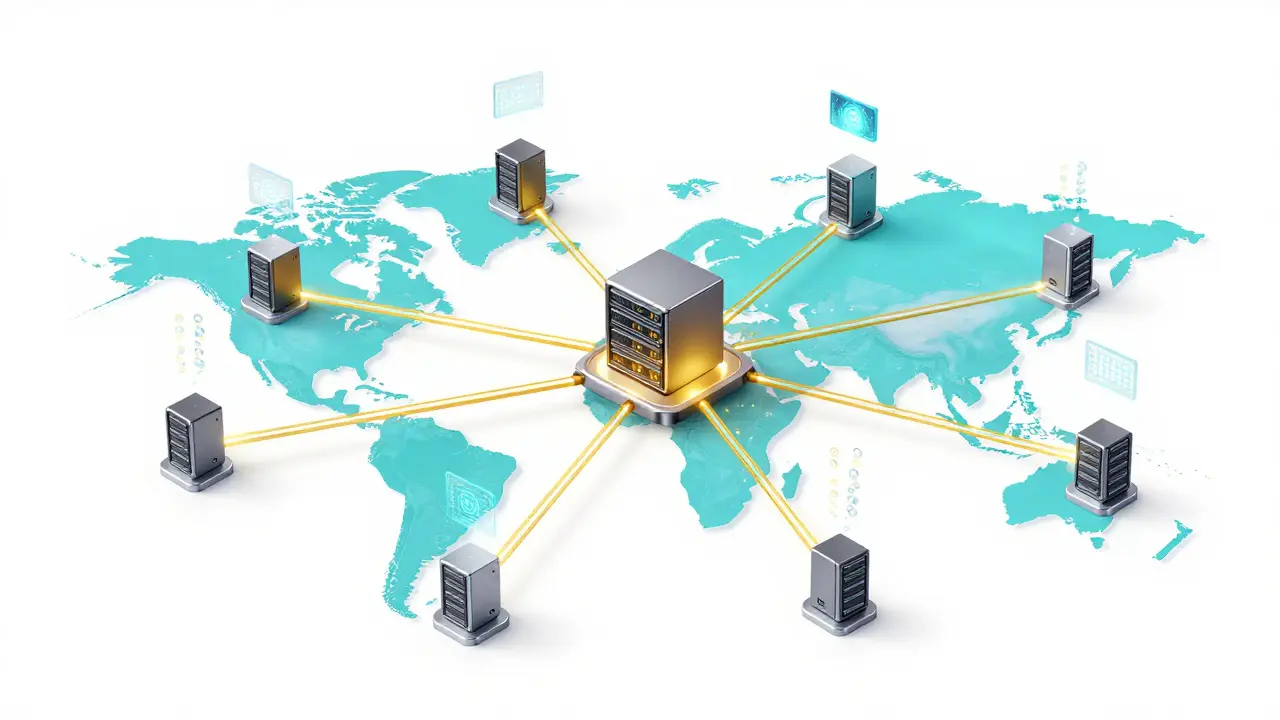
You cannot stream to a million people from a single server. It would crash instantly. This is where a CDN (Content Delivery Network) comes in. A CDN is a distributed group of servers located around the world that caches content closer to the user.
Instead of every fan in London and Tokyo hitting a server in New York, the CDN replicates the stream. This reduces "latency"-that annoying lag where the audio doesn't match the video. Popular CDNs like Cloudflare or Akamai charge based on the amount of data delivered. To reach a million people, you'll need a "multi-CDN strategy," meaning you use two or three different providers so that if one fails, your concert doesn't go dark.
You can't just send one high-quality stream. Some fans will be on 5G in a city, and others will be on shaky hotel Wi-Fi. You need Transcoding, which is the process of creating multiple versions of the stream (1080p, 720p, 480p, 360p) in real-time. This is called Adaptive Bitrate Streaming (ABR).
Transcoding requires heavy computing power (CPU or GPU). If you use a service like Mux, they charge you for every minute of video processed. For a million viewers, the transcoding isn't the biggest cost, but the "per-minute" fees for the live ingest can add several thousand dollars to your bill before the first fan even clicks "play."
In a live concert, you don't get viewers gradually. You get a "thundering herd." At 8:00 PM, 900,000 people try to log in at the exact same second. This creates a massive spike in requests to your authentication servers.
If you're selling tickets, your payment gateway and login system must handle this. If your database can't handle 100,000 requests per second, it doesn't matter how much bandwidth you've paid for-nobody will be able to get into the stream. This often requires Auto-scaling groups, where your cloud provider automatically spins up hundreds of extra servers to handle the rush and then shuts them down when the show ends.

If $100k sounds like a nightmare, there are ways to optimize. The biggest lever you have is bitrate control. Reducing your top-end resolution from 4K to 1080p can cut your data costs by more than half without a noticeable drop in quality for most mobile users.
Another trick is using a "Hybrid Model." Use a free platform like YouTube for the mass audience to handle the heavy lifting, and keep a private, high-quality stream on your own server only for "VIP ticket holders." This limits the amount of expensive egress you're paying for while still reaching the million-person milestone.
YouTube is significantly cheaper because they absorb the bandwidth costs in exchange for data and ad revenue. A private site gives you control over user data and ticket sales, but you pay for every gigabyte of data transferred. For a million viewers, the difference can be tens of thousands of dollars.
Bitrate is the amount of data processed per unit of time. A higher bitrate means better image quality but more data. Since streaming costs are based on the total volume of data (egress), a high-bitrate stream costs more to deliver than a low-bitrate one.
Yes, absolutely. Without a CDN, all million users would connect to one central server, which would crash immediately. A CDN spreads the load across thousands of global servers, ensuring the stream stays live and doesn't buffer.
It automatically adjusts the video quality based on the viewer's internet speed. If their connection drops, the player switches from 1080p to 720p or 480p instantly so the video doesn't stop to buffer. This requires the server to provide multiple versions of the same stream.
Some advanced platforms use P2P, where viewers share bits of the stream with each other, reducing the load on the central server. This can drastically lower costs, but it's harder to implement and can be blocked by some corporate firewalls or browsers.
If you're planning a massive event, start with a load test. Don't wait until the night of the concert to see if your site can handle 10,000 people, let alone a million. Use tools to simulate traffic spikes. If you're on a budget, prioritize a platform that offers a "flat fee" for a specific number of concurrent viewers rather than a variable cost based on data, which can leave you with an unpredictable bill at the end of the month.




Kirk Doherty
crazy how much the cloud actually costs when you scale it
Meghan O'Connor
The math on the 4.5 Petabytes is barely accurate because it ignores the overhead of the transport protocols. Also, the author uses "egress" as a buzzword without explaining the specific tiered pricing of AWS CloudFront, which is where the real nightmare happens. It's just a basic overview that misses the actual technical nuance of cache-hit ratios. Typical surface-level analysis.
Aimee Quenneville
wow... just wow... imagine paying 100k for a stream when you could just use youtube and save your money for, like, actual food!!!! lol
Jasmine Oey
Omg, it's just so heartbreaking that people don't realize the ethical implicashuns of using these massive corporate clouds!! Like, do we even care about the carbon footprint of 4.5 Petabytes of data? I simply cannot believe some people just prioritize profit over the planet in such a dramatic way!! It's just... so gauche!
James Winter
AWS is a joke. Use Canadian servers. Better. Fast.
Cynthia Lamont
Sigh, the grammar in the "Quick Takeaways" section is an absolute disaster. Why is there a lack of consistent capitalization? It is honestly embarrassing to see such a sloppy presentation when discussing high-level infrastructure! The lack of precision in the writing mirrors the lack of precision in the cost estimates! Absolutely pathetic!
Marissa Martin
It's interesting how we focus on the cost of the stream rather than the exploitation of the artists who probably don't see a cent of that 100k.
Morgan ODonnell
I think everyone is just trying to help here. It's a lot of money but it's a huge event.
Aryan Gupta
You can't trust these "cost estimates" because the cloud providers are likely hiding the true cost of their data harvesting operations. Why is no one talking about how CDNs are actually just surveillance hubs for the government to track who is watching what in real-time? The "thundering herd" is just a cover for a massive stress test on our digital privacy. Wake up.
Mongezi Mkhwanazi
One must consider that the pursuit of absolute technical perfection in a digital broadcast is often a vanity project for the mediocre... and the sheer audacity of expecting a million souls to converge upon a single digital point without a spiritual cost is simply staggering... truly... it is the hubris of the modern age... and yet we cling to these bitrate metrics as if they define the quality of the human experience... what a tragedy...
adam smith
I find the provided information to be quite helpful. It is a very interesting topic indeed.
Kelley Nelson
It is quite unfortunate that the discourse surrounding this topic has devolved into such a simplistic debate. One would assume a more sophisticated approach to infrastructure procurement would be the standard for an event of this magnitude.
Mark Nitka
Let's just agree that the Hybrid Model is the best way forward for most of us.